



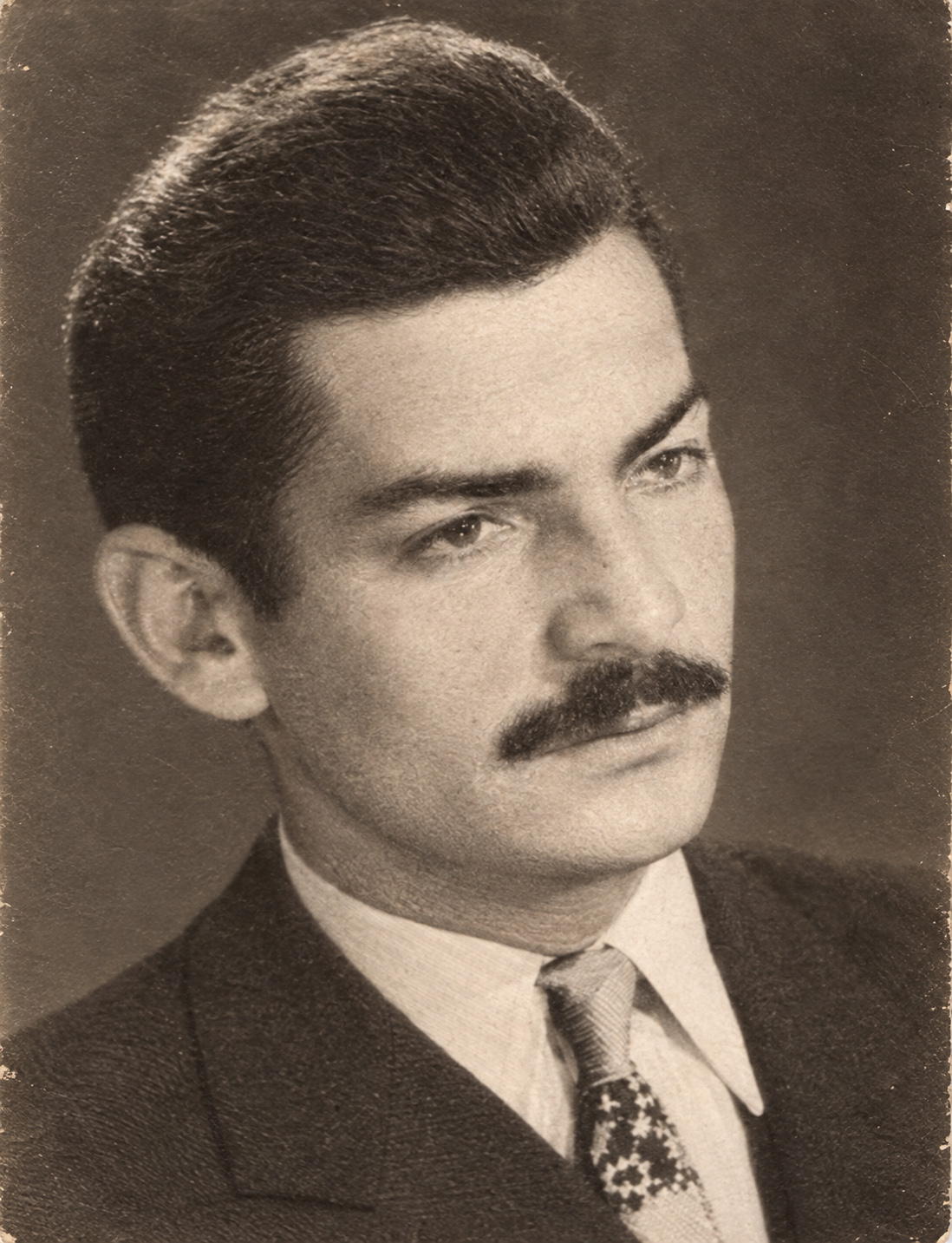
In almost every respect, Branko was the complete opposite of Lala and Gadža, except when it came to honesty and human dignity.
He was a talented footballer, but, as is often the case, talent is not necessarily accompanied by the hard work and persistence required to fully develop it. Branko, too, failed to make the most of his natural ability and reach the highest ranks of football, not only in Novi Bečej but much farther afield, perhaps even reaching the leading clubs in Belgrade.
He played for Zvezda's first team from the age of seventeen or eighteen, practically without training and with very little experience of playing football during his childhood. Apparently, by watching matches and observing the players he admired, he managed to learn the skills of the game and, almost overnight, became a first-team player for Zvezda.
He enjoyed outdribbling opponents, beating them in the smallest of spaces, putting the ball through their legs and only then passing it to a teammate. He enjoyed football like an artist, not always worrying about whether a particular move would be the most useful for the team or whether the spectators would appreciate it. This does not mean that he neglected team play. On the contrary, with just a little more effort, he could have been much more effective and could have been among the best players in almost every match.
In Novi Bečej society at the time, as was the case in many communities of that era, the standing of a young man was largely determined by the material position of his parents rather than by his physical and psychological qualities, character or willingness to work.
Branko was aware of his intelligence and was also well built, with handsome facial features. However, he lost his parents at a very young age and lived in Novi Bečej with his aunt and uncle. His uncle's modest income as a junior clerk at the District Court in Novi Bečej could barely provide for their family of five. With Branko becoming the sixth member of the household, he was inevitably very aware of their circumstances.
This weighed heavily on him, but the conditions during the occupation offered very few opportunities for employment. A sensitive man by nature, he would not allow anyone to look down on him, even in the slightest, because of his material circumstances. He was proud and expected everyone to respect his dignity, just as he himself respected the dignity of others.
He judged people simply by what they were like, rather than by the family or social background from which they came.
Perhaps, in the end, it is worth explaining where Branko got his nickname, “Maček.”
When he was ten or eleven years old, he came to Vranjevo from Zagreb, where he had lived with his uncle after the death of his parents. We boys used to play football in the house of his parents, Stanimir Blažin, while he watched us play as a child.
When he spoke his first word, he pronounced it with an Ijekavian accent. Because of this, Stevan Mojić – Moša nicknamed him Maček, after the Croatian politician Maček, who was a prominent public figure at the time.
And so Branko Pecarski acquired the nickname “Maček,” a name that would stay with him throughout his life.
Comments