



In addition to achieving satisfactory results for Novi Bečej's standards, the ambitions of the club's management were higher. They wanted, and felt that the conditions were right, to create a strong team capable of competing with the top clubs of Great Bečkerek, Greater Kikinda, and even all of Banat.
They knew that the authorities viewed the old club, which had been founded during the Austro-Hungarian period, with suspicion. Therefore, at the end of 1921, they changed the club's name to SOKO, as it was the only existing Serbian sports organization in Novi Bečej at the time. The old management and player roster remained mostly unchanged. However, under the new name, they gained more favor with the authorities, which was enough for the club's leadership to more freely pursue their plans.
Several new players were brought in, who, in addition to employment, received other benefits such as certain financial compensations, time off work for matches, free time for training, paid accommodations, etc. Only three or four players from the old TSE remained in the first team.
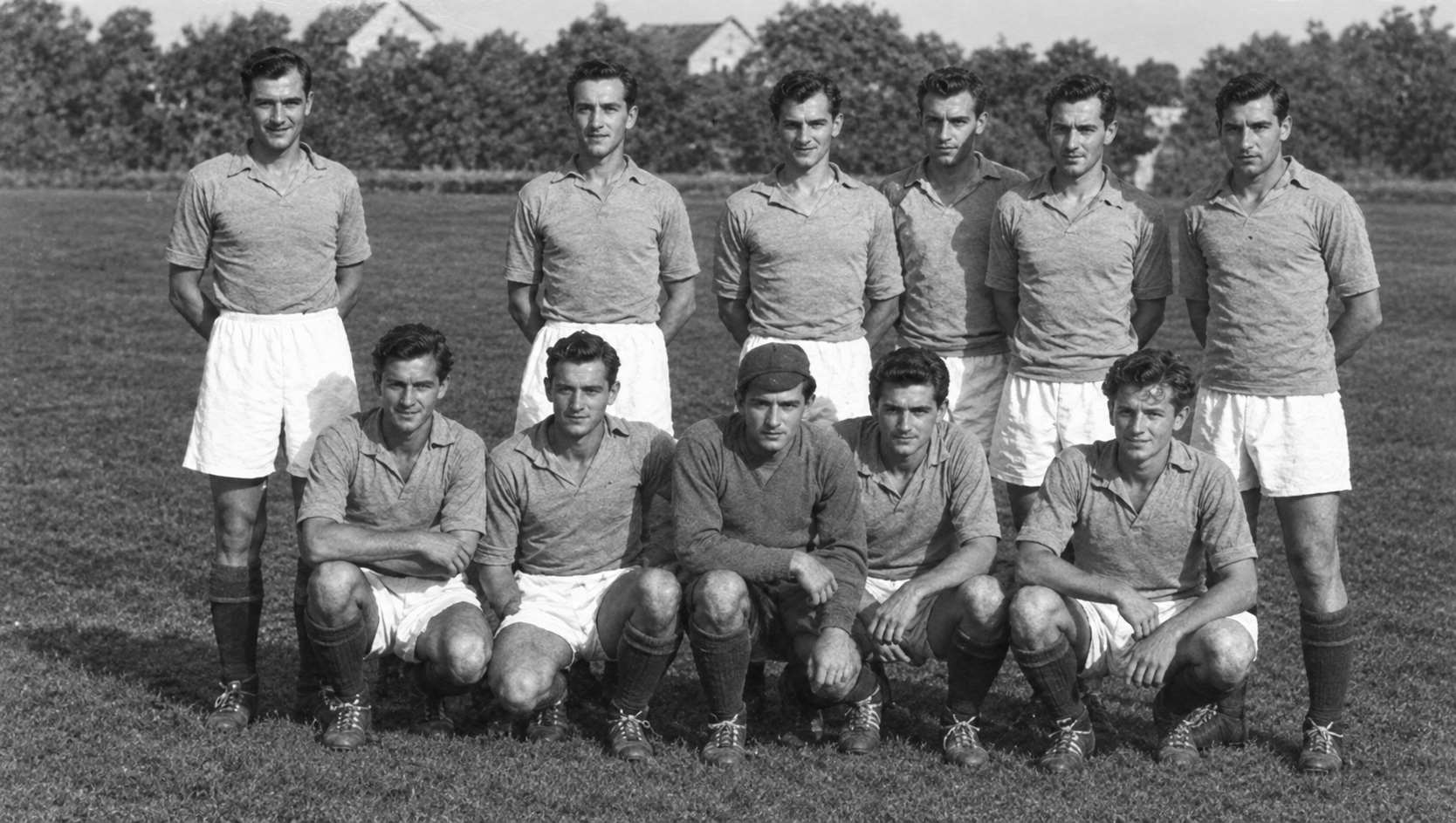
The goalkeeper position was held by Šipoš, a locksmith from Vranje, but after a year, he was replaced by Lakatoš, who came from outside and worked at Giga Jovanović's printing house. The fullbacks were Stevan Kovačević — Čiča, a carpenter from Bačka Palanka, and Berger, a Jewish player from Petrovo Selo who had previously played for Juda Maccabi in Novi Sad. In the half-line were Tibor Štaud from Novi Bečej, Laslo Nemet from Mužlja working at the post office, and Šimon, a Jew from Novi Sad. The forwards remained the brothers Geza and Laci Farkaš, with new arrivals including two brothers Vig, Jews from Bačko Gradište, Jakobović, a Jew from Novi Sad, and Proka Gaborov, a watchmaker from Great Bečkerek. Additionally, Erne Kraus, a Jew from Novi Bečej, also played.
With such a roster, the new club Soko undoubtedly represented a solid team, capable of competing with all the teams of Banat, which was the club management's goal.
The results achieved in 1923, published in the Torontal newspaper, show that the team was indeed solid. The first match in Novi Bečej between Soko and Kadima from Great Bečkerek, which ended in a draw, was considered a surprise not only for the result but for the solid performance. It was noted that the Kadima team faced not only players from Novi Bečej but also Del and Pustav from Stari Bečej and Berger from Novi Sad.
Here are some of the results Soko achieved in 1923:
- June 24, 1923 — SOKO vs. KADIMA (Great Bečkerek) in Novi Bečej 2:2 (0:2)
- July 1, 1923 — SOKO vs. BORAC (Great Bečkerek) in Novi Bečej 3:0 (0:0)
- July 29, 1923 — SOKO vs. SLAVIJA (Great Bečkerek) in Novi Bečej 1:0 (1:0)
- July 29, 1923 — SOKO II vs. BEODRA and KARLOVO in Novi Bečej (pre-match) 0:1
- August 3, 1923 — SOKO vs. SOKO Stari Bečej in Novi Bečej 2:0 (1:0)
These are only the results recorded in Torontal, and there were certainly more matches, as the club's leadership aimed to turn Novi Bečej into the football center of Banat, ensuring regular matches for the newly formed team, ideally every week.
The results generated significant popularity for football among the people of Novi Bečej, leading to an increase in attendance at each match.
The club's management strove to be completely independent of the gymnastic organization Soko, whose name the club bore.
Meanwhile, young Serbian students with ambitions to play in the first team, although not as skilled as the players brought in from outside, started emerging. They felt that being from Novi Bečej and Vranje made them a promising future for the club. These claims were supported by the leadership of the Sokol society, which the football club management did not accept.
In its efforts to maintain its quality, while considering the great support football had gained not only from the urban population but also from farmers, the club's management began preparations to separate the football section from the Sokol society and form an independent football organization.
This decision was not opposed by the Sokol society, as they saw it as a way to continue football activities and easily rid themselves of the unwanted elements within the football club’s management and foreign players who were only there for playing football.
The authorities themselves did not create any obstacles to the formation of a new club, as it was the safest way to satisfy the football fans and provide an opportunity for young Serbian students to play in public football matches.
Thus, a new football club was formed, although it was not a new club per se, but a separation from the Sokol society and a name change. From the fall of 1923, the club was known as the Sports Club GRAĐANSKI.
Građanski joined the Football Association of Yugoslavia and became a member of the Great Bečkerek district of the Belgrade Football Subunion, participating in the Banat Championship by 1924.
The new club achieved even better results than the previous year, which encouraged further support from spectators. Around a thousand spectators attended each match in Novi Bečej, which was a large turnout for the time, as football was just beginning to gain popularity among broader layers of the population.
The increased attendance, along with the added revenue, served as a motivator for achieving even better results. Građanski, now supported not only by the urban population but also by several farmers from Vranje, enjoyed particular support among the Hungarian kubikas community. For them, this was a form of national affirmation, as the players were mostly Hungarian and Jewish, with the exception of Proka Gaborov on the left wing.
Results of Građanski recorded by Torontal:
- July 13, 1924 — GRAĐANSKI vs. KADIMA (Great Bečkerek) in Novi Bečej 3:2
- August 24, 1924 — GRAĐANSKI vs. SRBIJA (Great Kikinda) in Novi Bečej 2:1 (1:1)
- August 31, 1924 — GRAĐANSKI vs. OBILIĆ (Great Bečkerek) in Great Bečkerek 1:3
- September 7, 1924 — GRAĐANSKI vs. SLAVIJA (Great Bečkerek) in Novi Bečej 5:0 (0:0)
- September 14, 1924 — GRAĐANSKI vs. ŠVEBIŠE (Great Bečkerek) in Novi Bečej 6:0 (1:0)
- September 21, 1924 — GRAĐANSKI vs. SLAVIJA (Great Bečkerek) in Great Bečkerek 1:1 (0:1)
- September 19, 1924 — GRAĐANSKI vs. DUŠAN SILNI (Vršac) in Vršac 0:1 (0:0)
These results clearly confirm what older residents of Novi Bečej asserted about Građanski's performance: it was the best club in Banat at the time.
A 5:0 victory over Slavija from Great Bečkerek in Novi Bečej and a 1:1 draw in Great Bečkerek serve as accurate illustrations of these claims, especially considering that Slavija was the champion of Great Bečkerek that year, with Železničar, Obilić, Kadima, Švebiše, and Borac following behind. Additionally, Građanski's victory over the Serbia team from Great Kikinda, with a 2:1 score, and two wins over them for the Banat Championship, one in Novi Bečej and one in Kikinda, further demonstrate the strength of the club.
With victories over Slavija from Veliki Bečkerek and Serbia from Velika Kikinda, Građanski advanced to the Banat Championship final against the Southern Banat champion, Dušan Silni. According to the rules, only one match was played, in Vršac, which Građanski lost despite dominating the game, due to biased refereeing by referee Tilinger from Vršac. We will leave the commentary on this match in the next chapter, with a statement from eyewitnesses, students of the teacher's school in Vršac, who were from Novi Bečej.
It is important to highlight the physical condition of Građanski’s players. Perhaps due to the special status they enjoyed with their employers, they trained regularly and, for the time, had a level of fitness that few clubs could match. The results show that Građanski typically defeated their opponents in the second half, when they ran out of energy. The only exception, albeit in terms of results, was the match against Dušan Silni in Vršac, where Građanski, despite being superior, conceded a goal late in the game from a penalty, which was unjustly awarded by the referee.
This defeat in Vršac was, in fact, the "swan song" for Građanski’s team. Missing out on first place in Banat was a disappointment, especially for the club's officials and players. Not only did the opposing clubs and other football factors attempt to hinder Građanski's rise, but there were also other efforts to obstruct their progress.
For example, the Torontal newspaper, in its sports section, commented on the first match between the Veliki Bečkerek and Novi Bečej teams, noting that Kadima had to face a team strengthened with players from Novi Sad and Stari Bečej. Then, Građanski’s draw against Slavija in Veliki Bečkerek (1:1) was noted for the extremely rough play. Similarly, the final match against Dušan Silni from Vršac was also met with unfavorable comments. It was mentioned that Građanski players were constantly arguing with the referee, without mentioning his biased decisions, including the unjustly awarded penalty that resulted in a 0:1 defeat, costing them first place in Banat.
This wasn't the only way efforts were made to derail Građanski’s rise. We wouldn't believe it if we hadn't heard the story from a Novi Bečej native, Đurike Senaši, who was told by Kovačević, a Građanski defender, that before the match against Serbia in Kikinda, players had castor oil or some other purgative in their food, which took effect during the game, just to eliminate Građanski from further competition. This was confirmed by Miša Kiselički, a retired teacher who recalled the event, as he had followed all football activities in Banat at the time, especially when it came to Novi Bečej football.
This is, after all, the price paid by clubs from smaller towns when breaking into the top ranks of regional competitions, where referees treat them with particular severity, and then the entire sports community and opposing teams become ruthless, simply to prevent them — as they were called — "provincials."
Perhaps this can be somewhat understood in Građanski's case, as their players had better conditions compared to other clubs. They were considered semi-professionals, only playing football, which explained their superior fitness and performance. However, that wasn't entirely the case, but there’s no doubt they had better conditions than many other clubs.
After the defeat in Vršac, the quality of football in Novi Bečej quickly declined. That match was the last one played in 1924. By the following year, 1925, Građanski mostly played with local players from Novi Bečej, except for a few "imported" players who had good jobs and stayed in Novi Bečej for another year.
The loss in Vršac wasn’t the only factor influencing players' departures to their previous clubs in Novi Sad and Veliki Bečkerek; there was also a decline in demand in the economy, which was first felt in the trade sector. This shrank the club's financial base, especially since President Deže Bizek had sold his pharmacy in Vranjevo and moved to Žombolj, which had become part of Romania in 1923. Kenig, another benefactor, liquidated his grain trading business, so the club could no longer provide financial support to the players, except for what they earned from their employers.
Thus, Građanski found itself relying — as they say — on its own strength, mostly with Novi Bečej players. Matches were played against weaker opponents, which Građanski generally won, but the audience sensed the changes, and the games began to lose their appeal. The number of spectators decreased, which further worsened the club's financial situation.
Even though Građanski was weakened, it still had several skilled players and, by the end of its existence in the fall of 1926, managed to defeat Soko from Novi Bečej 1:0 in a derby, despite Soko having several excellent players, including Milan Tanurđić — Isus, who had come from SAND in Subotica.
At the end of 1926 and the beginning of 1927, Građanski ceased to exist. It took a full 12 years for Novi Bečej football to recover to a level comparable to that of Građanski when it played only with local players. This is why Građanski will always be a special club in Novi Bečej football history, not just for its results but for its ability to attract a large number of spectators and create a loyal fan base.
Comments