



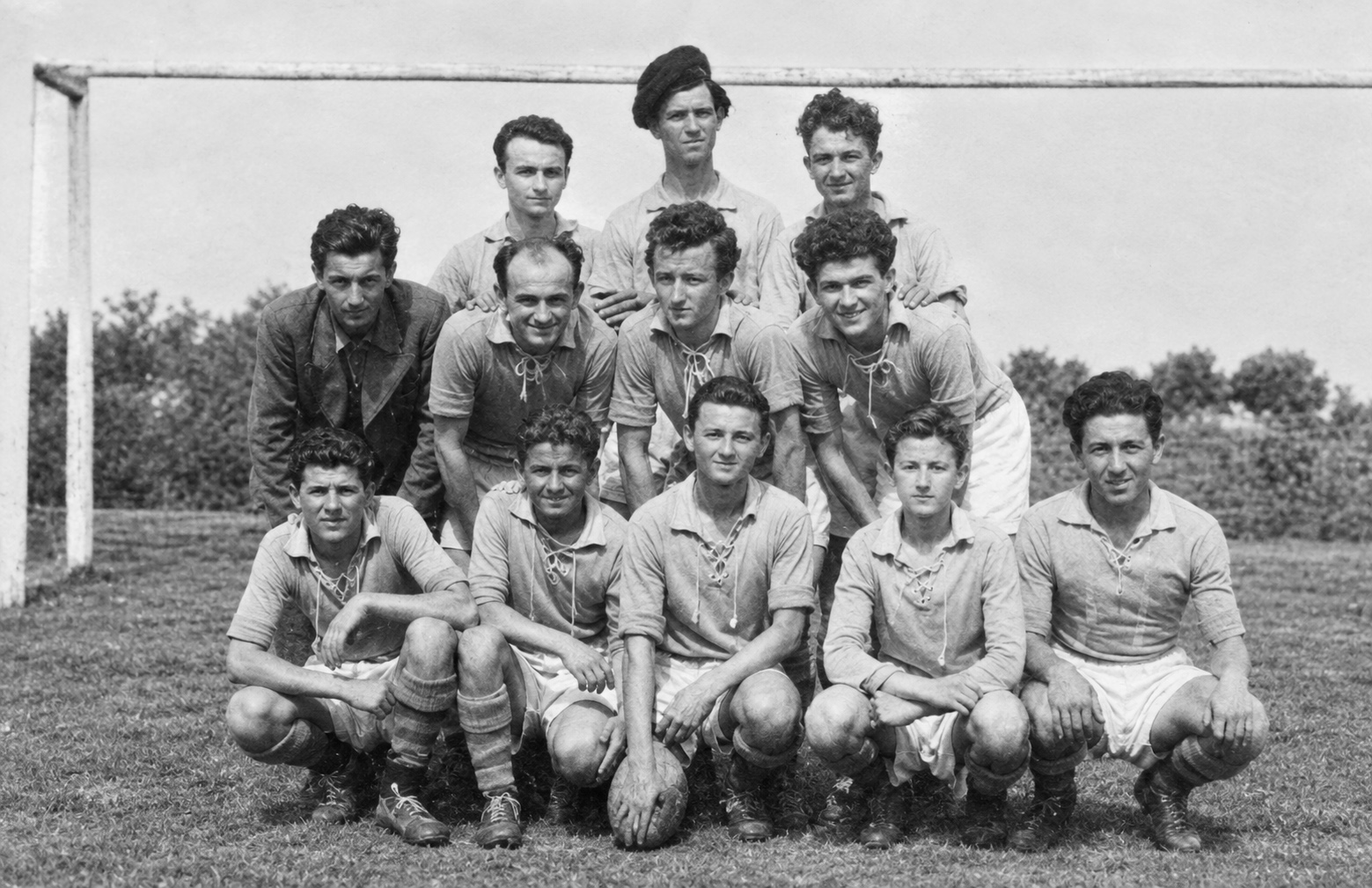
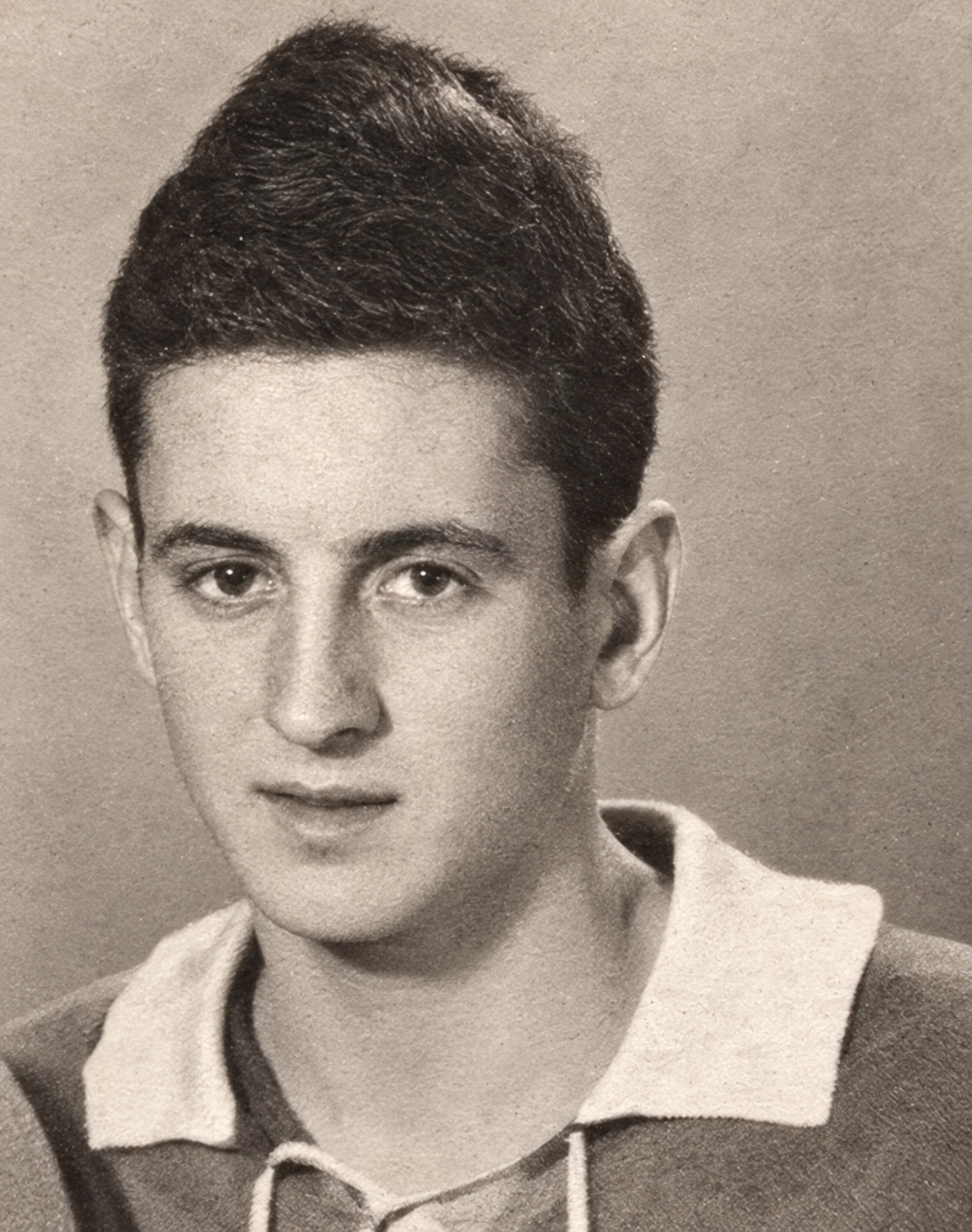
Joca had played for Zvezda in attack for many years, ever since childhood, while his older brother Đorđe (Đoka) was a goalkeeper. During the 1939/40 season, he made it into the first team and established himself as a centre-forward or left winger. He played in that position until the middle of 1943, when, due to the arrival of a number of talented players from Belgrade, Kikinda and Zrenjanin, he had to give way to players considered better than himself.
This did not discourage him. He was persistent in training and, when he realized that, alongside Ostojić, Branko Petrović, Sandić, Tubic, Pandurov and Erdeljan, he was unlikely to find his way back into the first team soon, he made a decision that surprised all of us: he decided to become a goalkeeper.
At that time, Zvezda had two excellent goalkeepers, Marčić and Gavrić, but Joca nevertheless saw an opportunity for himself among them. In his characteristic manner—extremely dedicated and combative—he very soon succeeded in becoming one of the first-team players of what was then an exceptionally strong Zvezda side.
Those responsible for selecting the team for individual matches were almost constantly faced with the dilemma of whom to put in goal. It was not unusual for the decision to favor Vratan, but with two other excellent goalkeepers, who were also fine people, none of the three could count on having a permanent place in the starting lineup.
Joca possessed one outstanding virtue. He was good-natured and never held it against anyone when he was not selected for the first team. He accepted it as something normal in life and did not consider that it called his reputation as a footballer into question.
He knew how—or perhaps it was simply part of his nature—to accept the decisions of Zvezda's management without protest. This should not be understood as a lack of ambition to achieve as much as possible in football. On the contrary, he was highly ambitious, but also sufficiently self-critical not to blame others for temporary failures when he himself was responsible for them.
In addition to discipline, he was distinguished by his fighting spirit, perseverance and, above all, his desire for success. These qualities came particularly to the fore after the liberation, when he joined the Army team from which the football club Partizan was later formed. Joca was the team's second goalkeeper, serving as a reserve to the legendary footballer and famous goalkeeper Glazer.
He did not remain at Partizan for long. Together with several other footballers from Belgrade, he moved to Rijeka, where he played for Kvarner, then a club competing in the Yugoslav First League. However, this time he did not play as a goalkeeper but returned to his original role as an attacking player.
From Kvarner, he moved to Orijent in Sušak, where, apparently, he brought his football career to an end.
Comments