



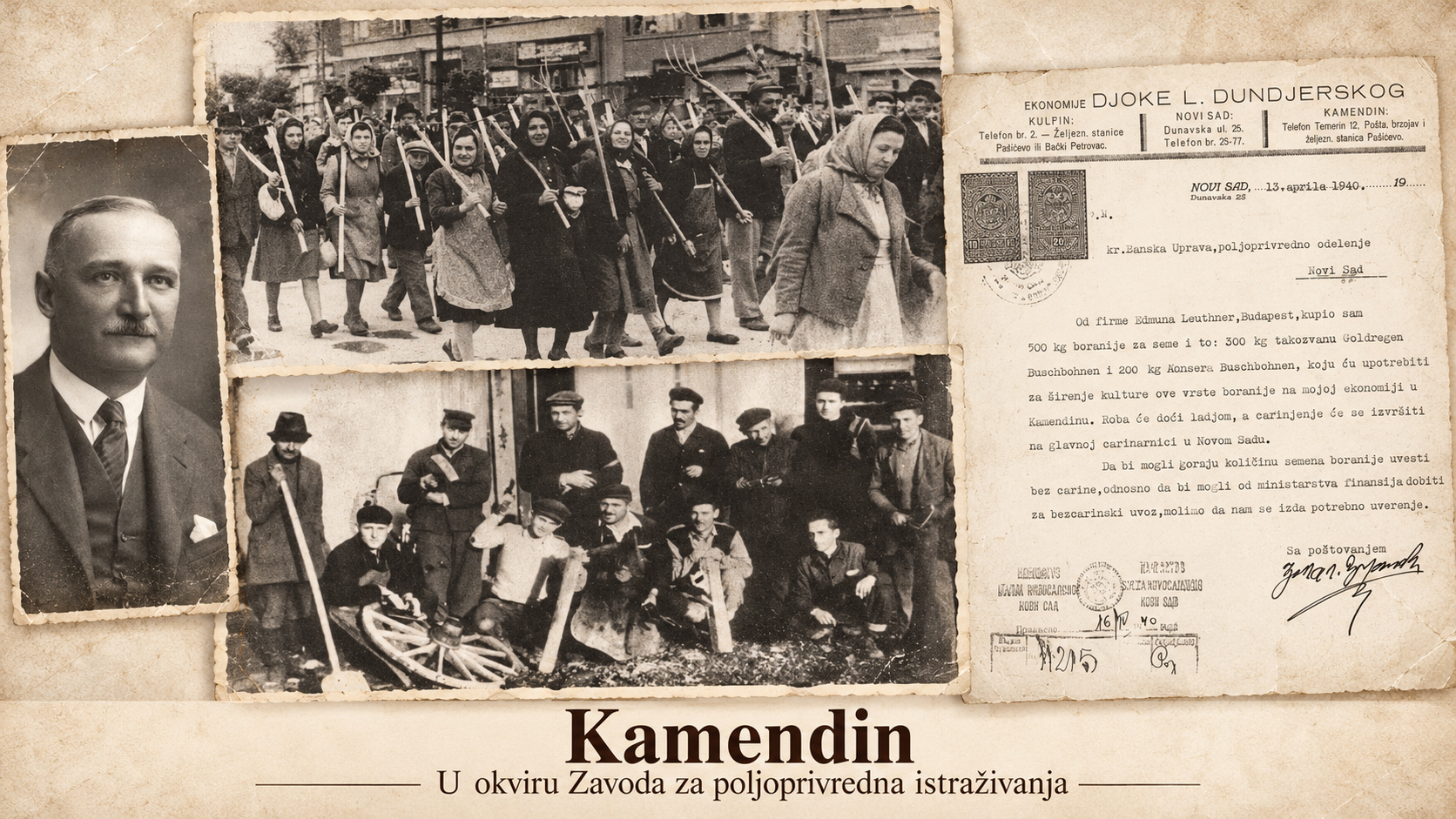
As early as the beginning of 1949, consideration was being given to turning the provincial Kamendin estate into an experimental livestock station of the Institute for Agricultural Research in Novi Sad.
During the reorganization of the General Directorate of Provincial Agricultural Estates in late 1949, the provincial estates Krivaja in Stara Moravica, Fruška gora–Gladnoš, Tamiš in Hajdučica, and Bratstvo i jedinstvo in Stari Bečej were placed under the administrative and operational authority, abbreviated AOR, of the Ministry of Agriculture of the People’s Republic of Serbia. The Jakšićevo estate in Srpska Crnja and the Begej estate in Srpski Itebej were assigned to the General Directorate of Provincial Agricultural Estates of Vojvodina, while Kamendin came under the AOR of the Institute for Agricultural Research in Novi Sad.
In September 1949, Kamendin’s then director, engineer Radovan Marković, informed the General Directorate of Provincial Agricultural Estates of Vojvodina that he would “from now on send all requested information to his new AOR, the Institute for Agricultural Research.”
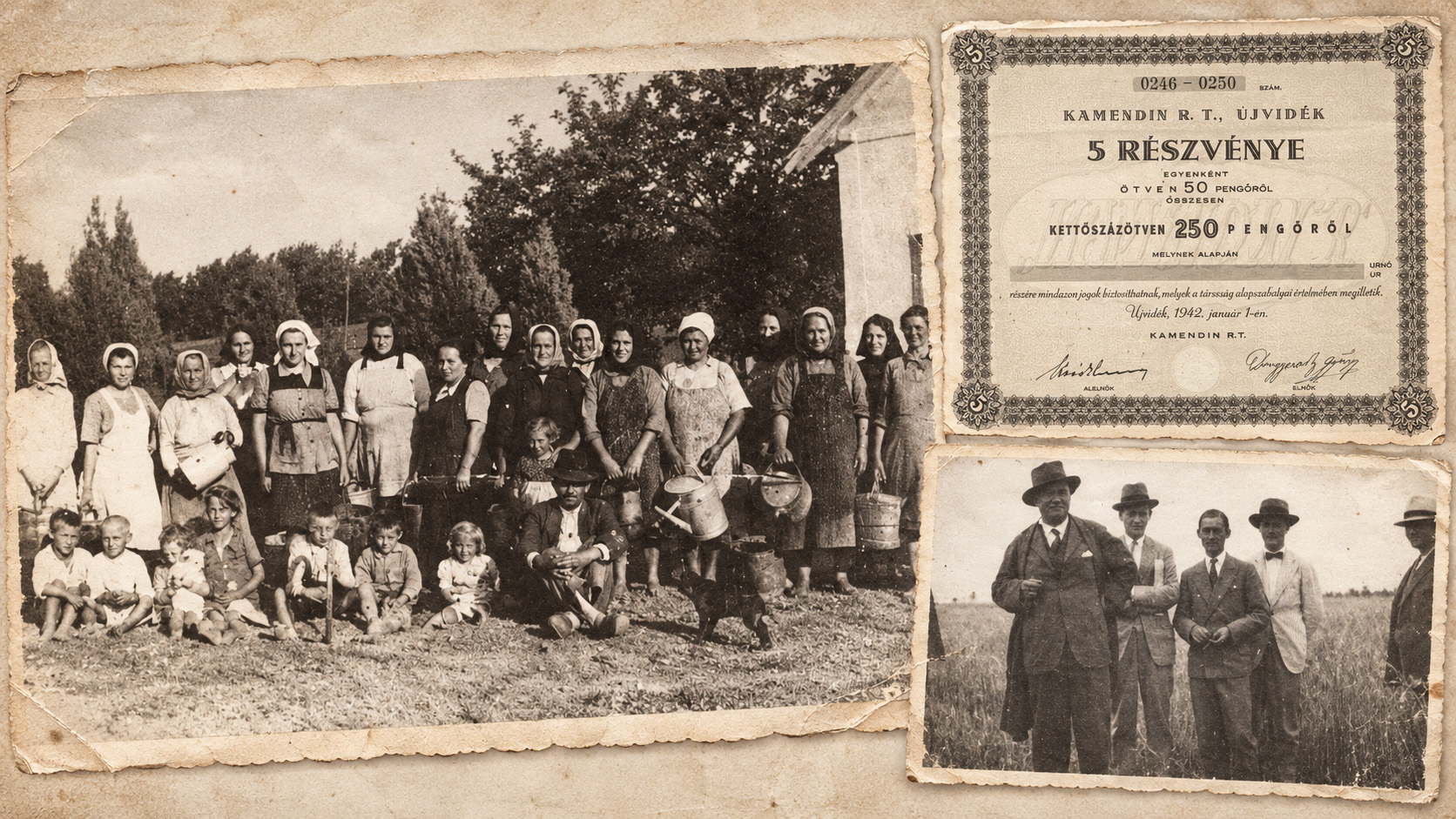
Employees on the estate
At that time, Kamendin had a total of 181 permanent workers and staff members. Its workforce and auxiliary personnel included:
- 13 skilled workers;
- 23 semi-skilled workers;
- 103 unskilled workers;
- six apprentices;
- 14 auxiliary staff members.
The professional and administrative staff consisted of three employees in economics and commerce, three in finance, eight in agriculture, two in veterinary work, five in administration, and one in healthcare.
Most workers were ethnic Hungarians. Of the 13 skilled workers, only one was a Serb. A smaller number of Slovaks also worked on the estate, mainly as seasonal labourers from Kulpin. Hungarians were also overwhelmingly represented among the semi-skilled workers: of the total of 23, 22 were Hungarian.
It is interesting to note that two foreign nationals, both Italian, were also employed during those years. Of the 103 unskilled workers, 44 were men and 59 were women.
The age breakdown recorded 15 workers aged up to 17, 26 aged between 18 and 31, 21 between 31 and 40, 28 between 41 and 55, and 13 over the age of 55.
The ethnic composition of the professional and administrative staff was different: of 22 employees, 16 were Serbs, while the others were Hungarians and members of other ethnic groups.
According to a surviving document, the following people were listed as state employees at Kamendin in early January 1950:
- Engineer Radovan Marković, director.
- Milorad Ćurčić, personnel officer.
- Milan Borozan, inventory bookkeeper.
- Gizela Volker, clerk responsible for the correspondence register, social insurance, and typing.
- Jožef Vetreb, agricultural foreman.
- Engineer Dušan Vojinović, officer.
- Milica Vukašinović, part-time inventory bookkeeper.
- Ilonka Grizer, assistant chief storekeeper.
- Vlajko Grujić, farm operations foreman.
- Jakov Živanović, chief agronomist and estate planner.
- Mancika Grizer, junior bookkeeper.
- Budimir Žikić, deputy livestock manager.
- Vukašin Kovačević, head of accounting.
- Vasilije Lazić, agricultural technician.
- Irena Lokić, hygiene worker.
- Nikola Lokić, veterinary assistant.
- Milutin Milović, supplies officer.
- Vidak Miljković, cashier and enterprise secretary.
- Đura Momčilović, chief storekeeper.
- Jovan Sforcan, labour officer.
- Teodor Sekulski, veterinarian.
- Koviljka Subotić, records clerk.
- Mihalj Tot, livestock officer.
The text states that only director Ivan Milašinović and crop production officer Dušan Vujinović held university degrees at the time.
Livestock numbers and animal health
When Kamendin came under the AOR of the Institute for Agricultural Research, the estate had 6,227 pigs, 307 cattle, 92 horses, and nine donkeys.
The male breeding stock included 14 bulls and 135 boars, while 27 mares, 92 cows, and 730 sows had been selected for breeding. According to the figures given, there were 38 mares, 23 cows, and 40 sows per respective male breeding animal.
Kamendin also had 1,977 head of poultry and 38 beehives.
During 1949, considerable attention was devoted to preventive vaccination. There were 77 vaccinations of horses and 271 vaccinations of cattle against anthrax. In addition, 8,056 simultaneous vaccinations against swine fever, 8,993 vaccinations against swine erysipelas, and 911 against fowl cholera were carried out.
At the end of June 1950, testing for Bang’s disease was also conducted at Kamendin. A report by the estate’s director, engineer Ivan Milašinović, stated:
“Six cows and one heifer tested positive, out of 160 animals whose blood was examined. They were immediately separated and housed at the Mali Kamendin farmstead. Five animals have so far been slaughtered, leaving one heavily pregnant cow and one milking cow. From here, they will be moved to the so-called ‘German farmstead,’ under a shelter, until they recover or are slaughtered.”
In early April of the same year, the number of horses on the estate was increased by a decision of the Agricultural Commission of the Main Executive Committee of the People’s Assembly of the Autonomous Province of Vojvodina.
Eight mares foaled in 1945, with a total value of 96,000 dinars, were transferred from the provincial agricultural estate Crvena zvezda in Kulpin. The text names Fatima, Fauna, Fatinica, Flora, and Frula.
Under the same decision, another thirty mares were transferred to Kamendin without payment. Those named included Freza, Forela, Farba, Frida, and Fleka, foaled in 1945, as well as Hvala, Hazena, Havajka, Hela, Hostija, Herba, Hemina, and Hanesta, foaled in 1947.
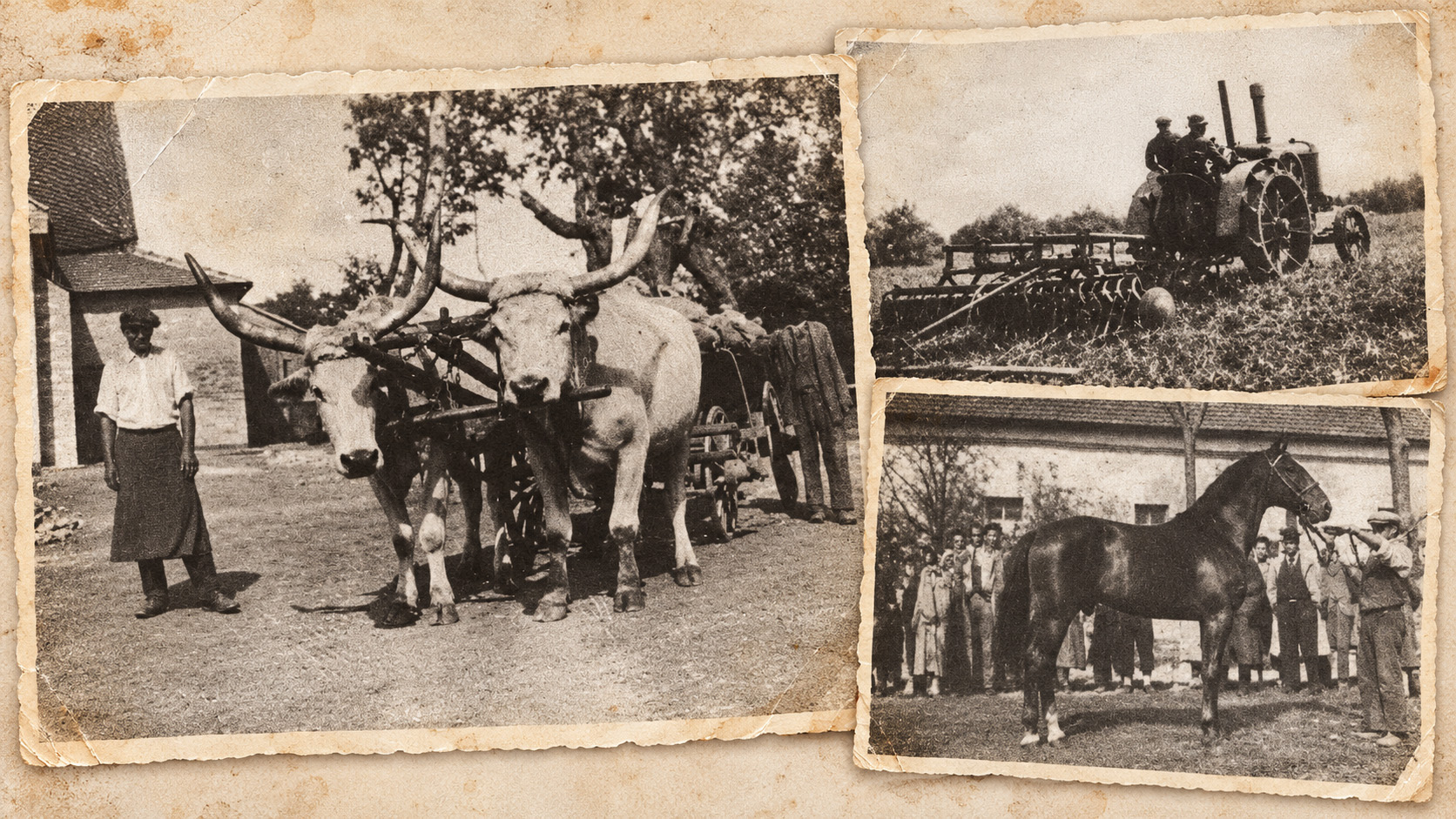
By mid-1950, Kamendin had 157 horses. The breakdown listed eight stallions, 31 stud mares, 69 working horses, eight male and seven female breeding animals under one year old, and eight male and 11 female animals aged between one and two years. The estate also had seven working donkeys and two breeding males.
There were 356 cattle: seven bulls, 147 cows, three working oxen, 58 male and 88 female calves under one year old, and six male and 47 female young cattle between one and two years old.
During May 1950, 27 cows, two calves, and 14 young cattle were sold to other estates. Two calves underwent emergency slaughter, and one died.
Monthly milk production exceeded 7,000 litres. Most of it was used to feed permanent and seasonal workers at Kamendin, as well as workers engaged in constructing buildings on the estate.
At the beginning of May 1950, Kamendin had 69 breeding boars weighing a total of 8,295 kilograms and 499 sows weighing 65,303 kilograms. There were 799 piglets under two months old, 1,037 between two and six months old, 110 older young pigs, and 802 fattening pigs.
During May, five boars and 66 sows were sold for breeding, along with 110 piglets under two months old, four piglets between two and six months old, and 316 fattening pigs. Two sows, eight piglets between two and six months old, 17 older young pigs, and 316 fattening pigs underwent emergency slaughter. The same month also saw substantial piglet mortality, with 140 deaths.
Livestock development and scientific experiments
From mid-1950, efforts to develop livestock production at Kamendin became even more intensive. The newspaper Slobodna Vojvodina recorded:
“The entire collective of the experimental station, all its livestock workers, veterinarians, and agronomists, are striving to fulfil their task as successfully as possible. Todor Sekulski, the station’s veterinarian, and the group of livestock workers under his supervision are applying all their experience to raising pedigree young stock.
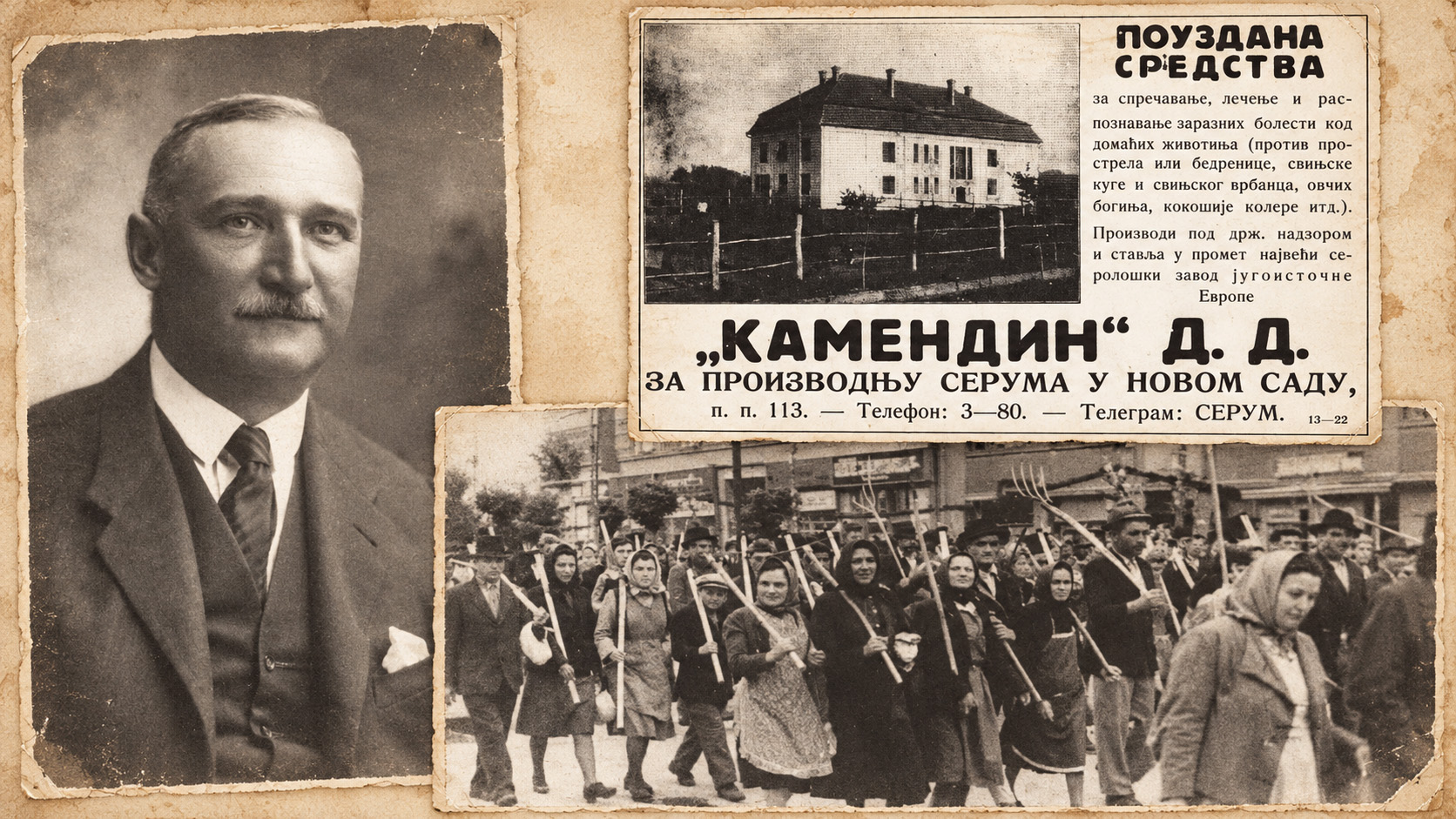
Through their work, they have helped Kamendin supply socialist farms with several hundred excellent pedigree animals. Many cooperatives and state estates have already received substantial numbers of Simmental and Podolian cattle. The station recently established a stud of Nonius horses. Pedigree Mangalica pigs of the Pfeifer type, improved Czech pigs, and other pedigree pigs are raised to establish good breeding herds. Particular attention is devoted to Berkshire and Yorkshire pigs.
In the first half of this year, the station’s collective supplied socialist farms with more than one hundred pedigree breeding boars and sows, 13 young bulls, and a substantial number of pedigree cows. During the first six months of this year, 800 pigs were supplied to Vetserum in Novi Sad for serum production…
Eržebet Belović is particularly distinguished in her work. Through good care, she has succeeded in bringing the calves’ combined weight to 320 kilograms above the planned figure. Ištvan Mitro, one of Kamendin’s best livestock workers, feeds and cares for 16 animals instead of 12. He received a financial reward whose amount was determined ‘by eye.’ It is entirely understandable that Kamendin’s workers would put considerably more effort into fulfilling their production tasks if rewards were allocated properly, as they would have a greater incentive to work.
By raising pedigree livestock and examining its working capabilities and productive benefits, the estate’s veterinarians and other specialists broaden their knowledge and help our scientists test certain scientific principles in practice.
In this way, the experimental station at Kamendin is gradually developing into an Institute for the Improvement of Livestock Production. Engineer Radovan Marković is currently studying the possibilities of accelerated fattening, which would shorten the fattening period while reducing production costs.
Engineer Milivoj Pavlović is examining the effect of protein-rich feed on milk quantity and quality in nine cows. At the same time, he is conducting experiments with ten heifers of the same age and weight to investigate the possibility of replacing grain feed with roughage.
A series of other scientific investigations is being prepared. These will represent our specialists’ contribution to the overall development of livestock production and help the experimental station of the Institute for Agricultural Research develop into an Institute for the Improvement of Livestock Production, the first institution of its kind in our province.”
Crop production and cultivated areas
In 1949, Kamendin’s total agricultural area amounted to 2,344 cadastral jutra, of which 2,191 were arable land and 52 were pasture.
Cereals occupied a total of 1,070 cadastral jutra, industrial crops 47, vegetables 241, fodder crops 821, and other crops 12.
Maize covered the largest area among cereals, at 345 cadastral jutra, followed by winter wheat at 273 and spring oats at 193.
Sugar beet occupied 26 cadastral jutra, paprika for industrial processing 19, and poppies two. Among vegetables, potatoes covered the largest area, at 59 cadastral jutra, followed by peas for grain at 26, onions at 22, and beans at 20.
Substantial areas were also devoted to fodder crops that year. Spring vetch for hay occupied the largest area, at 336 cadastral jutra. Established alfalfa covered 186, spring-sown alfalfa 86, fodder maize 57, and fodder beet 36 cadastral jutra.
Average yields per jutro amounted to 15 metric quintals for wheat and 14 metric quintals for both spring feed barley and malting barley.
In autumn 1950, winter crops were sown on 577 of the estate’s 2,191 cadastral jutra of arable land, while spring sowing in 1951 covered 1,481 cadastral jutra.
The winter sowing included the following crops:
| Crop group | Crop | Area in cadastral jutra |
|---|---|---|
| Cereals | Winter wheat | 210 |
| Cereals | Winter barley | 210 |
| Cereals | Winter rye | 5 |
| Fodder crops | Winter field peas for hay | 80 |
| Fodder crops | Winter field peas for grain | 40 |
| Vegetables | Peas | 1 |
| Vegetables | Spinach | 2 |
| Vegetables | Lettuce | 2 |
| Vegetables | Onions | 1 |
| Vegetables | Garlic | 1 |
Spring cereal sowing included 180 cadastral jutra of spring oats and 480 of maize.
Fodder crops occupied the following areas:
| Crop | Area in cadastral jutra |
|---|---|
| Established alfalfa | 179 |
| Newly sown alfalfa | 66 |
| Vetch for hay | 170 |
| Vetch for seed | 30 |
| Red clover | 60 |
| Sainfoin | 20 |
| Maize for green fodder | 40 |
| Maize for silage | 80 |
| Fodder carrots | 5 |
| Fodder beet | 30 |
| Foxtail millet | 20 |
| Soybeans | 5 |
| Lentils | 5 |
| Grass pea | 5 |
| Sweet clover | 10 |
| Sunflowers | 15 |
| Lupins | 10 |
| Sudan grass | 5 |
| Sweet sorghum | 5 |
The vegetable crops were:
| Crop | Area in cadastral jutra |
|---|---|
| Potatoes | 20 |
| Beans | 10 |
| Tomatoes | 4 |
| Peppers | 3 |
| Onions | 3 |
| Melons and watermelons | 3 |
| Summer cabbage | 2 |
| Peas | 2 |
| Green beans | 1 |
| Cucumbers and courgettes | 1 |
| Other vegetables | 2 |
A further 110 cadastral jutra were reserved for grazing, 13 for the threshing yard, eight for the homestead grounds, and two for a black locust grove.
Labour shortages and agricultural machinery
Like other estates, Kamendin frequently lacked sufficient labour for agricultural work, particularly seasonal labour. It is interesting to note that workers were recruited from as far away as Slovenia.
In September 1949, estates of provincial importance in Vojvodina required 2,635 workers, including 225 for Kamendin.
In a report to the Institute for Agricultural Research, director Radovan Marković warned of this shortage. He stated that the estate would need 150 workers a day during October if all the work was to be completed on time, within twenty-five days.
At the end of 1949, Kamendin had the following machinery and equipment:
- seven tractors, two powered by diesel and five by kerosene;
- one truck with a trailer;
- 55 ploughs, including 11 tractor-drawn and 44 animal-drawn;
- 30 harrows;
- four cultivators;
- 17 seed drills;
- four mowers;
- four reapers;
- three threshing machines;
- three maize shellers;
- two motor-powered hay and straw choppers;
- one cream separator;
- one butter churn;
- four seed-treatment drums;
- 31 animal-drawn carts.
Permanent workers also paid attention to planting fruit trees, which provided additional benefits.
A mid-1950 inventory listed 25 bearing trees and 133 young bearing trees without identifying the fruit species. It also recorded seven bearing and 15 newly planted pear trees, 13 bearing and four non-bearing plum trees, 50 bearing and 50 non-bearing apricot trees, 18 bearing and 68 young cherry trees, and 133 young sour cherry trees.
Participation in the 1949 agricultural exhibition
During 1949, Kamendin’s employees were highly active in preparing for the Second National Agricultural Exhibition and Fair of Breeding Livestock and Poultry in Novi Sad, held from September 11 to 26.
The surviving entry forms for the crop varieties exhibited by Kamendin provide a range of interesting information.
That year, for example, the estate grew Bankut 205 winter wheat on 38 hectares, achieving a yield of 26 metric quintals per hectare. The preceding crops were peas, lentils, and beans. Superphosphate was applied at a rate of 150 kilograms per jutro, the seed was selected and treated, and sowing took place from October 26 to 28, 1948.
That year saw a considerable increase in enthusiasm for work and competitive efforts to achieve greater output and better-quality production on the estate.
The explanation accompanying the award presented to Đura Legenj at the Novi Sad exhibition described him as one of the best workers and brigade leaders. His brigade consisted of 15 workers caring for 2,320 fattening pigs. The citation praised the entire brigade’s commitment to animal care and cleanliness, as well as its success in achieving a higher fat percentage in the pigs while using less feed.
Two other Kamendin workers, Joška Boroš and Đura Klipec, also received awards at the exhibition.
A reporter for Vojvođanski poljoprivrednik noted that Kamendin displayed a model of its farm in the socialist-sector pavilion. Many buildings had already been constructed, and the entire complex was expected to be completed in the following years.
“It will be an entire integrated livestock enterprise,” the reporter stated, “where piglets will be raised at one end and fattened pigs dispatched from the other to meet the needs of our working people. The entire production area of the estate is separated from the residential area, significantly improving health conditions for the workers. These are the prospects for the development of state estates and, through them, all socialist agricultural enterprises and the numerous peasant labour cooperatives of our people’s republic.”
Construction and improved housing conditions
The completion of existing buildings and construction of new facilities at Kamendin continued in the following years.
In 1949, the Planning Commission of the Autonomous Province of Vojvodina allocated 504.3 million dinars for capital construction on estates of provincial importance. Kamendin received a total of 33,341,000 dinars: 21,920,000 for capital construction and 11,421,000 for housing and social amenities.
The following year, 1950, the investment plan provided considerably less funding. Kamendin received 13,181,000 dinars, of which 12,681,000 were for construction work and 500,000 for equipment.
In 1951, funding was lower still, with a stated total of 9,454,000 dinars. Capital construction was allocated 8,030,000 dinars, with the following purposes listed:
| Purpose | Amount in dinars |
|---|---|
| Agricultural produce storehouse | 1,140,000 |
| One cowshed | 440,000 |
| One stable for foals | 3,106,000 |
| Three feed-preparation kitchens for fattening livestock | 834,000 |
| One silo tower | 260,000 |
| One water tower | 600,000 |
| One farrowing house with 60 pens | 366,000 |
| Two fattening houses for bacon pigs | 764,000 |
A further 1,515,000 dinars was listed for the construction and completion of housing and social facilities.
The greatest amount of construction at Kamendin took place during 1949, thanks to the considerable efforts of permanent workers and financial assistance from People’s Front organizations. Particularly important was the fact that every permanent worker thereafter had a separate house, with substantially better living conditions than before.
Production difficulties and financial conditions
In the late 1940s and early 1950s, production at Kamendin was affected by a range of circumstances.
The economic blockade during Yugoslavia’s conflict with the Soviet Union and the countries of the Information Bureau intensified the transfer of accumulated resources from agriculture to industry. Very low agricultural prices and, above all, drought, particularly severe in 1950, substantially affected production at Kamendin as well.
According to meteorological measurements taken on the estate, precipitation in 1950 amounted to 28 millimetres in February, 71 in April, 24 in June, 61 in July, 19 in August, 44 in September, and 107 in October.
In mid-1951, a commission of the Agricultural and Forestry Commission of the Main Executive Committee of the People’s Assembly of the Autonomous Province of Vojvodina examined Kamendin’s final accounts for 1948, 1949, and 1950.
According to its report, the value of inventories in 1948 amounted to 5,977,433.50 dinars. For 1949, the supplied text gives the unclear figure “15.71.45,45.”
Working capital amounted to:
| Year | Working capital in dinars |
|---|---|
| 1948 | 2,896,479.38 |
| 1949 | 4,996,479.38 |
| 1950 | 5,024,463.00 |
The estate’s losses were:
| Year | Loss in dinars |
|---|---|
| 1948 | 5,026,287.37 |
| 1949 | 24,814,584.96 |
| 1950 | 3,309,900.80 |
Following its review, the commission proposed that the Main Executive Committee of the People’s Assembly of the Autonomous Province of Vojvodina cover the stated total loss of 33,650,782.22 dinars from the provincial budget.
Activities of the People’s Front
The late 1940s and early 1950s saw increased activity by socio-political organizations at Kamendin. As on many other state estates, these organizations operated under difficult conditions and faced numerous obstacles.
The People’s Front organization at Kamendin began operating more independently and intensively on January 19, 1950. Until then, it had formed part of the People’s Front organization in Čenej.
After only a few months of independent activity, Kamendin’s People’s Front organization was declared the best in the Novi Sad district. The explanation stated:
“During the first quarter, eight meetings were held to discuss tasks and members’ proposals for improving production. Political briefings are held regularly.
During the first quarter, 104 Front members participated in Marxist study circles, while 40 attended a four-month evening course in Marxism.
Among other forms of ideological work, the greatest attention was devoted to reading groups. These involved 88 Front members, meaning that all members of the Front on this estate were included in various forms of political and educational work.”
The report continued:
“During this year, Front members participated mainly in local campaigns. In accordance with the afforestation plan, they planted more than 5,000 black locust saplings, whitewashed 3,200 trees, and constructed 104 metres of pavement. During Scrap Metal Collection Week, they collected more than 5,000 kilograms of scrap iron and other waste materials.
Front members on the Kamendin estate assist the people’s authorities in carrying out their tasks. To help fulfil the lard procurement plan, they collected 123 kilograms of pork lard and handed it over to the People’s Committee.
Membership dues are collected regularly every month. In this short period alone, the basic People’s Front organization at the provincial agricultural estate Kamendin has achieved considerable success and serves as an example to other basic organizations in the Novi Sad district.”
The Party organization and cultural and educational work
In 1949, Kamendin’s Party unit had 14 members and 13 candidate members. Although this might appear to be a small number, it was not insignificant compared with other estates in Vojvodina.
Political activity was particularly pronounced during the conflict with the Information Bureau, when the Party and People’s Front organizations arranged several political lectures and public meetings on the estate.
At the beginning of September 1949, an Agitprop commission was elected at Kamendin, headed by Jovan Svorcan. Vidak Miljković was responsible for ideological and political work within the Communist Party of Yugoslavia, while Božo Cvetković was responsible for work within the People’s Front. Dušan Dobrosavljević was appointed head of press activities and auditor, Mikloš Šajdik was responsible for cultural and educational work, and Božidar Tomić for technical and organizational work.
The socio-political organizations also attended to workers’ cultural, educational, and professional development. The library held 350 books, and two workers were taught to read and write during 1949.
Six lectures were held — two professional and four political — with a recorded total attendance of 940. Kamendin had 28 radio sets at the time, and daily newspapers and other publications were read regularly.
Mass organizations also worked to raise workers’ living standards, improve housing and everyday conditions on the estate, and ensure regular supplies.
Earnings and migration to the towns
Like other state agricultural estates, Kamendin experienced considerable labour turnover.
Permanent workers on state estates earned more than other agricultural workers. Their average annual earnings amounted to 33,807 dinars, including payments in kind. Nevertheless, this income covered only 67 per cent of their living needs.
This encouraged workers to move to towns and seek industrial employment, which offered the possibility of higher earnings, fixed and shorter working hours, better living conditions, improved educational opportunities for children, and more organized supplies.
Seasonal workers were in an even more difficult position. They worked for only five to six months a year and had average annual earnings of 18,578 dinars.
The introduction of workers’ self-management
From mid-1950, following the adoption of the Basic Law on the Management of State Economic Enterprises and Higher Economic Associations by Work Collectives, Kamendin’s socio-political organizations began preparing elections for the first bodies of workers’ self-management.
With the election of the first Workers’ Council, chaired by Karolj Varga, and the Management Board on September 14, 1950, the estate also embarked on the path of workers’ self-management.
At the end of the same year, on December 22, a decision of the Main Executive Committee of the People’s Assembly of the Autonomous Province of Vojvodina abolished the Experimental Poultry Breeding Station in Kisač as an independent economic enterprise of provincial importance. All its property, rights, and obligations were transferred to Kamendin.
The provincial agricultural estate Kamendin, headquartered in Zmajevo, thereafter began serving as the experimental farm of the Provincial Institute for Animal Husbandry. It had 2,450 cadastral jutra of land, to which 360 cadastral jutra belonging to the Irmovo poultry station were added.
Under professional supervision, various experiments aimed at improving livestock production were intensified. They examined animal feeding, rearing, care, and housing. Selective breeding was carried out, and pedigree animals were sold to peasant labour cooperatives and other estates.
Experiments were also conducted to improve the harvesting, preparation, and storage of animal feed. Fodder crop production continued, as did the supply of surplus seed and commercial agricultural produce.
Organizational changes from 1954 to 1990
From the mid-1950s, Kamendin changed its name and organizational structure several times, sharing the fate of many other enterprises and institutions in Vojvodina.
By a decision of the Executive Council of the People’s Assembly of the Autonomous Province of Vojvodina dated March 2, 1954, it merged with the Provincial Institute for Animal Husbandry. Together, they were designated a self-financing institution under the name Institute for Animal Husbandry, headquartered in Novi Sad.
Five years later, the institution became the Institute for Cattle Husbandry. In 1961, it changed its name again to the Institute for Animal Husbandry Novi Sad.
In 1975, the Institute for Animal Husbandry was constituted as a work organization with two basic organizations of associated labour:
- the Basic Organization of Associated Labour for Scientific Research;
- the Basic Organization of Associated Labour, Kamendin Experimental Production Estate, Sirig.
In 1976, this work organization was removed from the commercial register and became part of the Faculty of Agriculture in Novi Sad. The Kamendin Experimental Agricultural Estate operated as a legal entity within the Faculty until December 1989.
On December 12, 1989, Kamendin again changed its name, becoming the Socially Owned Enterprise Kamendin Agricultural Estate, Sirig.
Under the Law on Social Capital, on December 21, 1990, the enterprise’s status was changed from social ownership to private ownership under the name Joint-Stock Company Kamendin Agricultural Estate, headquartered in Sirig.
Comments