



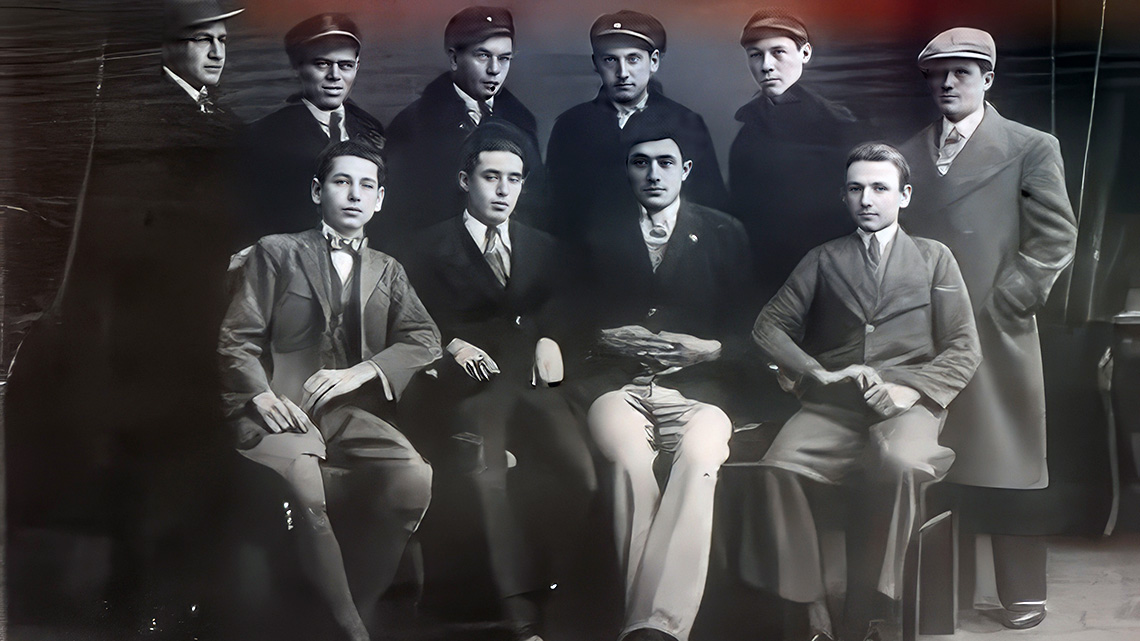
Following the dissolution of Građanski and considering that Soko was active only during school holidays, there arose a need for a permanent club that would include the youth residing in Novi Bečej. This need was further emphasized as Novi Bečej’s high school had older students capable of playing in the first team of a football club.
In 1924, Novi Bečej established a full-fledged gymnasium, transferred from Zombolj after it was ceded to Romania in 1923. By 1925 and 1926, many students from Kikinda, Bečkerek, and other towns returned to Novi Bečej to continue their education. Additionally, the high school attracted students from Stari Bečej, Kumane, Melenci, Beodra, Dragutinovo (now Novo Miloševo), and even from Kikinda and Bečkerek despite those towns already having established state high schools. Some of these students were skilled football players who quickly became key members of Jedinstvo’s first team.
It seems Novi Bečej was destined for pharmacists to lead its football scene. Following Bizek, who had founded TSE, Soko, and Građanski, pharmacist Borce Stanojević entered the stage in 1927. Originally from Belgrade, Stanojević owned a pharmacy in Novi Bečej and was elected president of the Sport Club Jedinstvo’s founding assembly. Other board members included Milan Matejić (merchant), Milan Kiprović (confectioner), Emil Lazić (barber’s assistant), Polak Šari (grain trader), Lipot Hauzer (clerk), and others.
Unlike Građanski, Jedinstvo faced financial difficulties from its inception. The club’s initial equipment, black jerseys with a red stripe across the chest and back, remained in use until 1934. Blue jerseys were purchased in 1930, but aside from two or three footballs, that was all the investment in Jedinstvo’s equipment during its first seven years. Spectator attendance mirrored the declining numbers seen before Građanski’s dissolution, with match revenues often insufficient to cover expenses.
Jedinstvo’s players consisted of a few former Građanski members and students of the Novi Bečej high school. In its first year, according to Emil Lazić, the team fielded: Pancer, Sergej Viktor, Horvat, Šandor Čanji, Laza Kiselički, Rada Ranisavljević, Ćaća, Nestor Tašin, Boško Tašin, Toša Pinćin, Milorad Majin, and Voja Krstonošić.
Until 1929, Jedinstvo played friendly matches against clubs like BAK from Bačko Gradište, Hajduk from Beodra, Tesla and Jadran from Stari Bečej, and some from Veliki Bečkerek. Upon joining the Football Association, Jedinstvo was placed in the Velika Kikinda group alongside teams like Srbija, Kosovo, and Radnički from Kikinda, as well as Delija from Mokrin. In the autumn of 1929, Jedinstvo defeated Delija in Mokrin 1:0 with a goal scored by Krstonošić using his hand—unnoticed by the referee but seen by the audience, leading to stones being thrown at the team’s bus. They also beat Radnički from Kikinda in Novi Bečej 4:1, sparking hopes for further success in the spring season of 1930.
The year 1929 was successful for Jedinstvo in friendlies as well, as new players, including Cvetko Tabački from Veliki Bečkerek, Ida Šibul from Velika Kikinda, and Boško Vrebalov from Melenci, joined the team. Despite this youthful lineup, all the younger players were talented and skilled technicians. One standout was Franja Bernauer, who became one of the team’s best players.
Jedinstvo hosted matches during the Pentecost holiday in 1929, defeating Tesla from Stari Bečej 7:1 and a combined team from Obilić of Veliki Bečkerek 5:4. Voja Krstonošić scored ten goals over the two matches, cementing his reputation as a remarkable striker.
The spring of 1930 brought challenges due to flooding in Gradište, rendering the field unplayable until May. The lack of training impacted Jedinstvo’s performance, leading to disappointing results. By the end of the season, the team finished in second-to-last place, with Delija overtaking them due to better goal difference.
Over the following years, Jedinstvo struggled to improve its standings. Despite talent like Voja Krstonošić, who had been trained under a professional coach in Kikinda, the team faced challenges in retaining players and maintaining consistent training.
Jedinstvo’s story is one of determination, struggle, and resilience, reflecting the early days of football in Novi Bečej. Despite its eventual dissolution in 1934/35, the club left a lasting legacy in the region’s football history.
Comments