
I must immediately apologize to readers for emphasizing and perhaps overstating my attachment to my homeland in each of my books where I recount my memories. I have no other explanation except that my childhood, youth, and the abundance of experiences from that time have been crucial in my elderly creative endeavors. The landscapes, fields, meadows, and the inhabitants, in particular, are the world of my modest artistic and literary creations.
Explore the history and personalities of Novi Bečej through articles detailing significant events and notable residents. Lazar Mečkić's book provides profound insights into memoirs, historical research, and local memories.
Share this page on social media
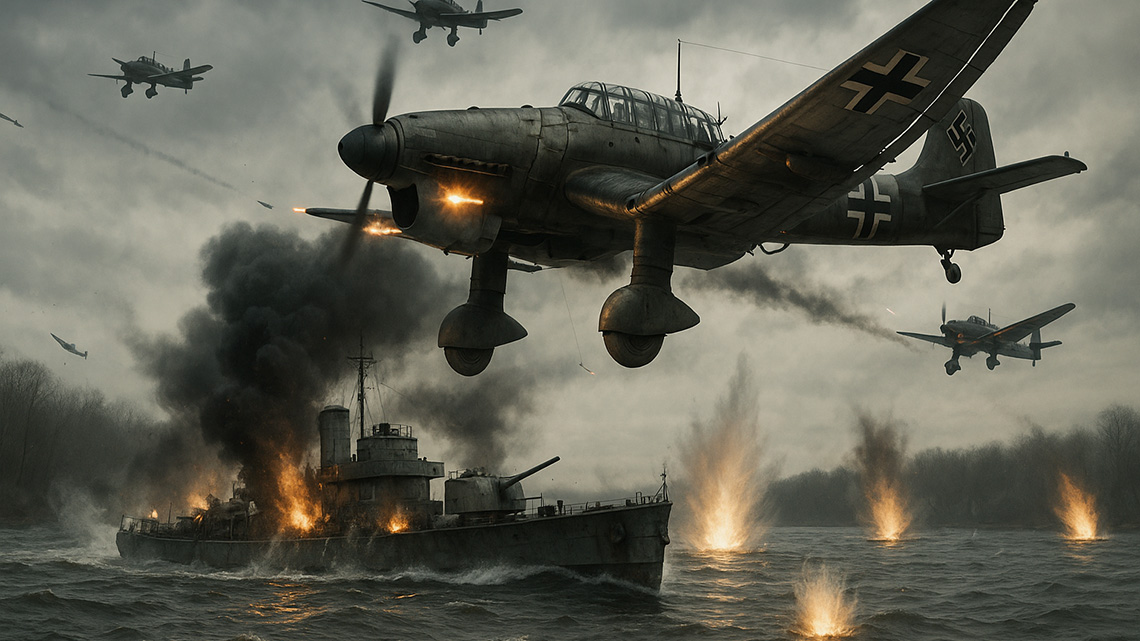
The feat of Aleksandar Berić, commander of the monitor "Drava," during the April war of 1941, went unnoticed by the authorities in Novi Bečej – no one initiated a move to declare this great man a national hero. Therefore, with this text, I want to remind everyone of his heroism, adding further information about his life, military career, and family – details that were unavailable when I published the book Novi Bečej and Vranjevo Through History in 1989.
In the history of Serbian theater, a special place is reserved for Alexander - Šandor Popović from Novi Bečej (Vranjevo). Unfortunately, he was not given the opportunity to further demonstrate himself, or perhaps he was so dynamic that he simply could not confine himself to a narrower creative field. Despite this, for what he did for Serbian theater during its formative period, we believe that he has not been given the appropriate place in cultural history, especially in the history of Serbian theater.
Antonije Brežovski founded an amateur troupe in Novi Bečej in 1830, which was enthusiastically embraced by all Serbian merchants, artisans, and wealthier farmers. Prior to the emergence of this Novi Bečej troupe, no earlier troupe had lasted as long (18 years) from 1830 to 1848 or had such a broad repertoire. This was not the case later either, until the appearance of the Flying Amateur Theater in Novi Sad in 1837.
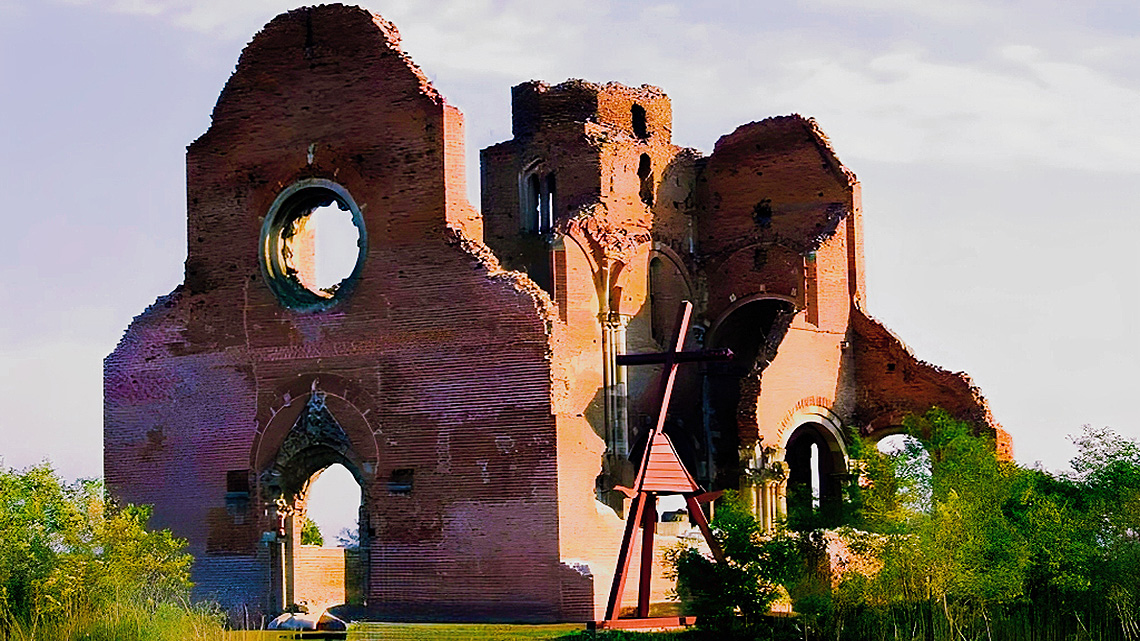
Arača: about 14 kilometers northeast of Novi Bečej - 4 kilometers right from the Novi Bečej - Novo Miloševo road, lies Arača, one of the significant monuments of medieval architecture in Vojvodina. From the former settlement, only the ruins of a Romanesque church - a basilica of the Dalmatian - Benedictine type - remain. This church was destroyed twice but has preserved some of its massive parts to this day, which can serve to study the cultural history of our people. Consequently, it was placed under state protection (by the decision of the Republican Institute for the Protection of Cultural Monuments No. 217 dated February 16, 1968).
The first traces of permanent human settlements in our area date back to the Neolithic (New Stone Age) as well as later periods. This was certainly influenced by the presence of large rivers (the Tisza), where people had favorable living conditions (water, fertile land, hunting and fishing, communications, etc.). Traces of such settlements in our area have been discovered in several places (Borđoš, Matejski Brod, Garajevac in Novi Bečej, the Selo šport site in Kumane, etc.), and one of them (Matejski Brod), as a significant archaeological site, was placed under state protection (by the decision of the Institute for the Protection and Scientific Study of Cultural Monuments NRS No. 1652/50 from December 30, 1950).
There were many enthusiasts of song and theatrical art in Novi Bečej and Vranjevo. The youth nurtured both song and theatrical art, considering that there was an exceptionally rich tradition of theatrical art. Among the several amateur theater troupes that existed over time, the "Napredak" Amateur Theater Troupe in Vranjevo holds a special place. This troupe operated from 1901 until the occupation of Yugoslavia during World War II.
Branković Avram (Vranjevo-Novi Bečej, 1799 - Brusnica 1831) Father of Antonije, a food merchant, mother Alka. He attended primary school in his hometown, high school in Sr. Karlovci and Szeged, Hungarian law studies in Pest and Köszeg (1819), and Austrian law studies in Vienna. He spent some time as a jurat in Pest, collaborating notably with J. Milovuk. He translated civic poems from Hungarian and German. He was acquainted with V. Karadžić and in 1828 moved with him to Serbia. Several of his works remained unpublished, of which two are known for certain: "Socrates and His Cup of Poison" and "Constantinople or History of the War with the Turks." The printing of the latter book was prohibited. In Brusnica, he worked as a district clerk in 1831. It was there, while speaking in cheerful company, that a fatal stroke befell him.
Before the appearance of steam engines for towing ships, humans or horse-drawn wagons were used. Downstream, ships traveled using the power of the water flow, aided by oars and sails. However, upstream or with heavier cargo, sails provided little assistance; instead, hired laborers powered by human strength or carters using horse-drawn wagons were used for this purpose. The workforce for towing boats was mostly recruited from among convicts. Towing a boat was extremely difficult and exhausting work, and few managed to survive their sentence.
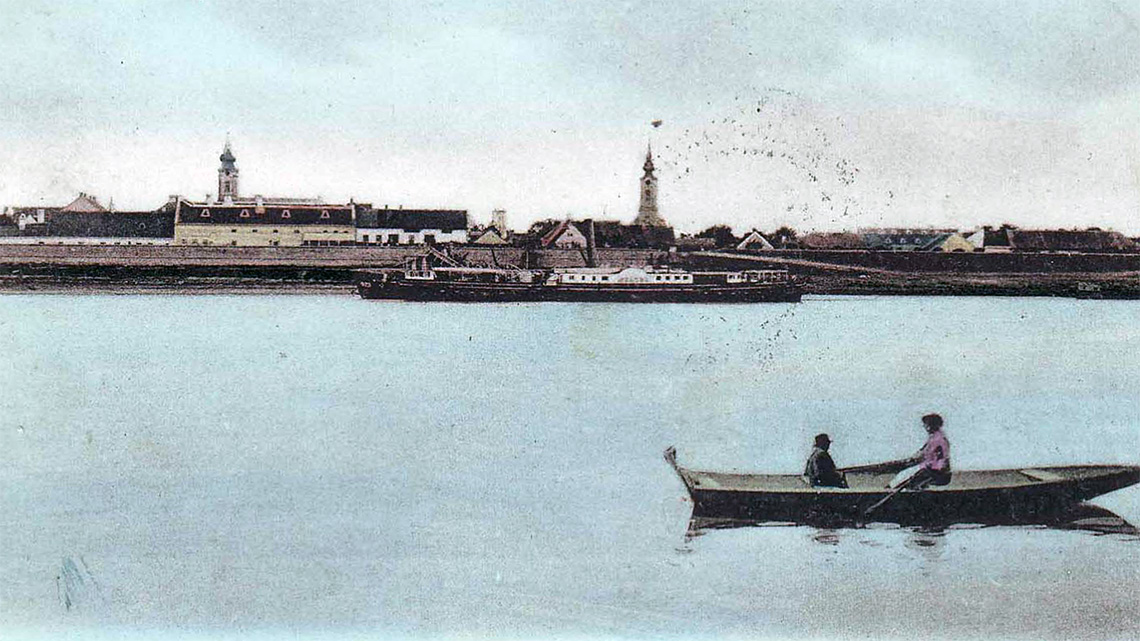
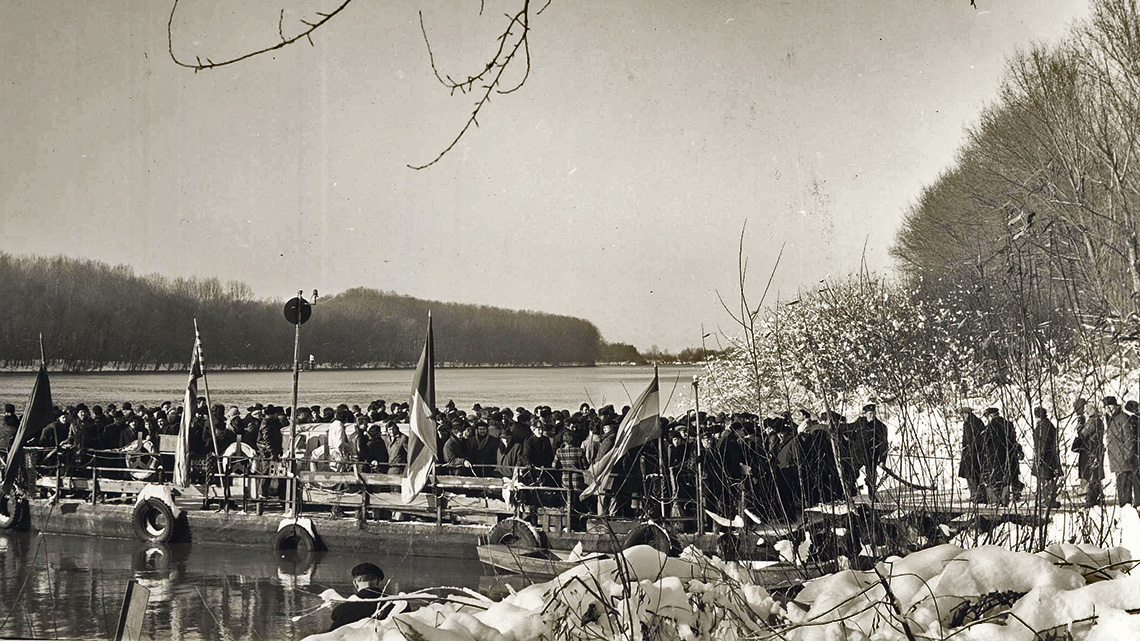
River passenger traffic held a significant place for Novi Bečej. In addition to the ferry and horse-drawn carriage transport to Stari Bečej, there was a smaller boat that made about ten round trips daily between Novi and Stari Bečej. This boat operated for many years, continuing even after World War II until the construction of the dam on the Tisa River and the bridge for road traffic in 1977. It connected the two neighboring towns of Novi and Stari Bečej and served as an important link between Srednji Banat and Srednja Bačka between the wars.
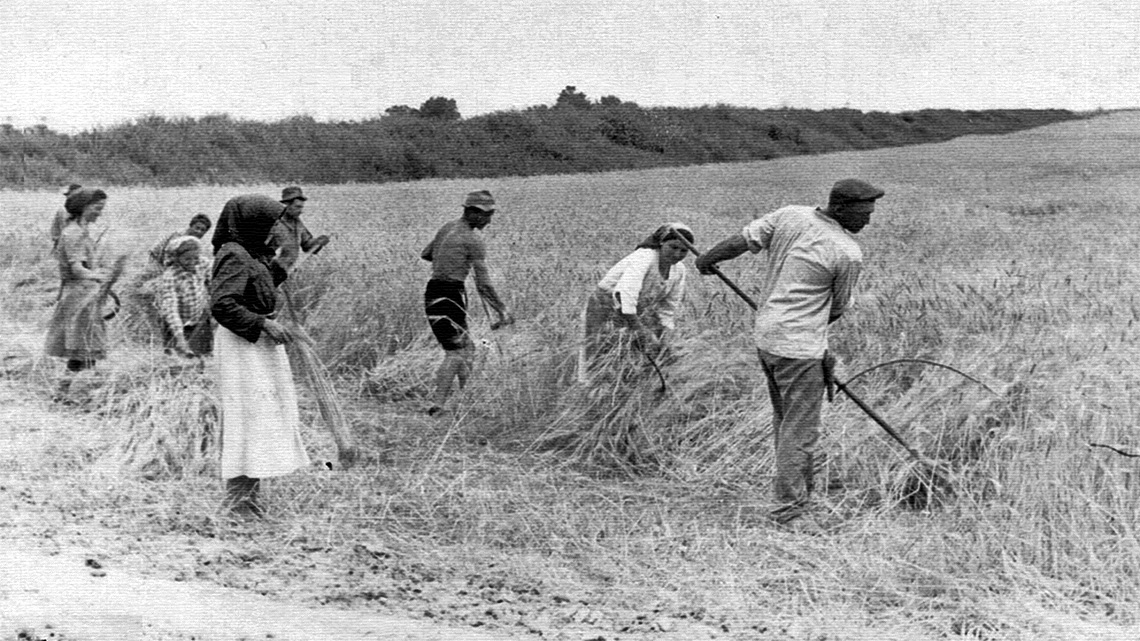
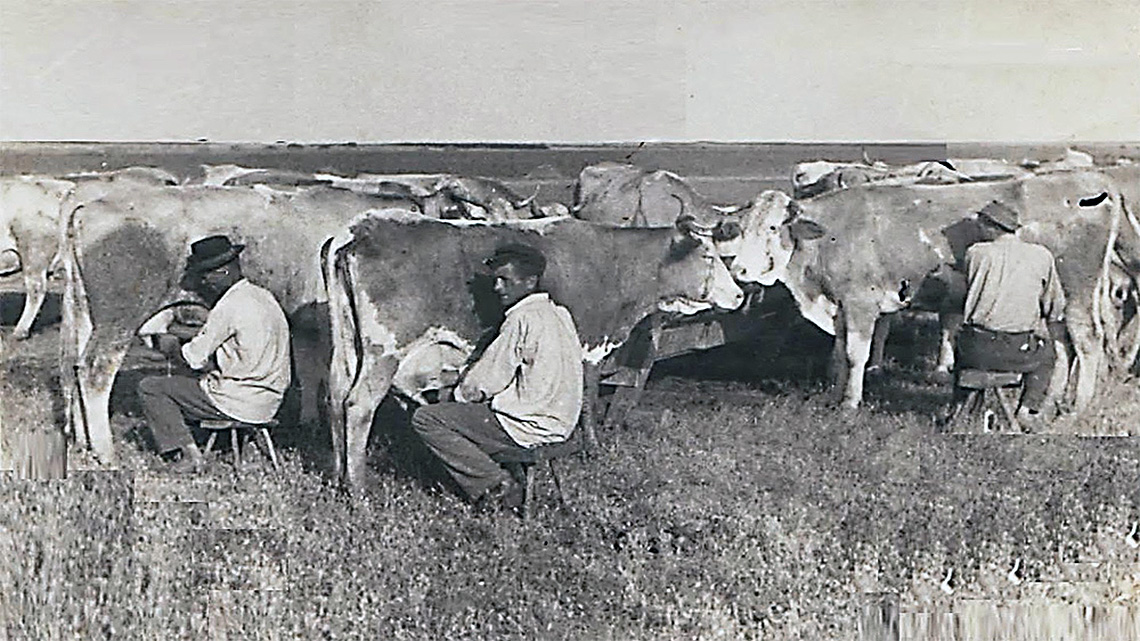
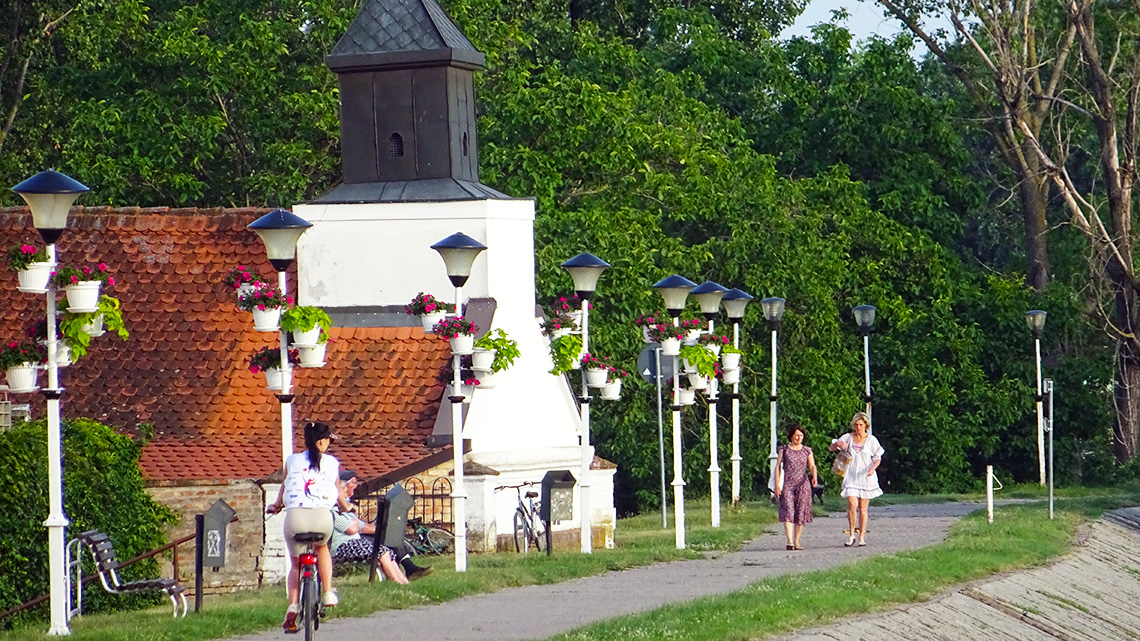
Whenever I think of Novi Bečej and Vranjevo, I simply see the beauty of the humble, yet so dear to me, houses and streets, and our blessed fields and meadows. These meadows and pastures inspire in me a desire to create. In my mind, I often see herds of horses or cattle, and in the distance, the outlines of farmhouses on Berek, just as they looked in the days of my youth. I enjoy this thinking and admire those beauties.
It should be known that Novi Bečej and Vranjevo, at that time (the time of my youth in the 1930s-40s), had 3-4,000 horses, just as many, if not more, cows and oxen, 7-8,000 sheep, thousands of pigs, and the number of birds and their diversity, then and now, I cannot even begin to estimate.
I never thought much about the tasks of the village herd keepers while living in Novi Bečej with my farmer parents. It was entirely normal when, in the evening, the cattle guard—whom we called the chief guardian—opened the gate and shouted from the street:
- Housewife, will the dog come out? Is anyone there? When someone answered, he would announce, "Yesterday, your cow, Ruža, was taken out." This meant that from that day on, one should calculate when it would calve. For this good news, the guardian would be rewarded with a shot of rakija and possibly a larger piece of bread and some bacon. This was similarly announced by the swineherd, the horse keeper, and every other village herd guardian about any change in the horses, oxen, sheep, or other livestock entrusted to them.
In the second half of the 19th century, with the construction of the railway, grain trading in Novi Bečej experienced a catastrophic decline. Novi Bečej's role in grain trade sharply diminished, while Kikinda's significance as a market center for grain rapidly increased. What happened to Novi Bečej also occurred to all other river ports and grain trading that thrived alongside them. In his article 'The Decline of Danube-Sava Trade Due to the Advent of the Railway,' Mita Kostić says, among other things:
Boža was artistically gifted in many ways. He was one of the best amateur actors, an excellent singer, musician, painter-scenographer, and sign writer. Overall, he was a great artist, a cheerful person, and an outstanding entertainer. He had great acting potential, which is why Arsen Pecarski, a well-known connoisseur of theater arts and director of the Amateur Ensemble "Napredak" from Vranjevo, chose him as his closest associate.
Dr. Davidović was a lawyer, and in his later years, a Royal Notary Public. In the first two decades of the 20th century, there was hardly any association or organization, especially Serbian ones, in whose administration he was not one of the most prominent members, often serving as president. There was no public event or manifestation where he did not, with his eloquent speeches or insightful lectures, inform the audience about the significance of the respective event.
"Head of the Department of Radiotherapy at the General State Hospital; published works on diagnostics and radiotherapy, collaborator for 'SVEZNANJE' - 'Sveznanje' p. 898.
He was born in Vranjevo on September 6, 1887. He graduated from high school in Novi Sad in 1906. He studied medicine in Budapest and completed it in 1912 as a Tekelianum scholar. He specialized in radiology, was a private docent, and the head of the radiology department at the General State Hospital in Belgrade. He died in Belgrade in 1842 of cancer. In 1912, he served his state military service in Boka Kotorska and as soon as the Balkan War broke out, he immediately went to Montenegro, where he served voluntarily until the end of the war, after which he went to Paris for specialization in radiology.
Dr. Stevan Vasić was born in Ruma in 1810 and died in Vranjevo on January 24, 1875. Vasa Stajić writes the following about him: He was born in Ruma in 1810, where his father was a merchant. Stevan completed his education as follows: he attended the first grade in Ruma, the second grade and the first semester of the third grade in Karlovci in 1824-25, completed the third, fourth, and fifth grades in Novi Sad, and in 1832, he taught in Serbia. In 1833-34, at the age of 24, he finished the sixth grade in V. Varad. It is not known where he studied philosophy, but he completed his medical studies in Pest as a Tekelijanac.
In preparation for writing the book "PLAM ZAVIČAJA" in 1990, I wanted to illustrate it with as many photographs as possible, which would remind readers of the beauties of the homeland. Not just remind them but also supplement the text with images to convey what I could not faithfully describe with words.
I especially wanted to immortalize the "great ship." I contacted the Directorate of Yugoslav River Shipping to allow me to photocopy or give me a photograph of the former ship "PRINCESS JELENA," which, during my youth in the 1930s, sailed between Belgrade and Senta. The ship would dock at the Novi Bečej port around 8 PM daily, either coming from Belgrade to Senta or the other way around.
Dr. Zdelar was the first director of the Novi Bečej private gymnasium from 1924 to 1926. The residents of Novi Bečej owe Dr. Zdelar gratitude for obtaining a private gymnasium with public rights, equivalent to all state gymnasiums. Upon learning that Žombolj would be handed over to Romania by the end of 1923, cultural activists from Novi Bečej and Vranjevo submitted a request to the Minister of Education of the Kingdom of Serbs, Croats, and Slovenes to relocate the local state Serbian gymnasium to Novi Bečej.
Ilija was an exceptional figure in Novi Bečej during his lifetime. He was born into a poor working-class family in Vranjevo. His father worked at "Polet" with a modest salary but managed to provide Ilija with the conditions for education. In 1957, Ilija graduated from the Faculty of Economics in Belgrade as the best student of his generation. Modest, even shy, he managed to become the best speaker among his peers. Many of them enjoyed listening to his answers during exams at the faculty.
Irena was the daughter of the renowned cultural worker from Pančevo, Nikola Đurković, who was also a son-in-law of Novi Bečej. After the death of her parents, Irena moved in with her aunt Julijana Petrović and uncle Mladen Petrović, a municipal clerk, in Novi Bečej.
Upon arriving in Novi Bečej, she began giving private lessons in piano and German. Many residents of Novi Bečej and Vranjevo owe it to Aunt Irena—as everyone called her—that they mastered the German language and piano training.
Until her death, she was a private tutor. With the income from private lessons and her modest needs, she managed to save a significant amount of money, which she left to her friend Jana Kiselički, with whom she had lived for the last twenty years. Grandma-Jana, as we called this elderly woman, buried her and erected this beautiful tombstone.
He graduated from the higher pedagogical academy and for many years worked as a teacher and then as the long-standing principal of the "Miloje Čiplić" Elementary School in Novi Bečej.
Imre was an excellent organizer and a measured and kind-hearted school principal, loved by the children and respected by his colleagues at the school. Everyone respected him as a great hard worker and a thoughtful leader and organizer of every endeavor.
In the church, the iconostasis with icons, wall paintings, two thrones (seats), as well as some applied art objects (two large wooden candelabras, a brass servant, and a silver pentacle) have been placed under legal protection.
It is believed that the iconostasis was created by Jeftimije Popović or Stefan Gavrilović, and that the wall paintings were done by Pavle Simić around 1858.
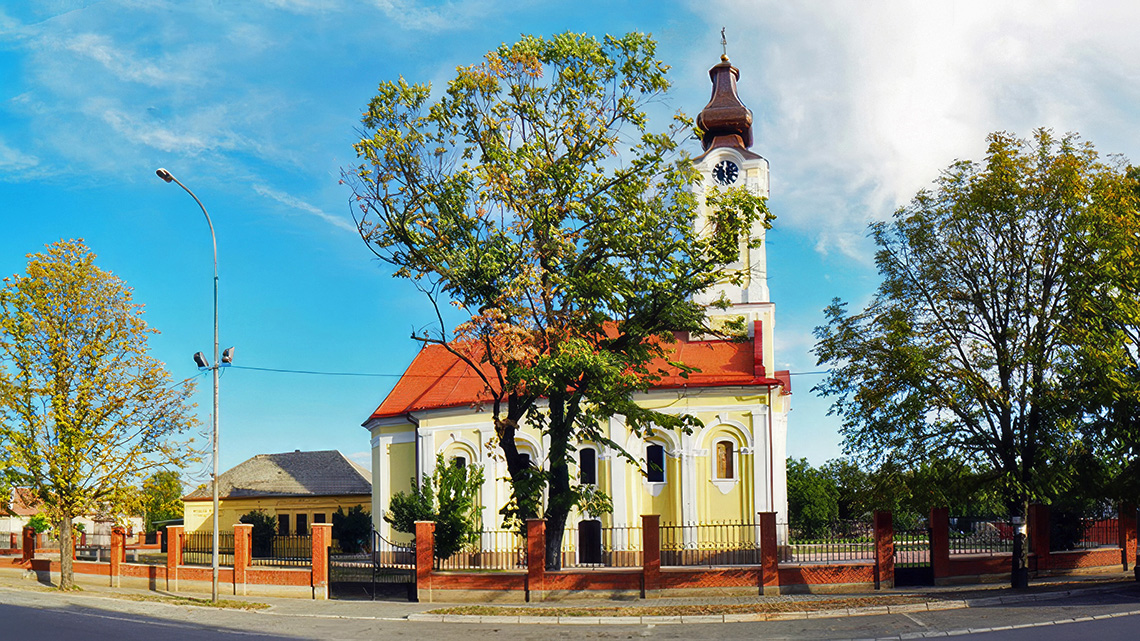
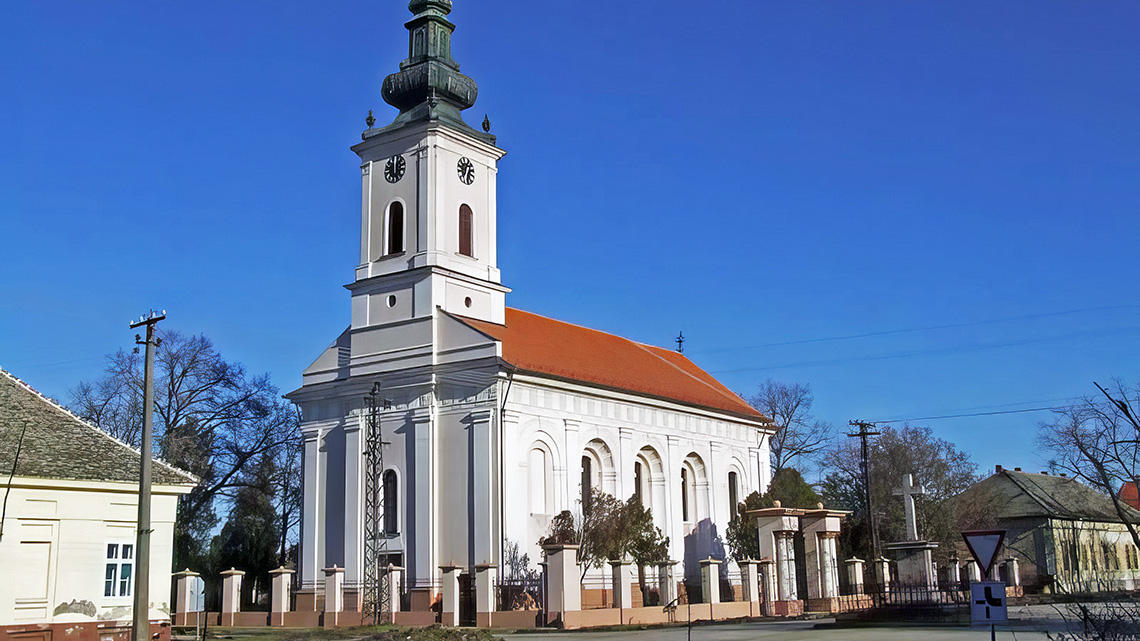
The Serbian Orthodox Church (Church of Saint John the Baptist) in Vranjevo - Novi Bečej, located at 63 Josif Marinković Street, has been protected by law along with its iconostasis and other items (thrones with choirs, movable icons, chasubles, and others), by the provincial institute for the protection of cultural monuments, according to decision number 939/67 of April 1, 1968, and number 581 of October 7, 1966.
Alongside the local ship "mala lađa" (small boat), there was a beautiful ship that we were as proud of as if it were our own—a passenger ship of the Yugoslav River Shipping that sailed between Belgrade and Senta. One day from Belgrade to Senta, and the next day from Senta to Belgrade. The ship would dock daily in Novi Bečej around 8 PM, whether it was heading from Belgrade to Senta or from Senta to Belgrade. We called this ship "velika lađa" (big boat). It was a beautiful ship with an even more beautiful name—"Princess Jelena," perhaps one of the most beautiful ships of the Yugoslav River Shipping.
Trade in Hungary up to the mid-19th century was, according to the data of Hungarian statistician Fenješ Elek published in 1847, "poor and small." An exception is Vojvodina and places in other regions where Serb craftsmen and merchants lived.
Elek highlights Torontal County, which he describes as:
"Torontal is at present (referring to the year 1846 - note by LM) the most developed, the wealthiest county of our homeland; it has the most beautiful and richest towns in the whole country. Craftsmen are numerous in the towns. The trade in Torontal is of very great importance, supported by the Tisa, Mureș, and Begej rivers..."
It is well known that Novi Bečej, until the mid-19th century, before the construction of the railway lines Temišvar-Kikinda-Segedin, Temišvar-Vršac-Bela Crkva-Bazjaš, was the main trading center for wheat. However, by the second half of the 19th century, it experienced a sharp decline. In this area of economic prosperity, Mr. Kasaš makes a mistake.
On page 15 of the book "Greetings from Novi Bečej," it is written:
"In the second half of the 19th century, these two settlements (referring to Novi Bečej and Vranjevo - LM), using the grain trade boom, became among the most important and significant centers for wheat trade in the entire Austro-Hungarian monarchy, but with deep-rooted traditions from the past. This fact led to the development of a wealthy bourgeois class, and in these places, the construction of mills began, banks opened, and many commercial and craft shops, sawmills, etc., emerged."
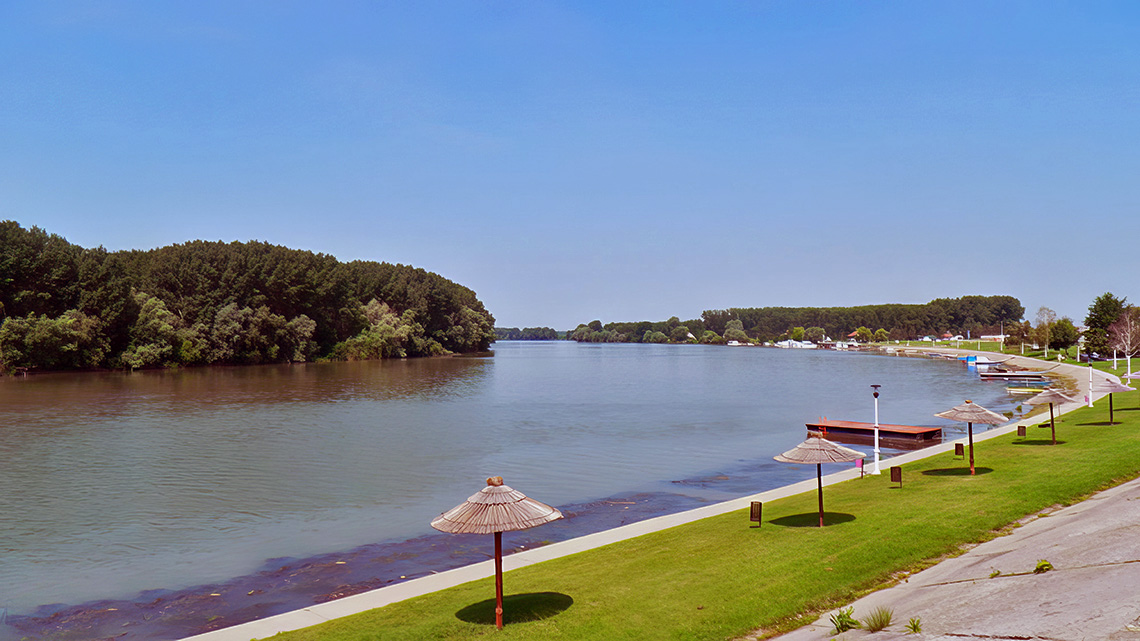
The chapel known as Manastir is located in Novi Bečej on the left bank of the Tisa River (near the current cargo dock) and was likely built at the beginning of the 18th century. According to tradition, the chapel was constructed on the site of an earlier Serbian monastery that was burned down by the Turks when they arrived in Potisje.
Our compatriot, Engineer Vasa Popović, in his book "The Development of Water Management in the Area of Novi Bečej from 1845 to 1995," provides a wealth of data and beautiful photographs. Among other things, he writes:
"From 1850 to 1875, works on regulating the Tisza River were carried out and completed with the excavation of 110 channels. By the end of the century, an additional 2 channels were excavated, so that the regulation of the Tisza was completed with 112 channels, totaling 136 km, which shortened the original course of the Tisza River to 966 km." Before the regulation, its length was 1,419 km.
After World War I, Giga was among the wealthiest citizens of Novi Bečej. In addition to a large bookstore and a modest printing press established back in 1898, he owned a large flower garden at the end of the main street in Novi Bečej, where a dozen beautiful residential buildings were constructed after World War II, as well as a farm with about thirty acres of land. Until his death, he was the director of the Tursko-Bečejska Savings Bank, whose capital exceeded a million dinars.