



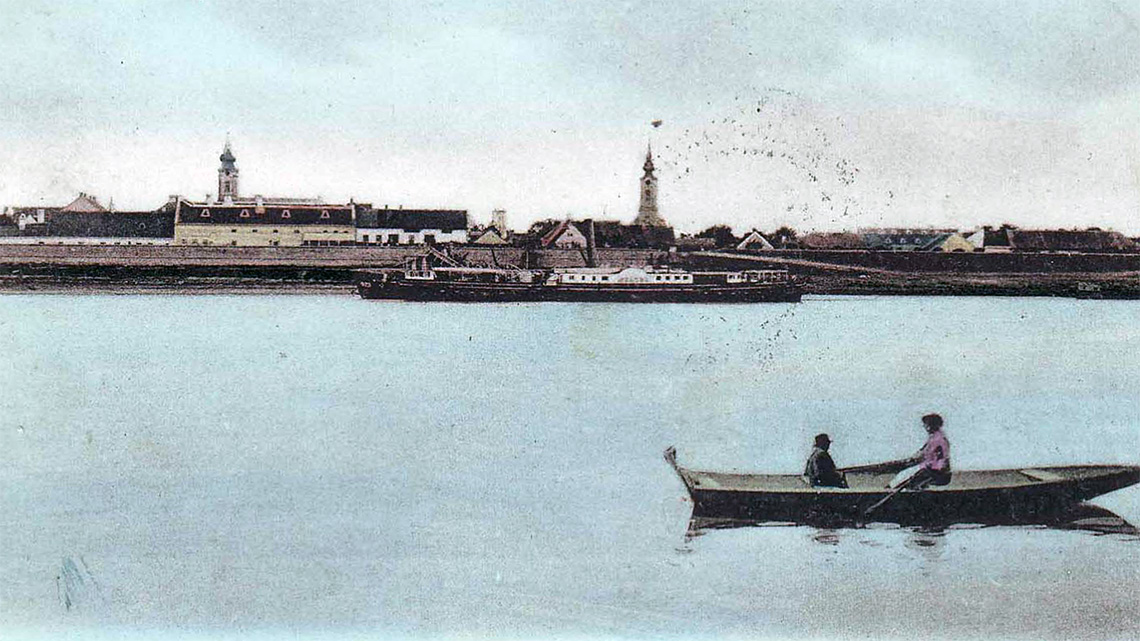
In the second half of the 19th century, with the construction of the railway, grain trading in Novi Bečej experienced a catastrophic decline. Novi Bečej's role in grain trade sharply diminished, while Kikinda's significance as a market center for grain rapidly increased. What happened to Novi Bečej also occurred to all other river ports and grain trading that thrived alongside them. In his article 'The Decline of Danube-Sava Trade Due to the Advent of the Railway,' Mita Kostić says, among other things:
'The previous trade route via waterways Tisa-Danube-Sava-Kupa to Karlovac and further by cart to the Adriatic Sea lost all value and was quickly abandoned... This shift of Hungarian-Slavic wheat exports from water transport to a much faster, shorter, easier, and cheaper railway route significantly damaged Serbian grain traders, ship owners, shipbuilders, boatmen, and carters, especially in major ports, leading to a reorientation in their business and changes in social structure.'
In addition to the construction of the railway, the transition of grain trading from Serbs to Jews was influenced by the rapid development of production and commerce in general, where individual capital was insufficient to keep up with the accelerated turnover of capital. This led to a new function of money – money as credit capital. Although it had a functional role earlier, it was marginal; now, it became a prerequisite for further economic progress. For this purpose, banks and savings institutions 'sprouted,' connecting capital on broad geographic and territorial scales. Under these conditions, grain trading in Novi Bečej passed from Serbs to Jews.

Comments