



In preparation for the parliamentary elections of 1927, the local party organization in Kumane continued its political activities despite persecution and arrests. On August 2, a large political rally was held, featuring speeches by Nikola Kovačević from Belgrade and Zdravko Granić from Melenci.
In his speech, Kovačević criticized the constitutional system, the National Assembly, and the Law on the Protection of Public Security and Order in the State. He strongly condemned all bourgeois political parties, challenged the government's policy toward Albania, and advocated the establishment of relations with the Soviet Union.
The gathering attracted a large audience and remained in the memories of many residents of Kumane. Voja Stančić-Laskov later recalled that, while speaking about war, Nikola Kovačević stated:
“We do not want war, but if it is imposed upon us, we will wage war against war. If the bourgeoisie fights with cannons, we will respond in the same manner.”
Dr. Sima Marković, the lead candidate of the Independent Workers’ List, representing the Republican Alliance of Workers and Peasants for the Velika Kikinda–Zrenjanin electoral district, also held a rally in Kumane. The meeting took place in the courtyard of Ilija Sekulić’s tavern but was dispersed by the gendarmerie before it concluded.
A few days later, on August 14, Marković organized another rally in Melenci. A report preserved by the local gendarmerie station recommended that Dr. Sima Marković and his associates be prohibited from holding public meetings within the district, particularly in Kumane and Melenci, which the authorities regarded as “communist strongholds.” The report concluded that Marković was “openly conducting communist agitation and calling on the people to offer energetic resistance to the authorities.”
Marković was arrested on September 4 during a rally in Elemir but managed to escape.
During the election campaign, communists distributed a proclamation issued by the Executive Committee of the Republican Alliance of Workers and Peasants. The document urged workers, peasants, craftsmen, and small property owners not to support the Radical Party, the Democrats, or the Socialists, but instead to vote for the list headed by Dr. Sima Marković, who was presented as a defender of working people’s rights.
At the same time, the Ministry of the Interior instructed regional authorities to closely monitor communist activities and propaganda. The circular stated that the Communist Party of Yugoslavia (KPJ), although banned under the Law on the Protection of Public Security and Order in the State, had intensified its efforts ahead of the elections by attempting to place its representatives in the National Assembly through organizations operating under different names, such as the Republican Alliance of Workers and Peasants, Independent Trade Unions, and Independent Workers.
Despite these repressive measures, communists in Kumane used election rallies as a public platform to criticize the policies of the ruling regime, highlight the difficult social conditions of workers and peasants, and expose corruption, exploitation, and other forms of social injustice. As a result, the rallies attracted large audiences, but they were also frequently dispersed by the authorities.
According to statistics from the National Assembly, Kumane had 1,684 registered voters, of whom 970 participated in the election, representing 57 percent of the electorate. Dr. Sima Marković, candidate of the Independent Workers and Republican Alliance of Workers and Peasants list, received 323 votes. The candidate of the Agrarian Party, engineer Dimitrije Vujić, won 277 votes, while Dr. Momčilo Ninčić, candidate of the ruling Radical Party, received only 205 votes.
The circumstances surrounding the election were particularly noteworthy. According to testimonies, police sergeant Svetozar Stojanov-Punga, acting on the orders of the district chief, placed a cap full of voting balls into the Radical Party ballot box before voting even began in order to improve the party’s electoral result.
Preparations for the municipal elections in Kumane began in August 1927. The local KPJ organization sought to secure the election of supporters who had not yet been identified or compromised in the eyes of the local authorities.
A total of 40 municipal councilors were elected. The Independent Workers’ List won 17 seats with the support of 344 voters. Blagoje Stančić, a participant in the October Revolution, was elected municipal president, while Lazar Brančić and Žarko Milankov became vice presidents. Other elected councilors included Steva Radišić, Kariton Buletin, and Svetozar Ćurčić.
Immediately after the election, however, the district chief annulled the mandates of all councilors elected from the Independent Workers and Peasants list, claiming that they were communists. Similar cases occurred in other parts of Vojvodina.
The residents of Kumane appealed to the State Council in Belgrade, which upheld the election results on the grounds that the elected councilors did not formally belong to the Communist Party. Nevertheless, the political circumstances of the time prevented communists from taking control of the municipal administration. As a result, the State Council’s decision remained largely symbolic, while members of the Radical Party assumed control of the local government and appointed Đura Radin as municipal president.
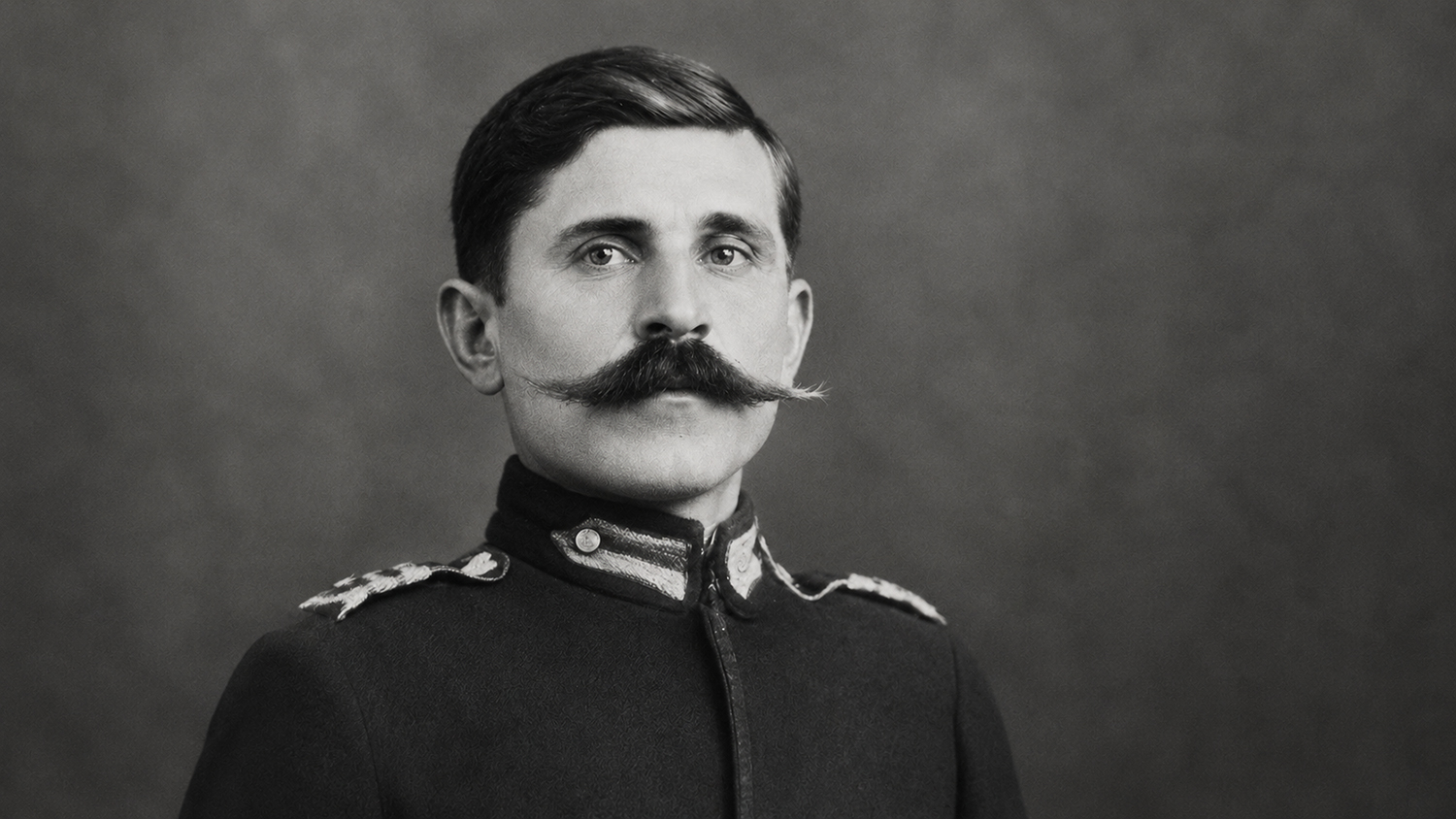
Pictured: Lazar Brančić, a member of the Communist Party of Yugoslavia (KPJ) since 1927.
Comments