



After the Obznana proclamation of 1920, the authorities banned the activities of SKOJ, the revolutionary youth organization of the working class, which also gathered a significant number of rural young people. Despite frequent police raids and arrests, the organization was re-established in Kuman in 1923 and continued to operate illegally until the dictatorship of 1929.
Another strong center of communist activity was the Association for the Education of Young People, known in the village as “Prosveta.” It was founded in the spring of 1924 with the goal of encouraging the self-education of youth. Its activities were legal and conducted according to approved statutes.
Work and Activities
Meetings were held in the primary school building, at the location of today’s post office. Young people gathered almost every evening and on Sunday mornings to discuss cultural, educational, political, and economic topics.
At the founding assembly, a managing board was elected. The first president was Stevan Baračkov, followed by Steva Stanisavljev, while the vice presidents were Sava Milankov (Živanov) and later Vita Trifunjagić. A monthly membership fee of two dinars was used to purchase literature.
Thanks to the activity of communists and youth activists—among them Jovan Veselinov, Steva Petrović, Slavko Strajnić-Bađa, Slavko Miškov, Maksa Kovačev, Sava Strajnić, Milorad Odžić, and Zoran Strajnić—the work of this legal association contributed to strengthening the workers’ movement.
The Association maintained a reading room with a lending library. Communists used it to circulate banned books, illegal newspapers, and party materials. Books were acquired through membership fees, voluntary donations, and income from events and sports matches.
Cultural and Social Life
Courses and lectures were organized for educational purposes. A choir section was formed, led by Joca Milankov Cicvarin. Within the sports section operated the football club “Radnički,” as well as the anti-alcohol society “Sober Youth,” whose members included Stevan and Ljuba Petrović, Jovan Veselinov, Lazar Mirčetić, Svetozar Solarov, Maksa Kovačev, Voja Stančić, and others.
Events were widely attended. Women also participated in the drama and choir sections. Among the most active before 1925 were Jagoda and Neva Tatić, Ljubica Cucii, Mila and Jovanka Đorđević, Leposava Zokić, Sanda Marković, Katica Milankov-Cicvarin, and Zorka Baračkov-Keka, and later Milica Blažić, Neva Petrović, Kova Mečkić, and others. Thanks to the Association’s political work—hidden behind cultural activities—three women from this circle were admitted to the party organization in 1927.
Reaction of the Authorities
The regime soon realized that the activities of NRPJ were carried out under the influence and leadership of KPJ. On July 11, 1924, the deputy prefect of the Torontal-Tamiš County issued an order to district authorities and police to dissolve all communist organizations under any name, considering them illegal extensions of the KPJ. Meetings, conferences, and the distribution of communist publications were strictly prohibited.
In September 1924, the authorities organized a conference in Zrenjanin of so-called representatives of the rural poor from Banat, where the “Union of Agrarian Brotherhoods Karađorđe” was established. Attempts by the regime to separate the rural proletariat from the KPJ may have succeeded in some Banat villages, but not in Kuman.
Social and Economic Context
The people of Kuman clearly saw that agrarian reform had not fulfilled its promises. Many poor peasants did not receive the land they were promised, and those who owned small plots were burdened by debts, taxes, and obligations. Exploitation by landowners, exporters, and middlemen grew steadily, further strengthening workers’ and peasants’ movements.
Conclusion
The Association for the Education of Young People in Kuman played an important role in the cultural, social, and political life of the village during the interwar period. Although formally dedicated to youth education, it became a center for progressive ideas and the strengthening of the workers’ movement. Despite pressure and bans from the authorities, its work left a lasting mark on the political and social development of Kuman and the wider Banat region.
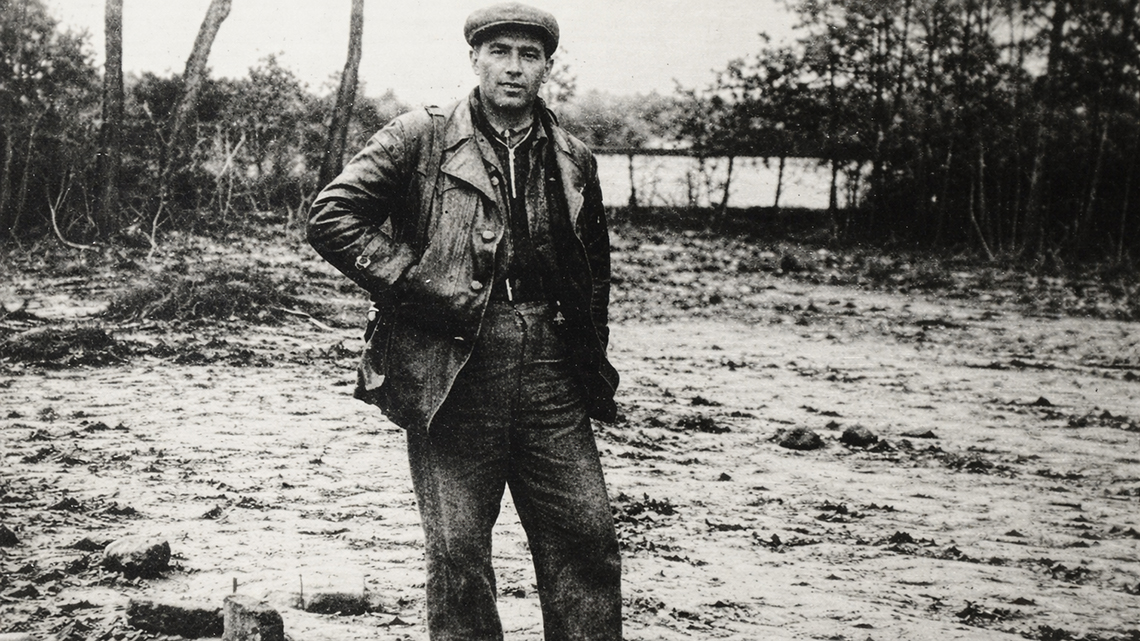
1. Jovan Veselinov, after escaping from the Mitrovica penitentiary, remained in Srem and became an organizer of the uprising and the leader of the People’s Liberation Struggle in Vojvodina
Comments