



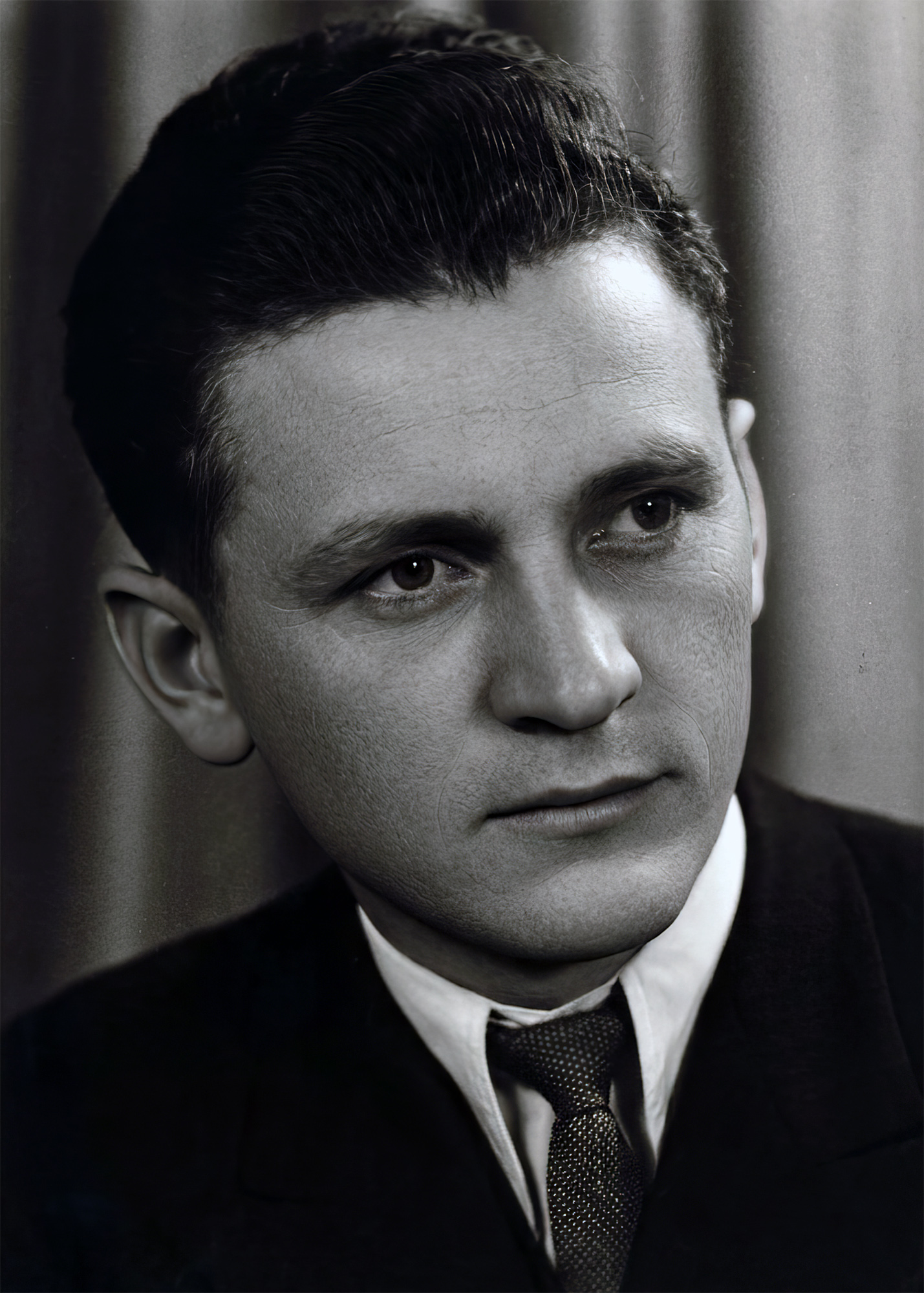
Ilija was an exceptional figure in Novi Bečej during his lifetime. He was born into a poor working-class family in Vranjevo. His father worked at "Polet" with a modest salary but managed to provide Ilija with the conditions for education. In 1957, Ilija graduated from the Faculty of Economics in Belgrade as the best student of his generation. Modest, even shy, he managed to become the best speaker among his peers. Many of them enjoyed listening to his answers during exams at the faculty.
After finishing his studies, he stayed in Novi Bečej, where he worked from 1957 to 1959 as the head of a department in the Agricultural Combine "Biserno Ostrvo." His intellectual qualities and diligence soon made him stand out to the economic leaders of the Municipality as a capable young economist, and by 1960, he was appointed general director of the largest enterprise in Novi Bečej, the Building Ceramics Industry "Polet." At that time, "Polet" was a company with rather outdated technology. The production process was mainly based on manual labor, exclusively producing tiles and bricks. With such work techniques, it employed 350 mostly semi-skilled and unskilled workers.
Under Ilija's leadership, "Polet" developed into a modern industrial enterprise with automated production and an enriched assortment of more valuable and complex ceramic products. This development and modernization continued, so "Polet" became a true giant in the production of building ceramics in the former Yugoslavia, with 1,250 employees.
Despite his exceptional modesty, Ilija's successes at "Polet" made him a prominent industrialist in the construction materials industry of Yugoslavia. He was elected president of the Board of Directors of the Business Association of the Construction Materials Industry of Yugoslavia and soon after, president of the Council for Construction and the Construction Materials Industry of the Chamber of Commerce of Yugoslavia. Besides these functions in federal bodies, he was also a long-time member and even president of the editorial board of the magazine "Izgradnja."
In addition to his work at "Polet" and Yugoslav organizations, his social activities in Novi Bečej were of great significance. He served as vice president of the Municipality for two terms. He performed this role parallel to his work at "Polet," with great success, as if it were his only and permanent employment. During his tenure as vice president, Novi Bečej recorded significant results not only in the economy but also in the construction of social facilities, roads, and more.
For his tireless and selfless work, he was repeatedly decorated and praised.
Comments