



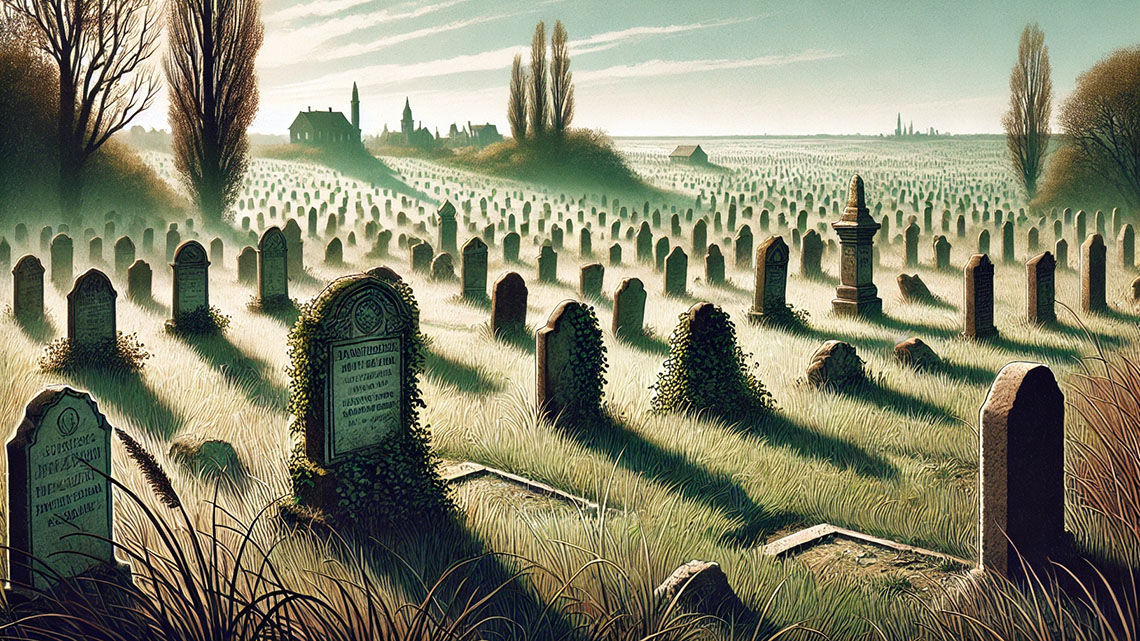
It wasn’t my idea to record the memories of our Novi Bečej and Vranjevo cemeteries. In early 1996, a plan was initiated in Novi Bečej to make a list of graves belonging to distinguished individuals at our cemeteries. Branislav – Bata Kiselički reached out to me, asking which graves I thought should be included. I dictated to him, over the phone, the names that came to mind at the time, with a promise to send him a more comprehensive list, which I eventually did.
However, the execution of this plan was interrupted. After several months, I approached Bata again about the list of graves, and his response was: “It seems the idea was abandoned since no one is doing anything about it.” I heard a similar response from Pišta Sekeres in early June 1997.
I know, dear readers, you might wonder why this explanation was necessary. My answer is that I didn’t want it to seem like I was "stealing" someone else’s idea or trying to take credit for it. No, I emphasize that this was not my idea, but it is my wish to pick it up where it was left off. Through this writing, I hope to encourage those responsible to realize their vision. To issue a memorial that would honor those whose graves deserve to be preserved, for, as the poet says: “These graves are not pits, but cradles of new strength.”
Here, I’ve highlighted only a few graves of our esteemed fellow citizens, who I believe should be saved from oblivion. These are the people I remembered. Some of them have already been forgotten, as they have no close relatives alive, or their family is far from Novi Bečej. Though they were once the most prominent citizens, their graves are neglected and overgrown with weeds. I’m thinking here of the graves of the Rohonci family, who greatly contributed to the development of Novi Bečej’s economy, with one member being a long-serving representative in the Hungarian Parliament for the Novi Bečej district. Then, there’s the distinguished intellectual family Ištvanfi, whose monument has been demolished and broken. A similar fate has befallen the tomb of the wealthy Šoljmoš family. However, luckily, it has been taken over by the family of the early-deceased Novi Bečej doctor, Dr. Bela Farkaš, who is also buried there, and the tomb is well maintained today. Elemer Šoljmoš built a beautiful mansion on the Tisa quay, which was a symbol of Novi Bečej but was demolished about ten years ago by the order of our urban planners to make way for a new health center.
There are quite a few people who have left a significant legacy in Novi Bečej, yet their graves are unknown, like Jovan Knežević, the founder of the first Serbian theater, Mihajlo – Mija Vlaškalin, a lawyer and classmate of the most prominent Serbs in Hungary, and the first to be buried in today’s Vranjevo cemetery; and then, there are the wealthy grain traders and cultural workers Dimitrije Papić and Živko Nedeljković, among others. These were the most distinguished citizens of our two towns, and it was believed that their contributions would remain unforgettable to fellow citizens. Yet, a veil of oblivion has covered their graves, making them difficult, or even impossible, to find.
I fear that this selection, based on personal memory and knowledge, may provoke dissatisfaction, perhaps even anger, from those who believe their deceased relatives with similar, or even greater, merits have been omitted. I accept such criticism, not to cleverly evade it (as they say, “to admit is to be half forgiven”), but I sincerely admit that this selection is based on personal recollection without consulting those who know more than I do. My aim is to inspire the relevant authorities to bring their noble idea to life. On the other hand, given the nature of this book, I limited myself to only about ten distinguished individuals.
Unfortunately, all graves, sooner or later, will fall into oblivion, as their relatives pass away, making it even more necessary to prevent their memory from being consumed by the inevitable embrace of forgetfulness.
The surest way to prevent this is by publishing a beautiful memorial book in which, alongside the gravestones, there would be photographs and short biographies of the distinguished deceased. Such a book must be the result of conscientious work in selecting these honored individuals. The committee appointed for this task must consult not only intellectuals but also older ordinary citizens who remember a great deal. Then, they should systematize the deceased by their professions during their lifetimes: educators, doctors, priests, lawyers, farmers, craftsmen by trade, merchants, social and recreational figures—athletes, theater, and music workers, etc. From each of these groups, they should select those who should not be forgotten. After making such a selection, comparisons should be made between those chosen from different professions to ensure that equal criteria were used. This selection must also take into account data from books, archives, and museums.
Such a book (memorial) would be no less valuable than any other book about Novi Bečej published so far. It would be a unique history. Just as Karolj Andre’s book Greetings from Novi Bečej preserved the beauty of Novi Bečej through old postcards, this memorial book would preserve the memory of the distinguished individuals of Novi Bečej and Vranjevo. They deserve this, as their initiatives and actions created, or at least laid the foundation for, the beauties we enjoy today.
Someone once said, "The dead do not know what has remained of their work and name, but that does not absolve the living from the obligation to preserve their works and names, at least some of them.
Comments