



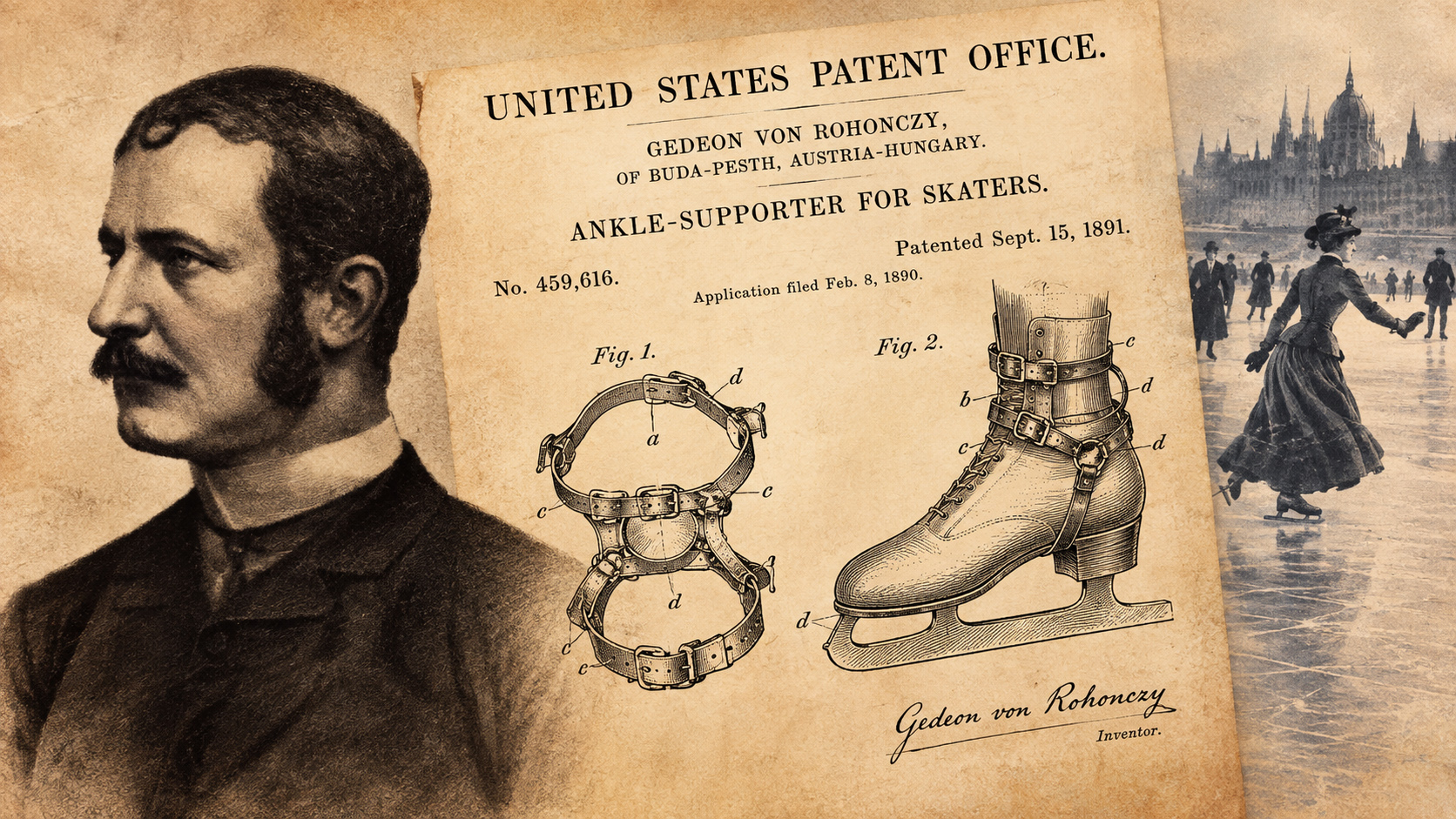
Gedeon Rohonci (1852–1929), a landowner from Törökbecse (present-day Novi Bečej), politician, horse breeder, sports official and inventor, was a man whose life encompassed far more fields than one might assume from his role as the owner of a large estate on Pearl Island (Biserno ostrvo).
Rohonci was born on January 15, 1852, in Budapest. After losing his parents at an early age, his education and upbringing were overseen by his grandmother Ilona and his maternal aunts Erzsébet and Constanza. He was educated in Budapest and Kecskemét, and after completing his studies he returned to his estate on Pearl Island, where he applied his knowledge to its management and development.
Rohonci was a successful and systematic producer, particularly known for improving fruit growing, as well as for innovations related to packaging and transportation. In 1902, he was elected president of the Hungarian Cooperative of Grape and Fruit Growers. At the same time, from 1878 to 1901, he represented the interests of the citizens of Törökbecse and his political party in the State Parliament in Budapest.
He was also a passionate lover of horses. On his estate he bred thoroughbred, half-bred and heavy draft horses, and his stud farm numbered around one hundred animals. He participated with his horses in races throughout Hungary and abroad.
However, one part of his biography is particularly interesting in light of the document before us today – his connection with skating and invention.
From the Skating Rink to the Patent Office
 From the earliest days of organized skating, Gedeon Rohonci was a prominent figure at the Budapest skating rink. He was not merely a participant; he also took part in organizing skating balls and performances on the ice. His involvement in the sport became so significant that toward the end of the 19th century he was elected president of the Budapest Skating Association.
It was during this period that another interesting trace of his inventive work emerged.
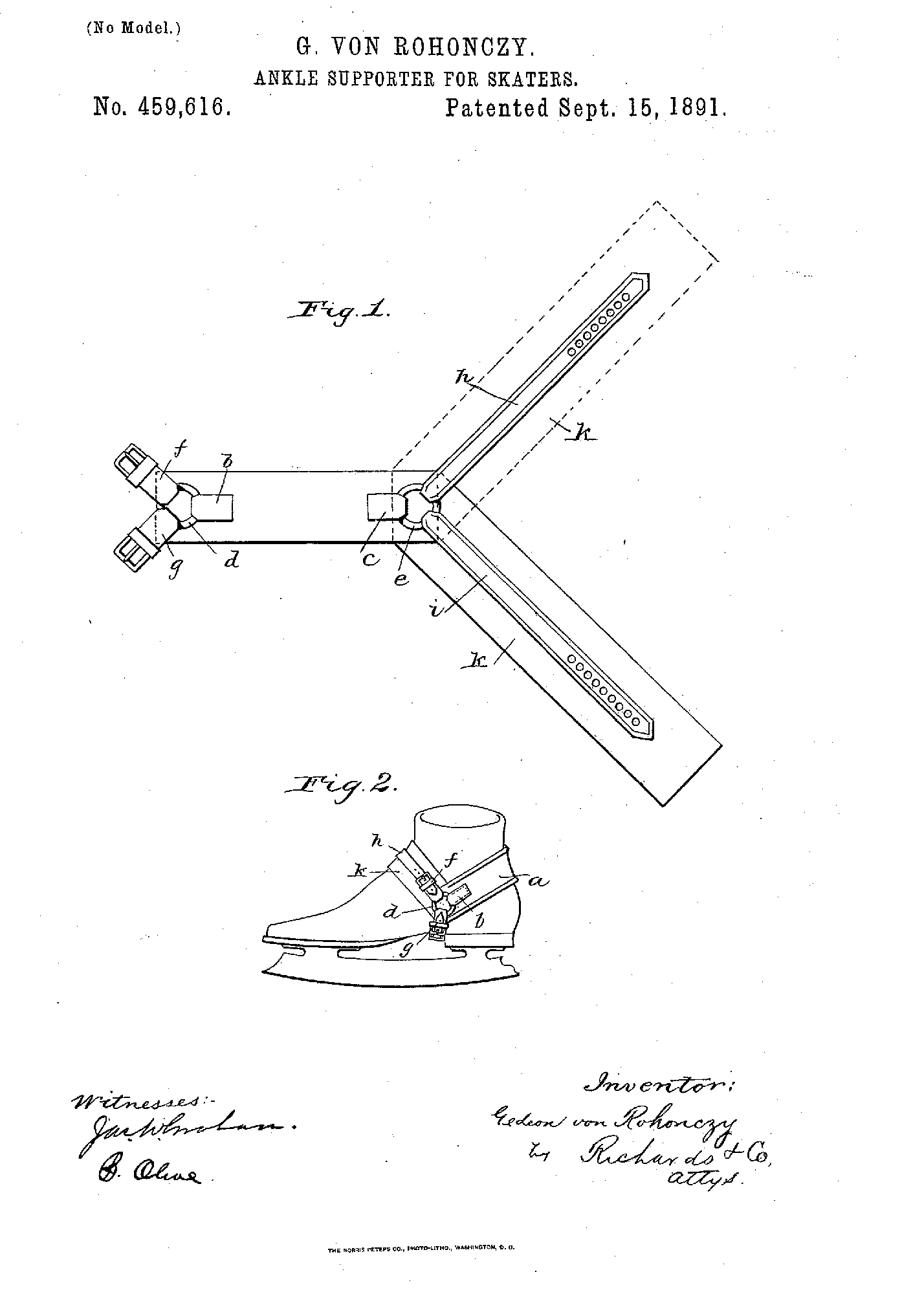
In 1890, Gedeon von Rohonczy filed a patent application in the United States for a device he called “Ankle-Supporter for Skaters.” The patent was registered under number 459,616 and was granted on September 15, 1891. The document identifies the inventor as Gedeon von Rohonczy, of Buda-Pest, Austria-Hungary.
This document is particularly valuable because it represents an original record of one of Rohonci's technical inventions.
What Did Rohonci's Invention Look Like?
Rohonci's device was conceived as a kind of support and stabilizer for the skater's ankle, attached to the shoe or skate.
The patent drawings show two positions of the device. The first illustrates the construction itself, while the second shows how the apparatus was fitted to a shoe with a skate attached.
The construction consisted of a system of straps, rings, buckles and adjustable elements. One part surrounded the ankle, while the other components were attached to the footwear. By means of buckles and adjustable straps, the device could be adapted to the skater's foot. The original patent drawing identifies the individual components with letters, while the bottom of the document bears the inventor's signature: Gedeon von Rohonczy.
Why Did Rohonci Create the Device?
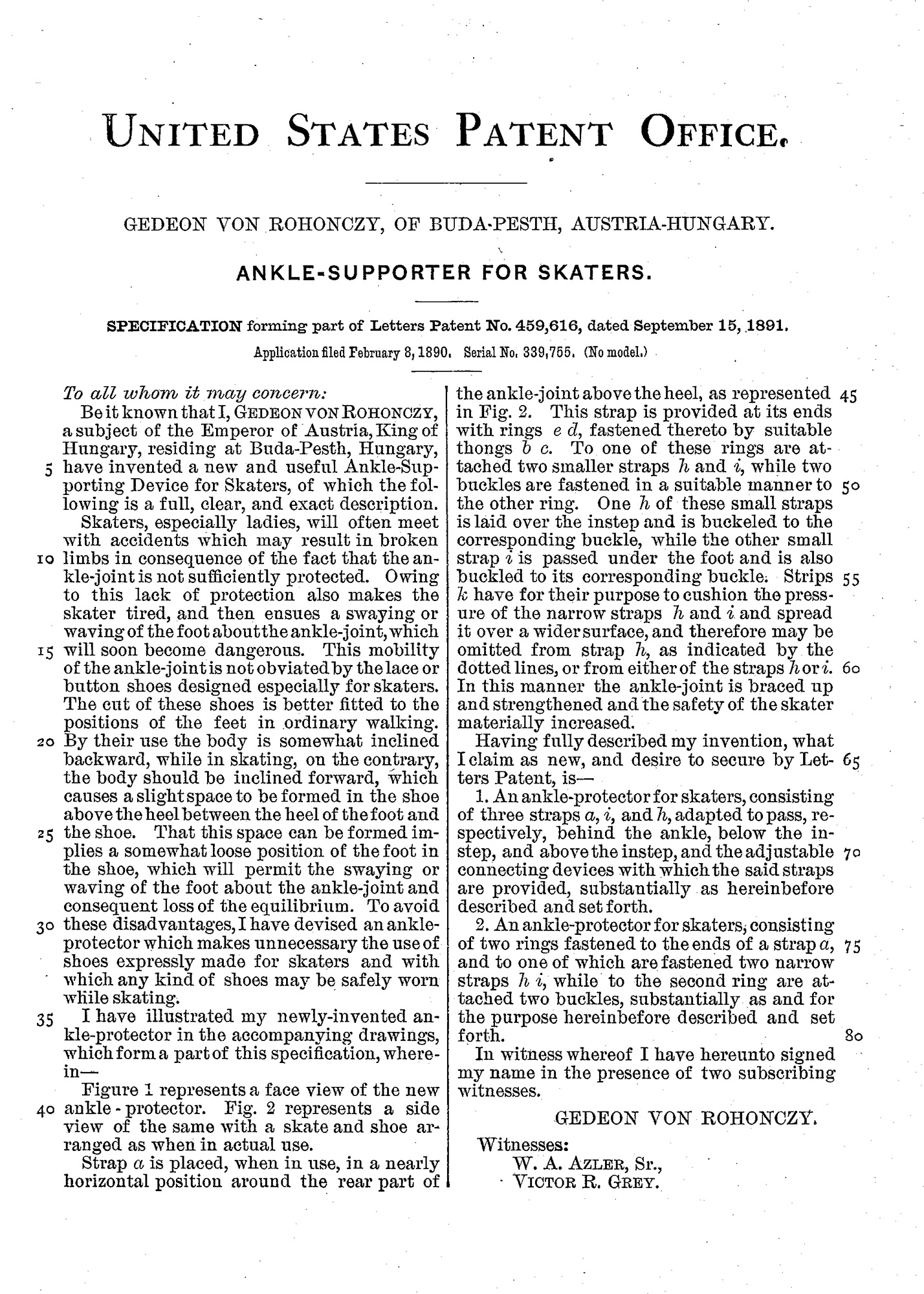 In the patent specification, Rohonczy begins with a problem he had observed in skating. He notes that accidents, particularly falls, could result in injuries to the legs and ankle. According to his explanation, the position of the foot while skating differs from its position during ordinary walking, creating the possibility of unwanted movement and loss of balance.
He specifically points out that the foot can move backward during skating, meaning that the heel and the front part of the foot do not behave in the same way as they do while walking. Such movement, he believed, could cause the foot to “rock” around the ankle joint and compromise the skater's balance. His idea was to address this problem by providing additional support that would secure the ankle.
The patent was therefore intended not merely as protection against injury, but also as an aid in stabilizing the foot and increasing safety while skating.
The Patent as Part of His Sporting Biography
When this document is considered together with the known facts of Rohonci's life, it provides a more complete picture of his relationship with sport.
He was a man who simultaneously managed a large agricultural estate, worked in fruit growing, participated in political life, bred horses and was active in sports organizations.
His interest in skating, however, went beyond participation in the sporting and social life of the Budapest skating rink. The 1891 patent demonstrates that he attempted to turn his experience of skating into a practical technical solution.
In this sense, his “Ankle-Supporter for Skaters” is an interesting example of how sporting experience in the late 19th century could inspire a technical invention.
From Skates to Sports Administration
Rohonci continued to be active in other sports as well. In 1903, he became president of the Újpest-Rákospalotai Athletikai Klub (Újpest-Rákospalota Athletic Club). Because his numerous responsibilities prevented him from performing the duties of the office on a full-time basis, he was subsequently given the status of honorary president.
His sporting interests thus extended from equestrian sports and skating to athletics and the administration of sports organizations.
At the same time, his private life and social position were quite eventful. Zoltan Kalapiš portrays him as a man who moved between the worlds of politics, the racetrack, skating rink, balls and salons, but also as a person willing to take on a variety of social and sporting roles.
One Patent, a Different Image of Gedeon Rohonci
Today, Gedeon Rohonci is primarily remembered through his connection with Törökbecse, his Pearl Island estate, fruit growing, horse breeding and political life.
The 1891 patent adds another, lesser-known dimension to his biography.
Gedeon Rohonci was also an inventor.
His device for supporting and stabilizing the ankle of skaters represents a surviving trace of his interest in technology and practical solutions. The original American patent document, with its drawings of the device, description of its construction and the inventor's signature, is an important document for understanding this lesser-known aspect of his personality.
For the history of Novi Bečej, the document is particularly valuable because it demonstrates how diverse the life of one of the town's most prominent landowners actually was. The man who improved fruit production on Pearl Island, bred horses and participated in public life was simultaneously deeply involved in the development of skating in Budapest and attempted to transform his own experience into a technical invention.
The 1891 skating patent is therefore not merely the story of an old device. It is another small, but fascinating, part of the larger story of Gedeon Rohonci.
Comments