



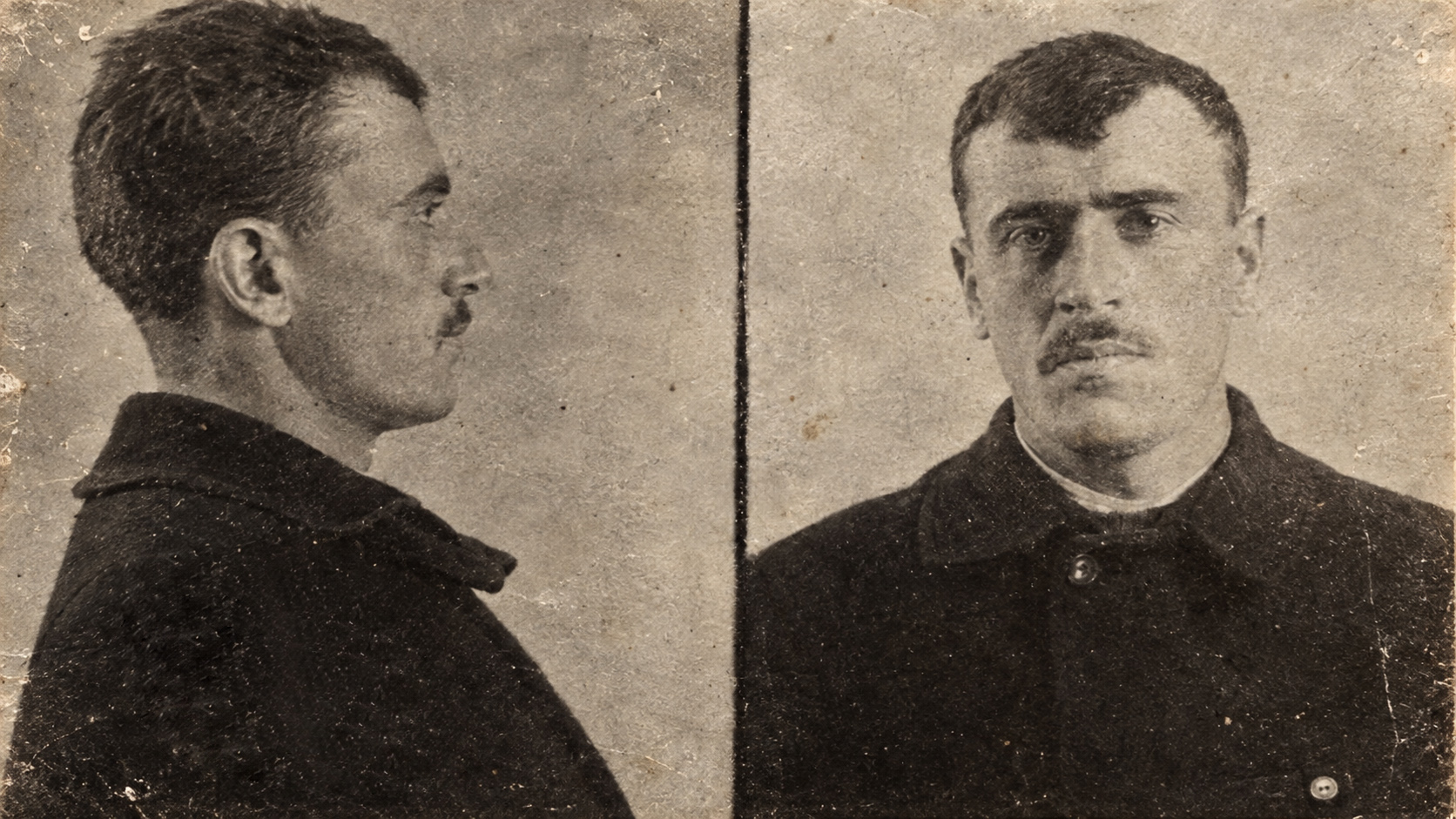
Born in 1913 and raised in a progressive peasant family, Miloš was well-liked in his neighborhood from a young age. Naturally sharp and quick-witted, he was the best student among his peers. As a senior high school student, he began his political work, condemning the monarcho-fascist regime and the dictatorship of Aleksandar and Živković. After finishing high school and enrolling in an agricultural school, Miloš’s rebellious nature against injustice and favoritism among teachers became more evident. At this school, he had his first encounter with the police "due to disobedience and indiscipline."
After his time in Ada, Miloš was already a well-known political figure in the village. People gathered in corners, on the streets, and young folks in public places listened with admiration to Miloš’s speeches about the corruption of the anti-populist regime, the ruthless exploitation of the poor, and the persecution of thousands of progressive people simply for trying to enlighten their fellow citizens about the truth and the causes of their suffering.
 During those years, Miloš didn't waste time at village gatherings, fairs, or promenades. His youthful diversions were replaced by good books: Gorky, Balzac, Dostoevsky, Darwin, and later Lenin, Marx, Segal, Lensky, and others.
In 1935, Miloš went to Vršac, to the Secondary Viticulture School. There, too, he faced difficulties due to his progressive views and efforts to share these views with as many people as possible. Expelled from the dormitory, he wandered for a while, almost starving, relying on the help of friends. His schoolmates secretly brought food from the dormitory canteen to feed him, "comrade Klima."
At this school, as a youth leader of the League of Communist Youth of Yugoslavia (SKOJ), Miloš first met and became acquainted with Žarko Zrenjanin. He often spoke to his comrades with enthusiasm about the impression Žarko made on him, praising his simplicity, accessibility, and intelligence.
After two years of education and productive work among the progressive youth of Vršac, Miloš spent some time working in Kikinda. There, he met prominent youth activists, communists, and SKOJ members, such as Proka Sredojev, Milan Jakšić, Dada Lipovanov, Kosta Sredojev, and many others. With the support and assistance of Kikinda activists, he initiated the establishment of the progressive youth organization "Cooperative Youth of Yugoslavia" in Dragutinovo. The organization quickly grew in size, demonstrating its fruitful cultural, entertainment, and propaganda activities in just two years, from 1939 to 1941. Supported by the local Communist Party cell, Miloš and his comrades nurtured and educated hundreds of progressive young people and peasants, including dozens of new SKOJ members and members of the Communist Party of Yugoslavia (KPJ).
In 1938, through his revolutionary work, Miloš became close to many prominent fighters, communists, and SKOJ members, including Svetozar Marković-Toza, Žarko Milankov, Ivan Vijoglavin, Bora Mikina, Vladimir Kolarov-Kočo, and others. They often visited the progressive-revolutionary people of Dragutinovo and Beodra, especially Miloš Popov's home.
Together with Petar Plavkić, Mara Pajićeva, and other progressive students, Miloš organized visits from Belgrade students, who delighted the villagers with cultural and entertainment events. The locals, in turn, warmly welcomed them, thus strengthening the connection between the village and the city—between people with progressive and revolutionary aspirations.
In the winter of 1941, Miloš was the first on the list of arrested and mistreated communists from Dragutinovo and Beodra due to his involvement in organizing the collection and sending of food packages to comrades imprisoned in the Sremska Mitrovica penitentiary. At that time, March events were approaching, and as a member of the local Communist Party cell, Klima actively participated in preparing the villagers for demonstrations against the treacherous Yugoslav government's accession to the Tripartite Pact. He also led these demonstrations.
After returning from the "war," where he served briefly as a student-sergeant, Miloš quickly reorganized the ranks of the local KPJ cells in Dragutinovo and Beodra. He helped collect and hide scattered weapons and military equipment in the village and its surroundings. Soon after, on June 22, 1941, as the secretary of the Communist Party organization, Miloš convened the well-known and significant meeting of communists in Akača to plan the fight against the enemy and traitors to the homeland.
Miloš Klima was one of the first illegal fighters. With the help of the district military committee, where he was deputy commander, Miloš formed the Dragutinovo Partisan Detachment of 14 fighters. The detachment fired its first shot, killing the first enemy soldiers, and the first barns and threshers in the fields were set ablaze. The people of the two villages supported their Partisan detachment, providing everything they needed, organized by local committees of the People's Front.
As part of the joint Partisan detachment of North Banat fighters near Melenci and Kumane, Klima stood out in all actions of the Partisan unit with his skill and bravery. After the detachment disbanded, Miloš returned with his comrades to Dragutinovo and Beodra, where he worked to organize and prepare for the anticipated enemy offensive.
In the fall of 1943, after reestablishing contact with the KPJ District Committee for North Banat, Miloš only needed to reorganize the ranks of the KPJ and SKOJ and assign new tasks to them. The revolutionary fighting spirit was maintained until that year, although it cost the lives of dozens of the best sons of Dragutinovo and Beodra.
In the spring of 1944, Miloš went to Srem. After a short time, he joined the 14th Vojvodina Brigade. As the head of agitprop (political agitation and propaganda), he gave lectures and consultations. Before the major offensive on the Srem Front, he transferred to the combat ranks of his brigade, becoming the political commissar of a battalion.
His mother brought him clothes and linens to the front and asked, "Why don't you take what I brought?"
He replied, "Alright, I'll take it if you're so insistent. I'll give it to my comrades. You see, I'm already well-dressed."
On April 14, 1945, the eve of the last offensive on the Slavonian Front, Miloš told his close comrade, Vereš: "Tomorrow, when we push hard, the Germans won’t stop until they reach their mother’s skirts."
The next day, the fighting was fierce. At one point, the enemy was slightly superior, and the brigade's flanks unexpectedly gave way. There was a danger that the unit might be surrounded.
That day, Miloš was among the fighters on the front lines near a brick factory in the small Slavonian village of Podgorač. The commander sent a courier with orders to retreat to another position. Commissar Miloš was in no hurry; he didn’t want to withdraw. The courier, whom the commander had sent, helped Miloš with the machine gun. Suddenly, the enemy came up behind them. And—that was the end. Miloš Popov-Klima, the political commissar, lay motionless, dead next to the hot machine gun, along with the commander’s courier, who refused to leave him alone.
This happened near the brick factory in Podgorač, close to Našice, as reported by the "Bulletin" of the Propaganda Department of the 36th Vojvodina Division a few days later, which also included the following:
"... How vividly he explained the aesthetic moments from Leon's 'Invasion,' with the routine of a professor delving into the complex dynamics of dialectical materialism..."
"... His lecture on the topic: 'Necessity and Chance' (Darwinism) is still fresh in our memory..."
"... Last night’s lively consultation with political commissar Miloš Popov on the topic: 'The Transition from Quantity to Quality'..."
All of this, and more, was recorded in the "Bulletin" of the 36th Division, but just a month later, cannon salutes marked the end of the war. Miloš did not live to see the moment he had passionately fought for over the past ten years.
Comments