



Even during the pre-war revolutionary activities, both the Beodra and Dragutinovo communists, along with other progressive individuals, established close mutual cooperation. The peak of this relationship was the intimate and comprehensive collaboration between the two partisan cells – Dragutinovo and Beodra – on all matters of ideological and political struggle against the anti-people regime: against bourgeois and petty-bourgeois parties, and against anything that hindered or delayed the realization of the age-old aspirations of the masses for freedom, equality, and a humane life.
Numerous actions of the communists in both places were planned and carried out jointly, such as:
- The unified action of participants in the October Revolution to form a joint party organization in 1920;
- A youth demonstration in both places during the funeral of Dr. Đorđe Joanović, which turned into a strong protest against the criminal actions of the ruling circles in Belgrade towards people with progressive and revolutionary views and aspirations;
- A joint and highly successful political-agitational campaign during the May 5 elections in 1935, aimed at supporting and ensuring the victory of the parliamentary candidate on the list of the United Opposition;
- The collection of aid for communists in the Sremska Mitrovica prison;
- A joint mass demonstration on March 7, 1941, against the accession of the former Yugoslav government to the Tripartite Pact, involving hundreds of locals led by the communists;
...and so on.
Through such revolutionary practices, the communists and other progressive individuals from Dragutinovo and Beodra forged a strong unity over the course of a few decades, which became especially evident in 1941, during the uprising and in the subsequent years of the People's Revolution.
By the spring of 1941, shortly after the occupation of our country, the Beodra and Dragutinovo communists operated under the direction of a joint party leadership. In later years, particularly in 1944, joint leadership was formed for other socio-political organizations as well.
The Dragutinovo Partisan Detachment, although mostly made up of fighters from Dragutinovo, equally relied on the people of Beodra, who at all times selflessly provided moral-political support and material assistance.
The people of Beodra and Dragutinovo, closely connected, fought side by side in the People's Revolution from beginning to end, sacrificing themselves despite all difficulties for the final victory of Socialist Yugoslavia.
The mass arrest of Dragutinovo patriots in November 1941 did not extend to the activists from Beodra, mainly due to the well-executed conspiracy in communication and concrete actions. However, they were not entirely spared from this misfortune. At the end of December, more precisely on the evening of the 25th, the police suddenly arrested the secretary of the party cell, Ilija Arsenov, along with activists Blagoje Popov, Milan Trajlov, and Ivan Marčić. It was assumed that this crackdown would extend to other numerous activists and patriots, so many were warned to be cautious. However, this precaution proved unnecessary, thanks to the strong stance of most of those arrested.
The detainees were held for interrogation at the local municipality until the next day, after which they were transferred to Petrovgrad.
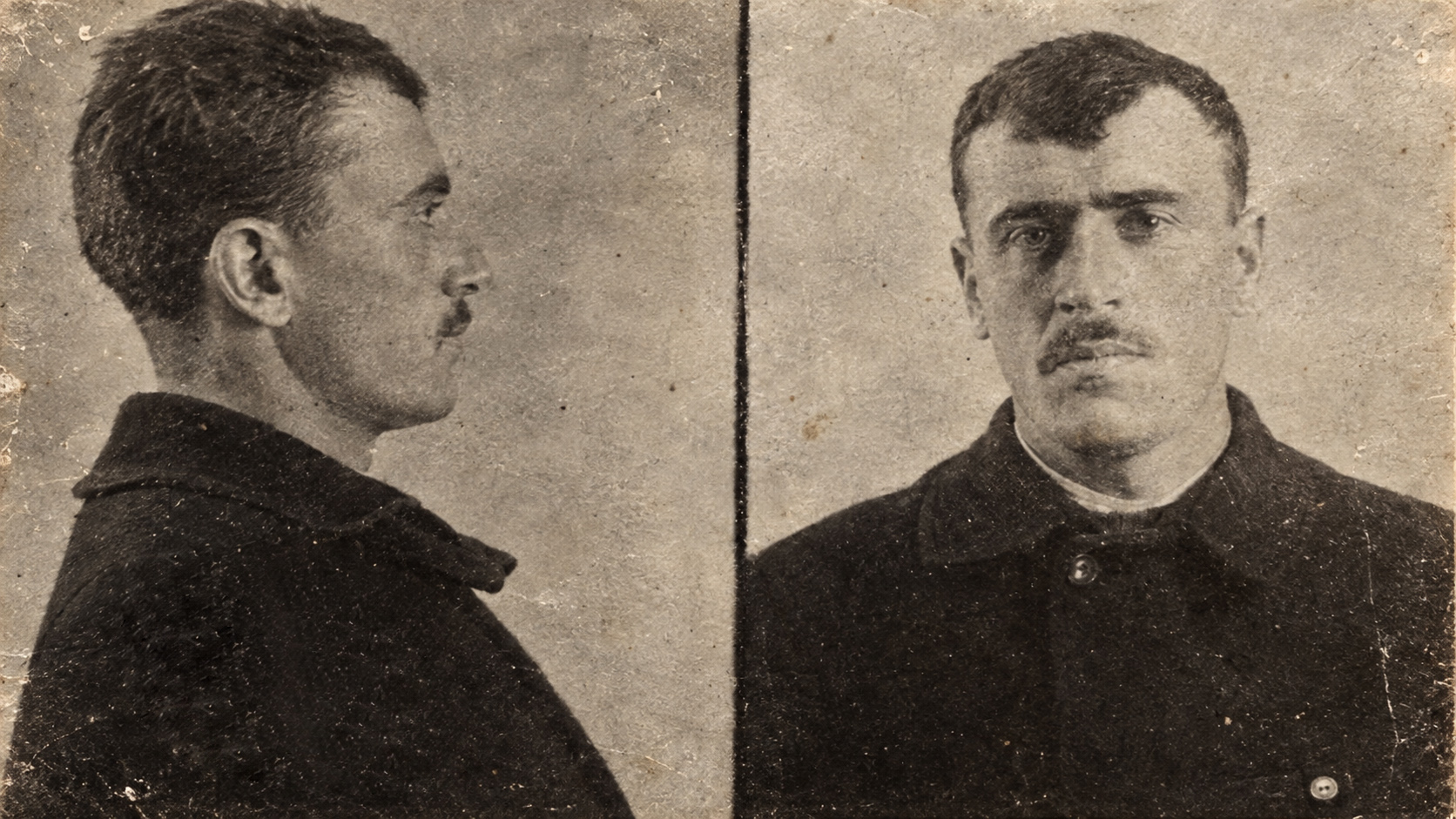
At the police station, they were accused of being connected with and collaborating with the partisans, particularly Milan Trajlov ("Šura"), who was charged with participating in several armed actions against the "German forces and installations" as a member of a partisan group. Initially, all of them held their ground well, vigorously denying all accusations and suspicions. It was only after several days of daily beatings and torture that Trajlov broke. He admitted to the police his involvement in an ambush of three German guards on the Kikinda-Bašaid road, revealing his membership in the Dragutinovo Partisan Detachment. By the end of December, the fascists took Milan to the vicinity of the spot where partisans had ambushed the three members of the German field guard in the summer of 1941 and eliminated them.
There, he described the entire event and roughly indicated where the slain Germans were buried.
This was more than enough to seal the fate of Šura and all the other captured partisans. On January 3, 1942, ten fighters from the Dragutinovo Partisan Detachment, led by their commander Lazar Pajić, were brutally murdered near Kikinda.
The other arrested activists from Beodra fared better, thanks to their good conduct and greater resourcefulness in dealing with the notorious police.
Blagoje Popov was accused by the police of maintaining regular contact with certain partisans, meeting with them and providing support. He consistently denied these accusations, and after repeated beatings and torture, the agents eventually "left him alone."
Ilija Arsenov, along with Ivan Marčić, also displayed calm and composed behavior in prison, leading to a brief investigation. After a few weeks, both were released from jail, with their families paying a monetary bail.
Around the same time, Beodran Živa Glišin was arrested, suspected of hiding Milan Trajlov in the autumn of 1941. He was held for a longer interrogation and was later executed alongside a group of Banat patriots.
This series of arrests in Dragutinovo and Beodra concluded in 1941, only to resume in 1942, with new, equally ruthless, inhumane, and bloody rounds. The enemy was gravely mistaken in thinking that this method would suppress and destroy the revolutionary and liberation spirit, the combative disposition, and the practice of hundreds of patriotic locals. The ranks thinned but were quickly filled with new fighters, new Party members, new SKOJ members – new patriots.
Comments