



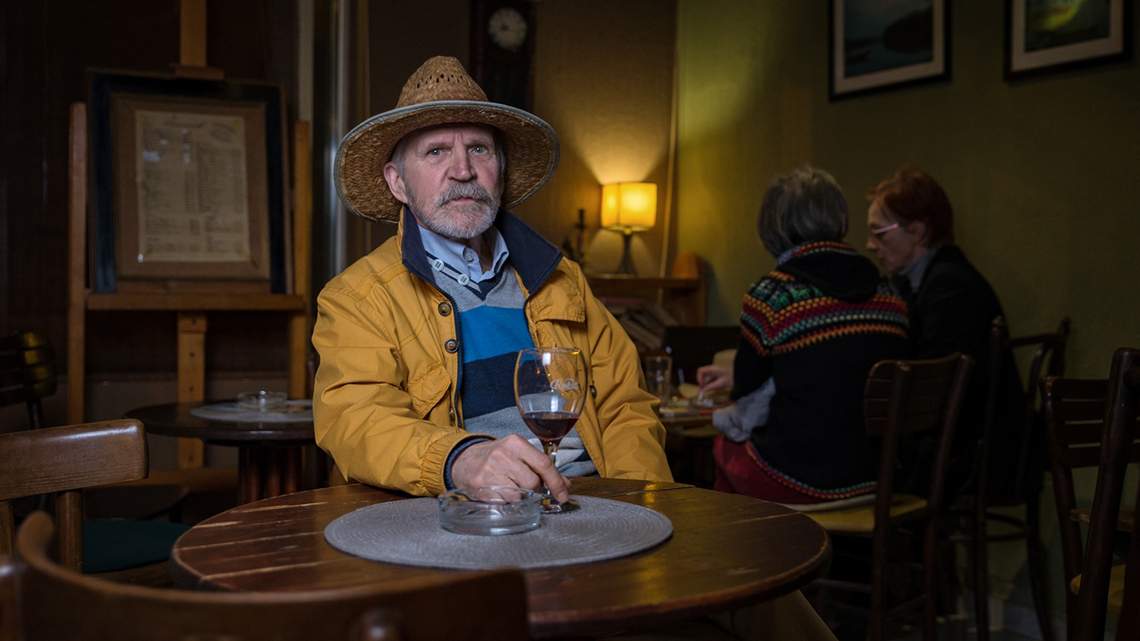
In the former Novi Bečej maternity hospital, located near the Andre family home, Karolj Andre was born on July 21, 1951 — a future collector and philatelist. He was educated in Novi Bečej, Subotica, and Novi Sad, where he later worked as a laboratory technician.
In 1970, with the help of friends, he opened the first disco club in Novi Bečej, named An-Ki. Soon after, he began collecting, a passion that would shape his entire life. As a member of the Philatelists’ Association of Novi Bečej and the Philatelic Society of Novi Sad, he started collecting postage stamps. Before long, he expanded his interests to include postcards, photographs, and documents related to his hometown, Novi Bečej, building an impressive local heritage collection.
He presented his stamp collections at numerous philatelic exhibitions in Serbia and abroad, while his collections of Novi Bečej postcards were displayed to the public several times between 1983 and 2010. Alongside collecting, Karolj devoted himself to researching the history of his homeland. Between 1994 and 2018, he published seven books, each documenting notable people, institutions, and events from Novi Bečej’s past, supported by the extensive archival material he had gathered.
Some of his notable works include:
- Greetings from Novi Bečej
- From the Past of Novi Bečej
- Gedeon Rohonci — The Lord of the Pearl Island
- The Lazaret in Turkish (Novi) Bečej
- Two Hundred and Forty Years of the Post Office in Novi Bečej
Karolj Andre is one of the founders of the Homeland Club of Novi Bečej and Vranjevo Residents, where he served as a board member and president, as well as the founder of the Local Heritage Archive. He also collaborated with the National Museums of Zrenjanin and Kikinda and contributed to the website NB online – novibechej.com, taking part in numerous exhibitions organized by the Novi Bečej Cultural Center.
Thanks to his dedication, curiosity, and love for his birthplace, Karolj Andre stands out as a true guardian of Novi Bečej’s historical and cultural heritage. His life’s work represents an invaluable contribution to the collective memory and identity of his community.
Comments