



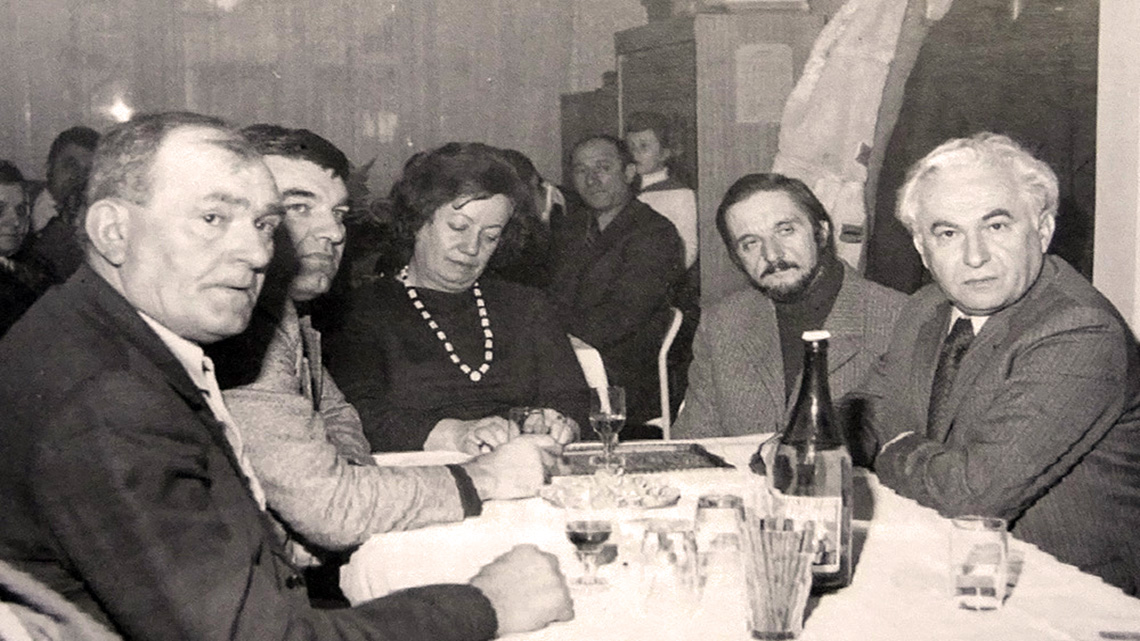
During the following year, the "Home for the Elderly" continued its operations, funded by the provincial authorities, and officially registered on February 10, 1949. The Executive Council of the Autonomous Province of Vojvodina appeared as the founder.10
In 1950, at Milošev put no. 8, the Begej District established a Home for Mentally Disabled Women (psychiatric facility for women) and adapted the building for those needs. This later became the so-called second department.11
A monthly report from 1950 shows that there were six employed workers and about 50 users, mostly over 40 years old.12
On the first day of 1951, the Home for the Elderly and the Home for Mentally Disabled Women were merged into one institution: the Home for the Elderly and Infirm. Its founder and financier was the Potisje District with headquarters in Novi Bečej. This institution had two departments - facilities of the former Home for the Elderly and facilities for the care of "mentally disabled women," the latter being in very poor condition.13
In the first few years, the Home for the Elderly and Infirm was funded exclusively from the district budget, but in May 1955, after the enactment of the Law on Social Institutions, it transitioned to self-financing from its own revenue. The Home became fully autonomous at that time. The institution was then called the "Home for the Elderly and Pensioners." This measure somewhat improved the institution's financial position, but on the other hand, the number of users decreased as they and their families were now responsible for financing their accommodation and stay. In addition to these funds, income also came from the sale of products from the farm and donations.14
At the end of May 1955, the Potisje District issued a resolution to establish an institution of the same name based on new legal solutions. Mila Isakov served as the director of the Home, and a Board of Directors of seven members was appointed. During those years, the Home faced significant material difficulties. For the accommodation of users, including a large number who were immobile, wooden beds with straw mattresses were used, and there were issues with water supply... so the "institution resembled a very poorly equipped house."15
However, we can infer the interpersonal relationships between the staff and users from the memories of Ljiljana Panić - Lika, daughter of the director Mila Isakov, who spent much of her childhood in the Home.
"The entire institution functioned as one big harmonious and interconnected family. Despite the legal regulations, the staff did not really have set working hours or roles. They took care of the residents self-organized, even outside of working hours: with visits and watch duties.
The first collective of women were: Aunt Julka, Aunt Marija, Little Milena, Big Milena, Aunt Kosa, Aunt Jelena, Aunt Novka. Almost all were single mothers and participants in the People's Liberation War. Their husbands had either died in Nazi camps or during the war. Julka lived with her son in the psychiatric ward for women. Besides their regular duties, they also served as janitors.
They performed Sisyphean tasks at the Home, always with a smile and kindness, with a supportive shoulder to cry on, comfort, and affection. They had a pronounced humanity and a will to help others. All were politically active. Since meetings often lasted late into the night, they frequently went straight from party meetings to work. They had to feed the residents and assist the sick.
Each week, one of them took turns watching over the residents and looking after the children of the employees. Grandparent services were rare, and there were no kindergartens, so the duty mums cared for us, fed us, bathed us, and checked the homework of those who attended school. No one was allowed to be a bad student, or heaven forbid, messy.
I would describe that first collective of mothers, as I called them, and the rest of the staff, based on memory:
Aunt Ilonka was a medical worker, dedicated and hardworking lady.
Milorad Pločić, administrative worker, measured and strict.
Aunt Julka was one of the earliest employees. She had a son, Đurika. They lived in the janitor's apartment in the psychiatric ward. She spent her entire working life at the Home. She was a warm and strong woman, quick and diligent.
Aunt Marija had three children. One of our mums. She worked as a warehouse keeper. She was kind-hearted and a dear soul.
Little Milena - 'Nena' had a son, Duško, in military school. She survived a death camp in Germany, thanks to being experimented on. She was a pocket-sized lady. Cheerful and lively, though occasionally lost in thought. No one bothered her then, they discreetly kept an eye on her. She was a severe diabetic but a fighter. In certain situations and during dangerous discussions (mostly provocative ones), she could get grouchy and boldly turn things around. She didn't shout, but her words rang out loud and clear like a gong.
Big Milena - 'Nena' was an exceptional cook. Measured, quiet, strict, beautiful, and with a dignified demeanor. When she said 'no, it can't be like that!', none of the external or internal management boards argued further or debated. Her suggestions were mostly correct concerning feeding, so they were adopted. Behind the strict facade was a warm human being, always ready to discreetly assist those in need. She had two sons. She loved when her children sang to her, and we eagerly awaited that.
Aunt Novka was also a pocket-sized lady, always ready for a joke. She managed laundry and sewing. She had a family with two children. She later moved away from Novi Bečej.
Aunt Bogdanka took over Aunt Novka's position. She was a professional tailor and became one of the mums.
Aunt Kosa - She was measured, beautiful, and a robust woman, physically very strong. She worked with Aunt Julka in the psychiatric ward.
Aunt Jelena worked in the kitchen with Big Nena. She had three daughters. She was my special mum. She loved playing with us kids (hide and seek, blind man's bluff, chase the kitty around you). When she was on duty, all the little ones went to her house and often slept there.
Now I would say a few words about the residents of the Home whom I remember as special.
Kuka - a small lively woman. Hardworking, deaf-mute, and literate. She read lips exceptionally well and responded with signs or writing.
Mari-neni - an elderly lady, highly educated, and severely immobile. She had a daughter in America and no one else. She was quiet, dignified, and educational.
10 Archive of the Institution, Report on the work of the Home for the Elderly and Pensioners in Novi Bečej for the period from 1955 to 1965.
11 Same; Ljiljana Panić - Lika, manuscript
12 Archive of the Institution, Report on the work of the Home for the accommodation of mentally ill persons "St. Vasilije Ostroški - Miracle Worker" for 2017.
13 Archive of the Institution, Report on the work... for the period from 1955 to 1965; Dragan Džigurski, cited work, p. 14
14 Archive of the Institution, Report on the work... for the period from 1955 to 1965.
15 Same


Comments