



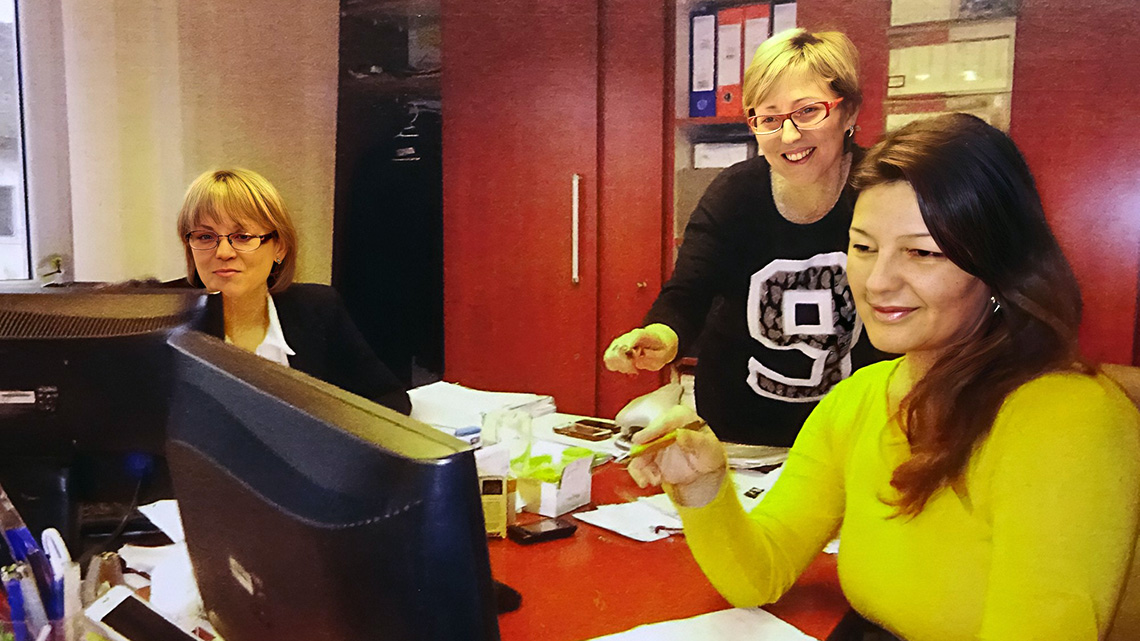
An institution with many users and employees, as well as a plethora of diverse and responsible tasks, must have an appropriate legal and financial-accounting service to ensure everything operates within legal and regulatory frameworks and in accordance with sound business practices.
At the very beginning of the institution's operations, all administrative tasks were combined and performed by part-time workers. The first accountant was Ana Vlaškalin. In March 1962, Dragoljub Vrebalov was employed, initially as an administrative worker and then as a secretary. He was soon appointed head of accounting, a position he held until his retirement in 1996. Vrebalov was among the first to have an accounting worker certificate and was also the founder of the first trade union organization in the institution.
Vrebalov was the only administrative worker in the institution until 1970, when Sofia Trifunac was employed as a hygienist-administrative worker. She handled material bookkeeping until her early retirement in 1996.
In 1974, Branimir Lisičin took over the duties of administrative officer and secretary. The service was completed in 1978 with the arrival of Slavica Arsenov, engaged in administrative officer duties, and Branka Ivančev, in the position of cashier. Ivančev, as an exemplary worker always ready to share and impart her vast experience, became the acting head of accounting while Vrebalov served in the Trade Union Council.
In 1986, Veronika Oroslamoš joined the service as a cashier and accounting worker. She performed other financial and material bookkeeping tasks and became the head of accounting in 1996, a position she still holds today.
Over time, administrative tasks in social protection and legal matters became more complex, particularly in the field of legal regulations. Therefore, in 1992, the institution hired its first law graduate, Gordana Glavaški, as secretary. After her retirement in December 2014, Ivana Cvejin took over the legal duties.
In the 1990s, Valerija Berta and Nada Džigurski joined this service. Berta was hired as an administrative worker, then worked as a cashier, and since 2001, she has been an accountant. Džigurski handled administrative tasks until her retirement in 2016.
In the next decade, Slađana Milankov was employed as a cashier and accountant, and Zorka Pištinjat as a cashier, until her retirement in 2012.
Among the last to join the Financial-Accounting Service was Olivera Perić in 2013. She was assigned the position of cashier, which she still holds today.
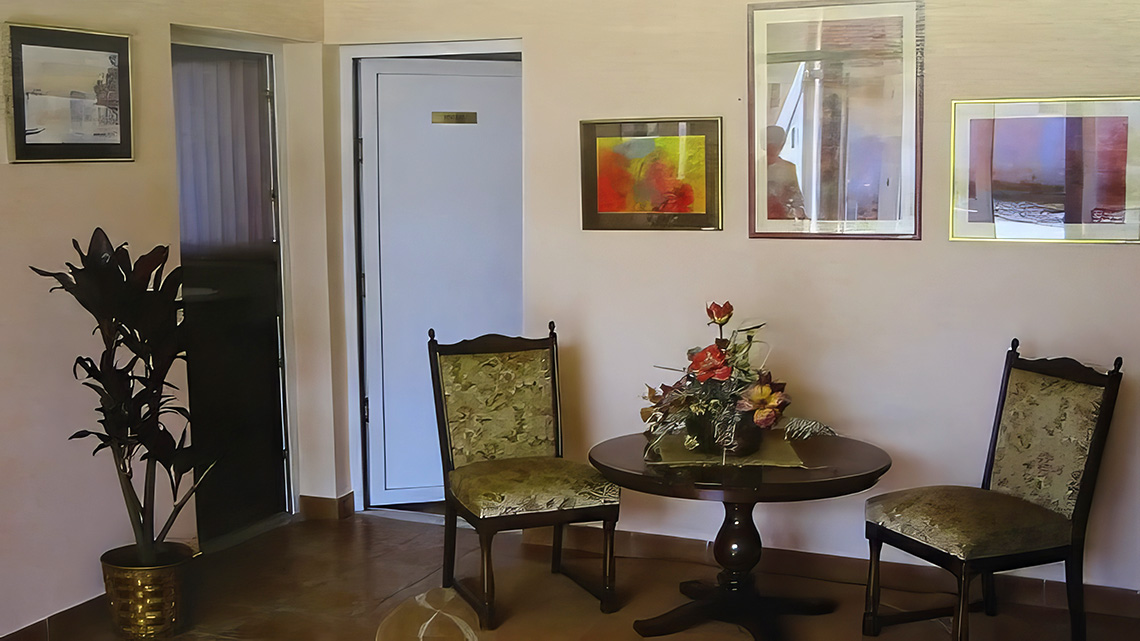
As the institution developed, reorganized, and changed its appearance, this sector followed suit, maintaining a good working atmosphere and fostering good collegial relations. In 2010, the accounting-administrative service moved to new, renovated premises.
By the end of the 20th century, IT tasks became increasingly significant. The old manual bookkeeping boards, main and subsidiary ledgers, material bookkeeping, manual form and document filling, payroll calculation, typing endless tapes for self-control and control by other financial institutions, visits to the then social bookkeeping service, tax administration, and other institutions were replaced by modern methods and computer technology, making the job more efficient, simpler, and cost-effective.
This also required the education and training of workers for accounting tasks, i.e., using computer programs for that purpose, but also in all other segments of the institution's operations, including computer programs for social work, healthcare, and the legal service.
By 1999, the institution had one server with two workstations and two additional separate computers. At the end of the same year, about fifteen new workstations and a server were acquired. A new local computer network was designed and implemented. Dial-up internet was introduced, and new software for accounting and social work was acquired. In 2002, the institution created an internet site and has been present in the virtual space since then, first at www.gcnb.rs, and later at its current address – www.domsvoc.rs. Over the years, the computer network grew in line with business needs. Dial-up connections were replaced by WI-FI and then ADSL. ADSL connections exist in all departments, and optical connections have been established in the administrative building and the first department. Video surveillance has been introduced in all departments. Initially, computers were used as DVR devices, which were later replaced by dedicated DVR devices. Electronic timekeeping has also been introduced. The computer network now has over 30 workstations.
In 1999, Dimitrije Šijan started working in this field in the institution. He began as an IT expert; today, he handles the design, implementation, and maintenance of the computer network, administration, and maintenance of computer systems, as well as the design and development of software solutions. He also conducts training and provides technical support to all employees.
With the entry into force of the Occupational Safety and Health Act in 2008, the need arose for a person to perform these tasks and elevate this segment of activity to a higher level. Through additional schooling and passing a professional exam, Suzana Slavulj was appointed to this position. The task of this service is to visit departments daily and, in the event of finding irregularities, or based on employee reports, strive to correct them as quickly as possible. It provides protective clothing and footwear, conducts regular employee training in accordance with the law, keeps records, and schedules sanitary examinations of employees if the service requires it. Since 2009, Suzana Slavulj has also been a fire protection officer.


Comments