



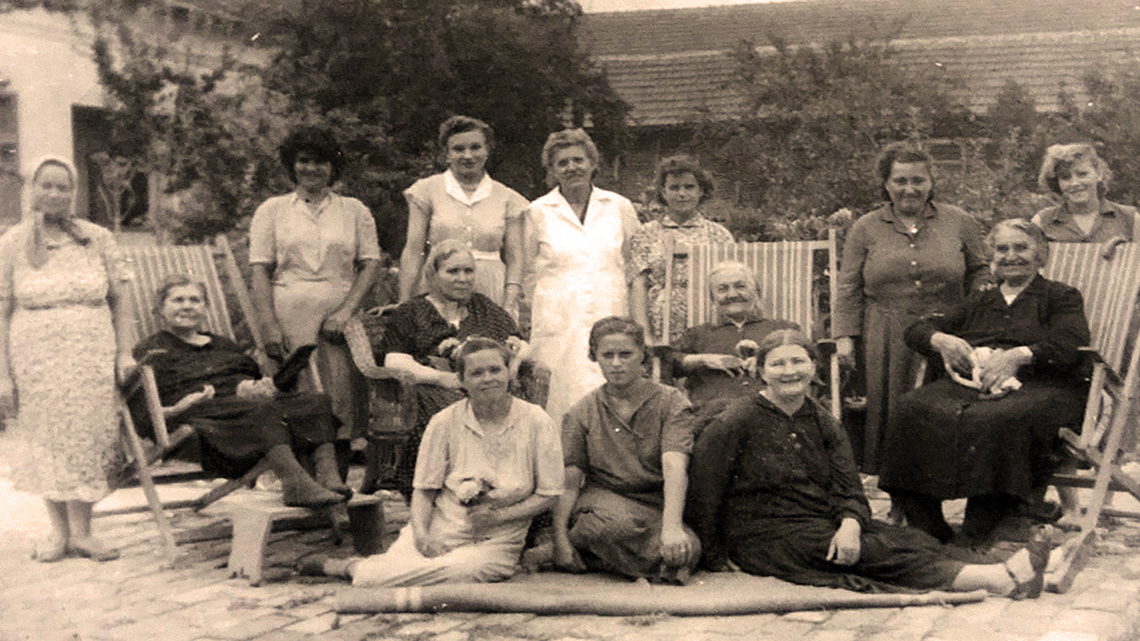
The first mention of organized care for the mentally ill in Novi Bečej dates back to 1789. As part of the general policy of the Hungarian authorities concerning the regulation of "lunatic asylums," Turski Bečej was highlighted as a place where local authorities needed to care for people like the "unfortunate" Jeca Aćimčev, so that his behavior would no longer disturb his fellow citizens.1
At that time, two settlements, Vranjevo and Turski Bečej, existed independently of each other. After several unsuccessful initiatives to merge them, this was finally achieved in 1946 under the name Vološinovo. This name was changed in 1952 to today's name, Novi Bečej. However, in this part of the history of social welfare in the area, we will consider them as one.2
So far, there is no information on whether, and how, this order from the late 18th century was implemented, nor how similar cases were resolved in the following decades. It was not until the second half of the 19th century, within the broader understanding of the need to provide help to those in need of all profiles, that the Red Cross Society was founded with the motto "We are all brothers in suffering." Later, the Society established branches in the territory of today's Vojvodina, first in Pančevo and Subotica. In Turski Bečej, a branch of the Red Cross was also founded. Its founders and members were wealthy and reputable locals who wanted to engage in charitable work. Among the active members at that time, it is worth remembering Istvanfi Istvan, the president, Garai Iže, the society's economist, Mrs. Istvanfi Istvan, Urban Šarolta, Mrs. Varadi Jožef, Mrs. Šaro Đula, Kajser Janoš, the priest, Ranković Istvan, Hazlinger Lajoš, and Varkonji Bela, the society's secretary. Over time, however, the Society's work completely ceased.3
One should not forget the role of numerous charitable societies that emerged at the end of the 19th and the beginning of the 20th century. These were organized on a national basis, and humanitarian work within them was most often carried out by women. In Novi Bečej, such activities took place at the end of the 19th century within the framework of the Turski Bečej Women's Charitable Association, founded in 1878. The association's goals were to help widows, orphans, neglected patients, and generally endangered individuals and families through various charitable actions, as well as to provide material support for institutions for the upbringing and education of children in the municipality.4
The opportunity for Novi Bečej residents to express their humanity to a greater extent came with the outbreak of World War I. The local branch of the Red Cross revived. Courses for the care of the sick and wounded were organized. An auxiliary hospital was established. About 240 beds were set up at several locations in the town. Wealthier citizens bore part of the burden of caring for the wounded at their own expense. Over 30 people of both sexes were trained to work in the hospital, mostly on a voluntary basis. However, there were also professional doctors and other skilled staff. The hospital treated over 1,000 wounded and cared for 300 patients, and in the last years of the war, it also took care of local orphans, refugees, invalids, widows, and the homeless.5
After World War I, the Serbian Red Cross Society for Banat, Bačka, and Baranja was founded in the territory of today's Vojvodina, later renamed the Red Cross Society within the Kingdom of Serbs, Croats, and Slovenes. Among other tasks, it organized home care and assistance services and provided social assistance to those in need.6
According to the accounts of the daughter of the first headmistress of the Home, Ljiljana Panić, Austro-Hungarian army stables existed on the premises of today's first department (Marshal Tito No. 77). Before World War II, a center for the elderly and infirm was established at that location. The center was maintained with the help of the humanitarian work of the locals, and the operations were managed by Danica Jocković. After World War II, war orphans were also added to the elderly and infirm.7
The existence of the Poorhouse and Children's Home in Novi Bečej, then Vološinovo, is also confirmed by the author of the previous monograph on the Home, Dragan Džigurski, and archival materials. From these, we learn that Danica Jocković was the head of the Poorhouse during 1945. This remained the case until September 1 of the same year, when Radovan Jocković was appointed to her position with a salary of 400 dinars per month.8
Based on indirect information from archival materials, it can be concluded that in 1947, a "Home for the Elderly" ("Poorhouse") was established in the town, mainly funded by voluntary contributions from the citizens and to a lesser extent by municipal funds. This is the first mention of organized social care for the elderly and sick in this period. On July 29 of that year, renovation and expansion of the Home for the Elderly began to accommodate 60 users. The locals participated in these works voluntarily. During this time, the building was plastered and painted, the carpentry was repaired, a shed was added, a sanitary block was built, and one room was expanded for the needs of the kitchen, dining room, and storage. Electrical installations were repaired, and new furniture was acquired. After that, on December 1, 1947, 66 people moved into this well-prepared space. They were cared for by AFŽ activists and volunteers. The temporary manager was Ilija Garčev, and the janitor was Ajdanov Milan, with salaries of 3,000 and 2,500 dinars, respectively. From January 1, 1948, the Home for the Elderly was funded by the Province's funds. The building of the Home was on Marshal Tito Street 77, at the location of one of the facilities still used today for elderly care.9
- Archive of Vojvodina, Fund Torontal County, box 148, no. 2,977
- Mr. Aleksandar Kasaš, Fragments from the History of Bečej Fortress, Contributions to the History of Novi Bečej, Novi Bečej, 1991, p. 18
- Karolj Andre, Lazaret in Turski (Novi) Bečej (Internet site: Novi Bečej - Online - reviewed December 1, 2018)
- Karolj Andre, Chronicle 2011 (Internet site: Novi Bečej - Online - reviewed December 1, 2018)
- Karolj Andre, Lazaret in Turski (Novi) Bečej during World War I (1914-1918) and the Red Cross Branch in Turski (Novi) Bečej, Novi Bečej, 2014
- Red Cross of Vojvodina (Internet site: www.ckv.org.rs - reviewed December 8, 2018)
- Ljiljana Panić - Lika, Memories: Traces of People in Time (manuscript)
- Archive of the Institution for Adults and the Elderly "Saint Basil of Ostrog - the Miracle Worker", Novi Bečej (hereinafter referred to as the Institution Archive), Meeting Minutes No. 231/1945 and Decision of the Municipal Board, No. 231/1945; Dragan Džigurski, On My Way Here I Stopped and Stayed, Novi Bečej, 2010, p. 7
- Institution Archive, Extract from the Minutes of the Executive Board Meeting of M.N.O. Vološinov, December 26, 1947; Dragan Džigurski, cited work, p. 9-12


Comments