



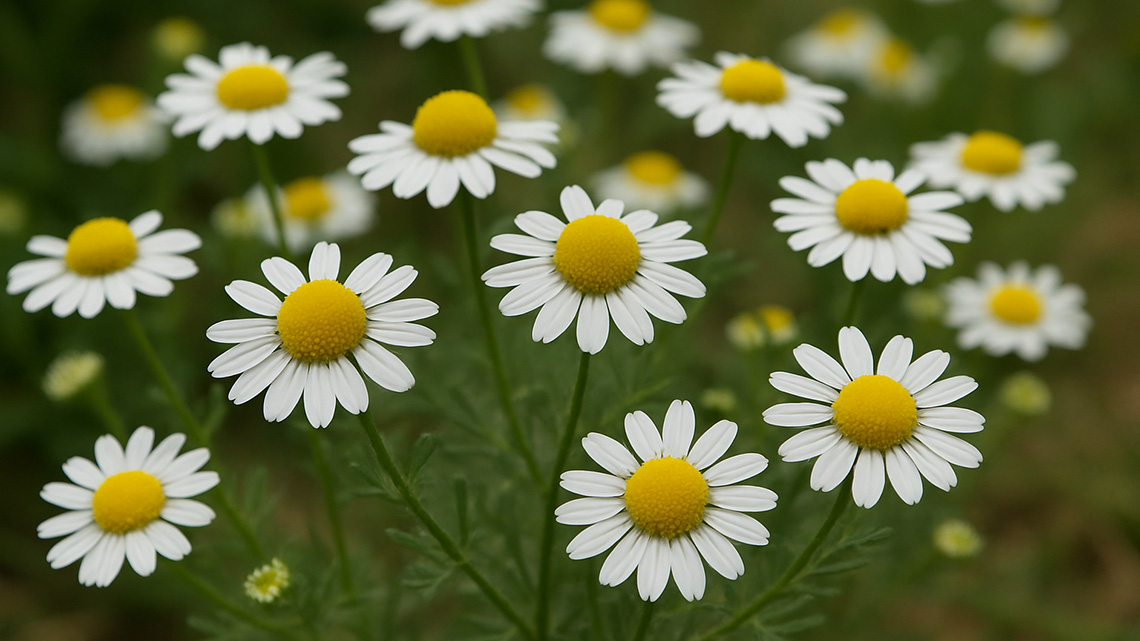
Chamomile is one of the most beloved and widely used medicinal herbs in the world. With its delicate white petals and golden-yellow center, it symbolizes calmness, healing, and natural care. The ancient Egyptians considered it sacred and used it to treat fevers and inflammation.
Appearance and Characteristics
Chamomile is an annual herb from the Asteraceae (daisy) family. It grows up to 50 cm tall, with branched stems and small aromatic flower heads. Its recognizable daisy-like flowers bloom from May to August.
For medicinal purposes, the flower heads are harvested—preferably on dry, sunny days when their essential oils are at their peak.
Healing Properties and Uses
Chamomile is famous for its:
- calming effects – for insomnia, stress, and nervousness
- anti-inflammatory and antiseptic action – for wound care, gum inflammation, and eye washes
- digestive support – helps with bloating, cramps, gastritis, and digestive discomfort
- cold and flu relief – as tea or steam inhalation
It is commonly used as:
- tea,
- compresses,
- baths,
- inhalation,
- creams and ointments.
Note: Chamomile is generally safe, but people allergic to other Asteraceae plants should be cautious.
In Folk Tradition
Chamomile has long been a symbol of peace and purity. In traditional beliefs:
- mothers gave chamomile tea to babies to ease stomach cramps
- it was burned to “ward off evil spirits”
- it was placed under pillows to bring peaceful sleep


Comments