



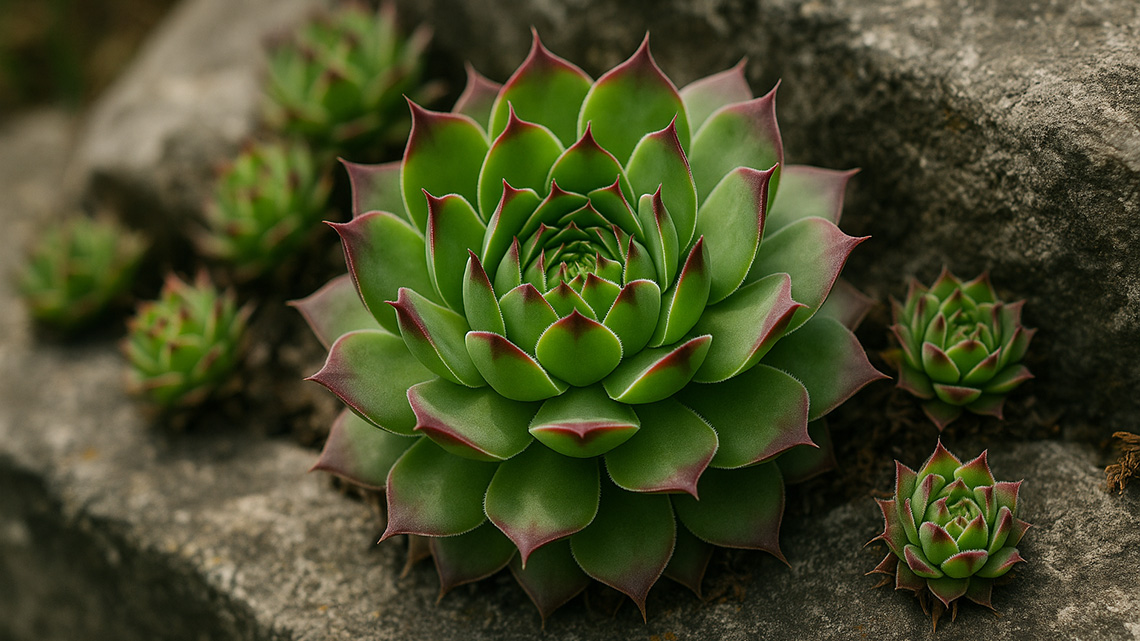
Houseleek (Sempervivum tectorum) is a plant rich in symbolism and remarkable resilience. In folk traditions, it was believed to protect homes from misfortune, lightning, and illness. That’s why it was often planted on rooftops — a custom that inspired its Latin name, meaning “always alive on the roof.”
Appearance and Characteristics
Houseleek is a perennial succulent from the Crassulaceae family. Its fleshy leaves form dense rosettes, varying in shades of green, red, and purple. The plant produces many offshoots ("chicks") that spread easily and make propagation simple.
It’s frost- and drought-resistant and thrives in poor soil. Houseleek grows almost anywhere — in gardens, pots, wall crevices, and rooftops — and requires little care, while offering a lasting, rustic charm.
Folk Beliefs
In Balkan folklore, the houseleek holds a special place. People believed it:
- protected the home from lightning (especially when planted on the roof),
- warded off evil spirits,
- brought health to household members.
In some regions, it was even used in wedding wreaths or given as a housewarming gift.
Medicinal Properties
Though primarily known for its symbolism and aesthetics, houseleek also has healing uses in folk medicine:
- used in poultices for burns, cuts, and insect bites,
- combined with honey to treat ear infections,
- sometimes used as a natural skin toner.
Due to its high content of mucilage and tannins, it soothes inflammation and supports skin regeneration.
Note: Always consult a healthcare professional before using medicinal plants.
Growing and Care Tips
Houseleek is ideal for beginners and busy plant lovers. Here’s how to care for it:
- Sunlight: full sun preferred, but tolerates partial shade
- Soil: well-drained, sandy or rocky
- Watering: only when the soil is completely dry
- Propagation: separate the small rosettes (“chicks”) and replant
This plant practically thrives on neglect — the perfect companion for a low-maintenance green space.


Comments