



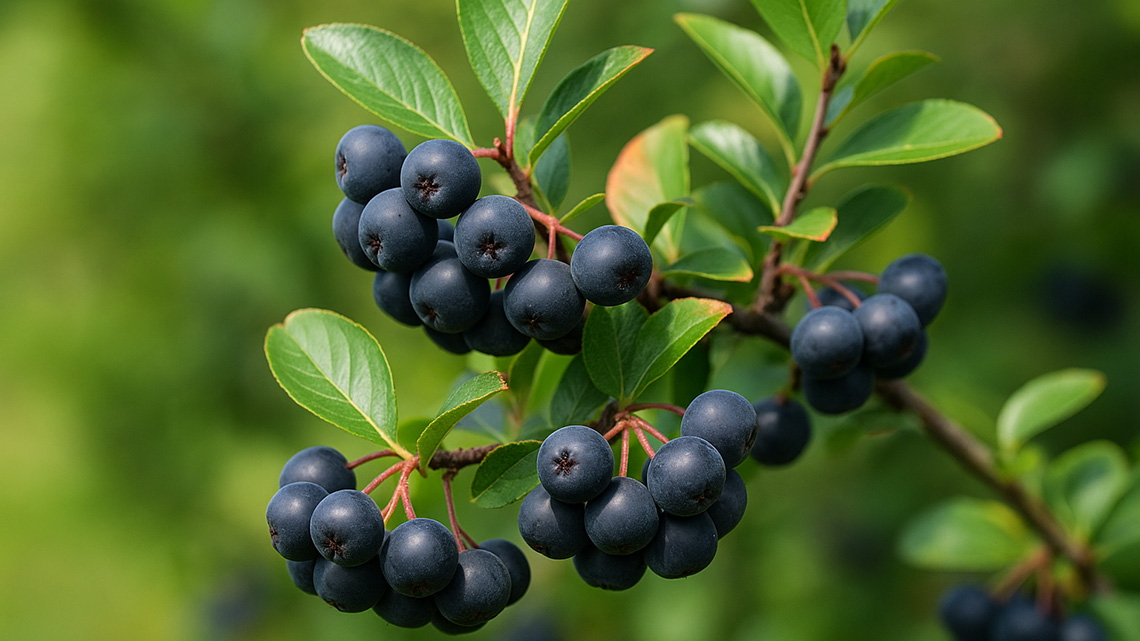
Also known as black chokeberry or Siberian blueberry, aronia (Aronia melanocarpa) is a hardy fruit shrub that has recently gained popularity in gardens and health circles alike. Its deep-colored berries are among the most potent natural antioxidants found in nature.
Appearance and Characteristics
Aronia is a deciduous shrub that can grow up to 2 meters tall. In spring, it blooms with small white flowers, while in fall it produces dark purple berries. Its leaves turn bright red in autumn, making the plant attractive throughout the seasons.
Thanks to its resistance to cold, pests, and disease, aronia is ideal for organic growing and requires minimal care.
A Fruit Rich in Benefits
Though slightly astringent in taste, aronia berries are a real nutritional powerhouse. They are rich in:
- anthocyanins – powerful antioxidants,
- vitamins C, A, E, B1, B2, B6,
- minerals – iron, calcium, magnesium, manganese,
- fiber and polyphenols.
Regular consumption may support:
- immune function,
- blood pressure regulation,
- cholesterol control,
- heart and blood vessel health,
- body detoxification.
How to Use Aronia
Aronia berries can be enjoyed in several ways:
- fresh (best on an empty stomach),
- as juice, jam, or syrup,
- dried or frozen,
- in smoothies, cereals, yogurt, or baked goods.
Because of their strong taste, they are often mixed with honey or sweeter fruits.
Growing and Care Tips
Aronia is a generous plant that gives a lot with little effort. Here’s how to care for it:
- Light: prefers sunny locations, tolerates partial shade
- Soil: well-drained, slightly acidic to neutral
- Watering: moderate, especially in dry periods and the first year
- Pruning: done in early spring to shape and rejuvenate the bush
Fruit typically appears 2–3 years after planting.
Fun Fact: Aronia was introduced to Europe by Russian botanists who admired its hardiness and medicinal potential — hence the nickname “Siberian blueberry.”


Comments