



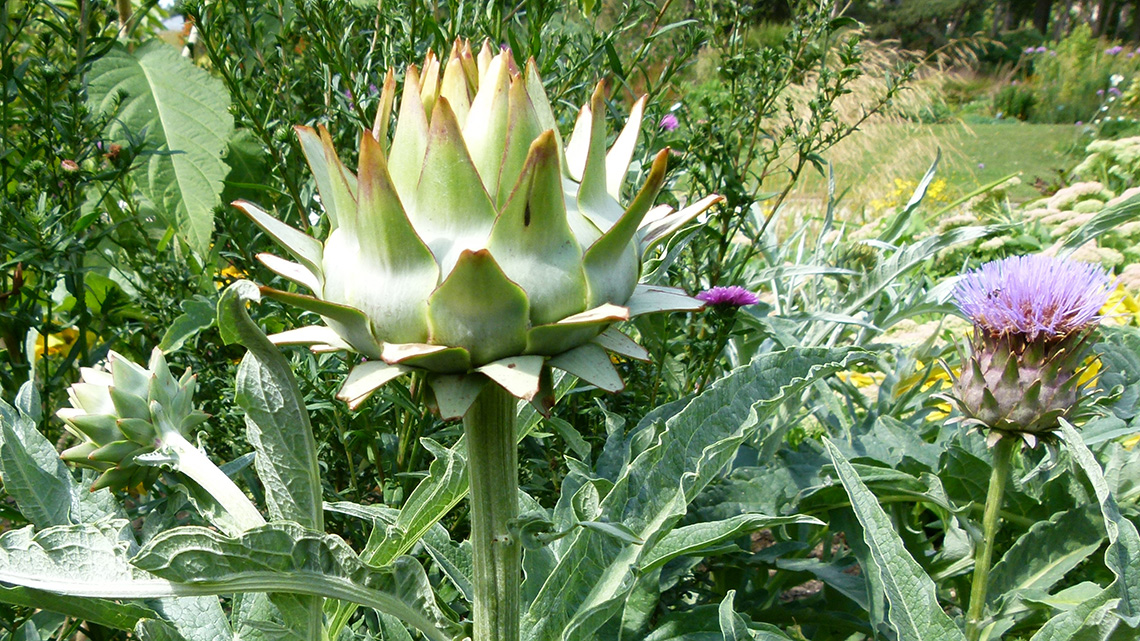
The artichoke (Cynara scolymus) is a plant that has captivated attention for centuries due to its unique beauty, taste, and medicinal properties. This Mediterranean plant is not only a gourmet delight but also a valuable ally for health.
Origin and Characteristics
The artichoke originates from the Mediterranean region, where it has been cultivated for over 2,000 years. Its large, silvery-green leaves and striking purple flowers make it not just a useful plant but also a highly decorative one.
The plant grows as a herbaceous shrub that can reach up to 1.5 meters in height. The most prized part of the plant is its flower buds, which are harvested while still closed. Once the flower blooms, the plant transitions to an ornamental phase.
Cultivation of Artichokes
Artichokes require sunny and warm climates, as well as fertile, well-drained soil. While they prefer a Mediterranean climate, they can thrive in continental conditions with proper care.
- Planting: Best planted in spring using young seedlings or direct sowing of seeds.
- Watering: Regular watering is crucial, especially during dry periods.
- Fertilizing: Organic fertilizers and compost provide essential nutrients.
- Maintenance: Regular weeding and protection from pests ensure healthy growth.
Nutritional Value and Benefits
The artichoke is a treasure trove of nutrients:
- Vitamins and Minerals: Rich in vitamins C, K, B9 (folate), and minerals like potassium, magnesium, and iron.
- Fiber: Exceptionally high in dietary fiber, making it ideal for improving digestion.
- Antioxidants: Contains powerful antioxidants like cynarin and silymarin, which aid liver detoxification and cell protection.
Medicinal Properties
The artichoke has a long tradition in folk medicine. Here are some of its beneficial effects:
- Liver Support: Helps detoxify the body and regenerate the liver.
- Improved Digestion: Stimulates bile secretion, easing the digestion of fatty foods.
- Cholesterol Reduction: Regular consumption helps regulate LDL cholesterol levels.
- Blood Sugar Regulation: Assists in stabilizing glucose levels.
Culinary Uses
The artichoke is a staple in Mediterranean cuisine. It can be prepared in various ways:
- Boiled: Traditionally served boiled with olive oil, lemon, and garlic.
- Baked: Stuffed with a mixture of breadcrumbs, garlic, and parsley, it becomes a delicacy.
- Salads: Its marinated leaves or hearts are perfect for fresh salads.
- Pesto: Adding artichoke to pesto sauce creates a rich and unique flavor.
Interesting Facts About Artichokes
- In ancient times, it was considered a symbol of luxury and was often reserved for the wealthy.
- Each year, California hosts the "Artichoke Festival," celebrating this fascinating plant.
- The artichoke flower is a natural source of dye used in traditional fabric coloring.
Conclusion
The artichoke is not just a plant but a true treasure trove of health and flavor. Whether you grow it in your garden or use it in your kitchen, this Mediterranean gem will enrich your life in countless ways. Its versatility and numerous health benefits make it an indispensable topic for plant enthusiasts.


Comments