



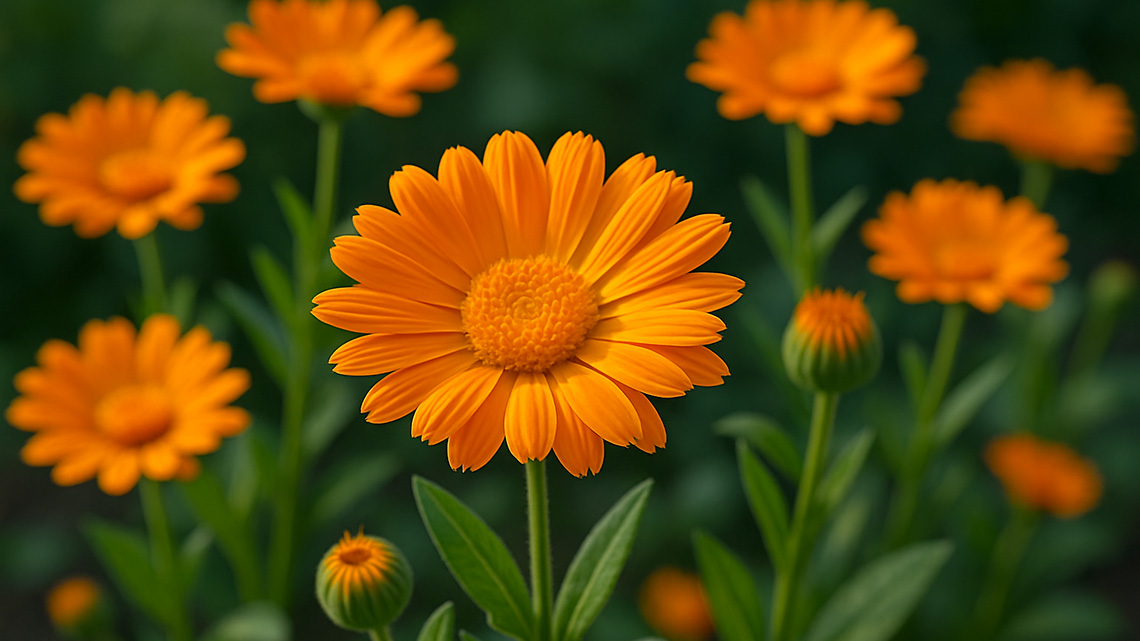
Calendula, commonly known as marigold, is one of the most cherished healing herbs in traditional medicine. Its bright orange or yellow flowers are not only beautiful but also packed with natural compounds that promote skin healing, reduce inflammation, and support overall well-being.
Appearance and Characteristics
Calendula is an annual herbaceous plant from the Asteraceae family. It grows up to 60 cm in height and produces striking daisy-like flowers from late spring to autumn. The plant thrives in sunny spots and well-drained soil, and it’s easy to grow both in gardens and containers.
It’s beloved by pollinators, especially bees, making it a welcome guest in eco-friendly gardens.
Medicinal Uses and Benefits
Calendula is valued for its:
- anti-inflammatory and antimicrobial properties,
- skin regenerative abilities – helps with cuts, burns, rashes, acne, eczema, insect bites, and varicose veins,
- soothing effect on mucous membranes – used in gargles, mouth rinses, and stomach remedies.
The most commonly used parts are the flower heads, either fresh or dried. Calendula can be used as:
- herbal tea,
- tincture,
- infused oil,
- ointments and creams,
- compresses and baths.
Note: Calendula should be used with caution during pregnancy and breastfeeding – consult a healthcare provider.
In Folklore and Tradition
In folklore, calendula was considered a sun-charged flower that brought luck and protection. People believed that:
- dried calendula hung in the home kept bad energies away,
- girls who wore it in their hair would attract true love,
- it had the power to “heal from the heart outward.”
Its petals were also used as natural dye for textiles and food coloring, and in the kitchen as a substitute for saffron – giving it the nickname “poor man’s saffron.”


Comments