



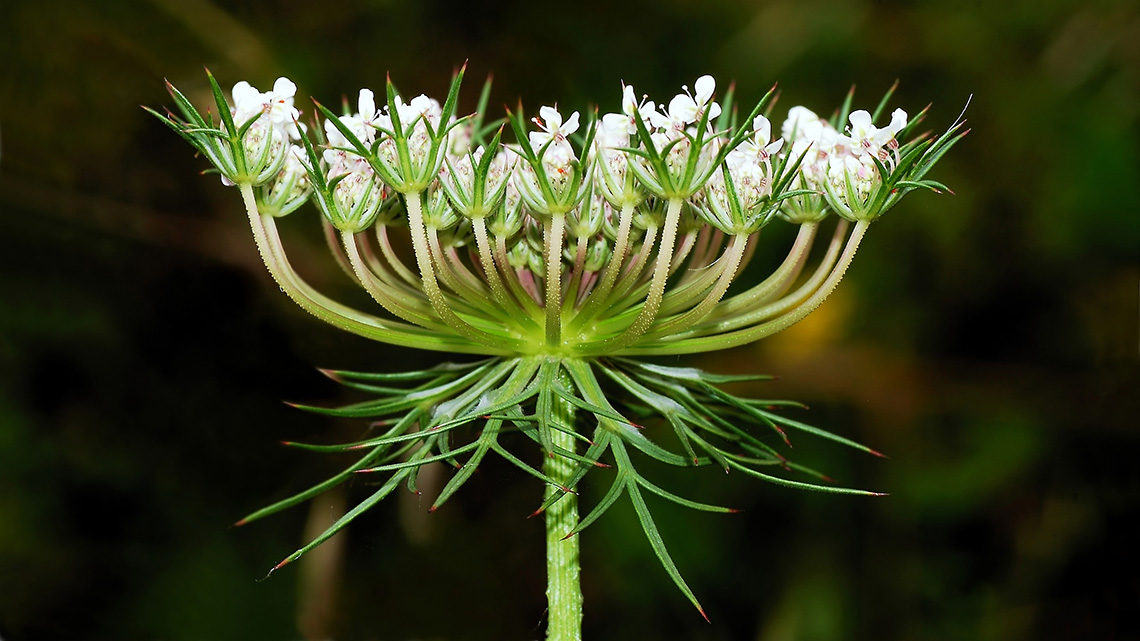
Wild carrot (Daucus carota) is a fascinating plant that reminds us of the enchanting corners of nature with its appearance and properties. Also known as "Queen Anne's Lace" or "wild carrot," this plant has a rich history and significance in folk medicine, cooking, and gardening. In this blog, we will explore its characteristics, benefits, and cultivation methods.
Plant Characteristics
Wild carrot is a biennial plant from the Apiaceae family, easily recognized by its delicate, white-pink flowers clustered in characteristic umbel inflorescences. In its first year, the plant develops a rosette of leaves and a root that resembles a small, thinner version of the cultivated carrot, while in the second year, it grows a flowering stem that can reach heights of 30 to 120 cm.
Flowers and Fruits
The flowers of wild carrot are tiny, white, grouped into large, flat inflorescences that resemble lace, hence the name "Queen Anne's Lace." In the center of the inflorescence, there is often a single dark red flower, which is distinctive for this species. After flowering, the plant forms small, oval fruits with a spiky surface.
Uses and Applications
Medicinal Use
Wild carrot has a long tradition of use in folk medicine. The root of the plant contains essential oils, vitamins, and minerals and is used to make teas and tinctures that help treat digestive issues, kidney problems, and as a diuretic. However, caution is advised, as some parts of the plant, like the leaves, can be mildly toxic if consumed in large quantities.
Culinary Uses
While the root of the wild carrot is edible, it is much tougher and less sweet than its cultivated counterpart. Nevertheless, it can be used in soups and stews, especially during times of food scarcity. The flowers and leaves can be used as decoration or seasoning in salads, adding not only flavor but also aesthetic value to the dish.
Gardening and Ecology
Wild carrot is an excellent plant for natural-style gardens, attracting numerous beneficial insects like bees, butterflies, and helpful wasps. These plants also help improve soil fertility and can be used as green manure.
Cultivation and Maintenance
Growing wild carrot is not demanding. The plant prefers sunny spots and well-drained soil but can grow in poorer soils as well. It is sown directly outdoors, usually in spring or autumn. Once established, wild carrot reproduces easily by self-seeding, which can be an advantage but also a disadvantage if not controlled, as it can become invasive.
Practical Tips for Growing:
- Location Selection: Choose a sunny spot with well-drained soil.
- Sowing: Sow seeds directly in the garden in early spring or late autumn. Lightly cover the seeds with soil and keep them moist until they germinate.
- Spacing: Leave enough space between plants, as they spread during growth.
- Maintenance: Regularly remove weeds around the plants and water occasionally, especially during dry periods.
Conclusion
Wild carrot is a true natural beauty that brings not only aesthetic pleasure but also numerous benefits for health, culinary uses, and ecology. Whether you want to enrich your garden, use it in folk medicine, or simply enjoy its beauty, wild carrot deserves a place in every garden.
We hope you enjoyed this blog and that you feel inspired to explore and perhaps cultivate this incredible plant.


Comments