



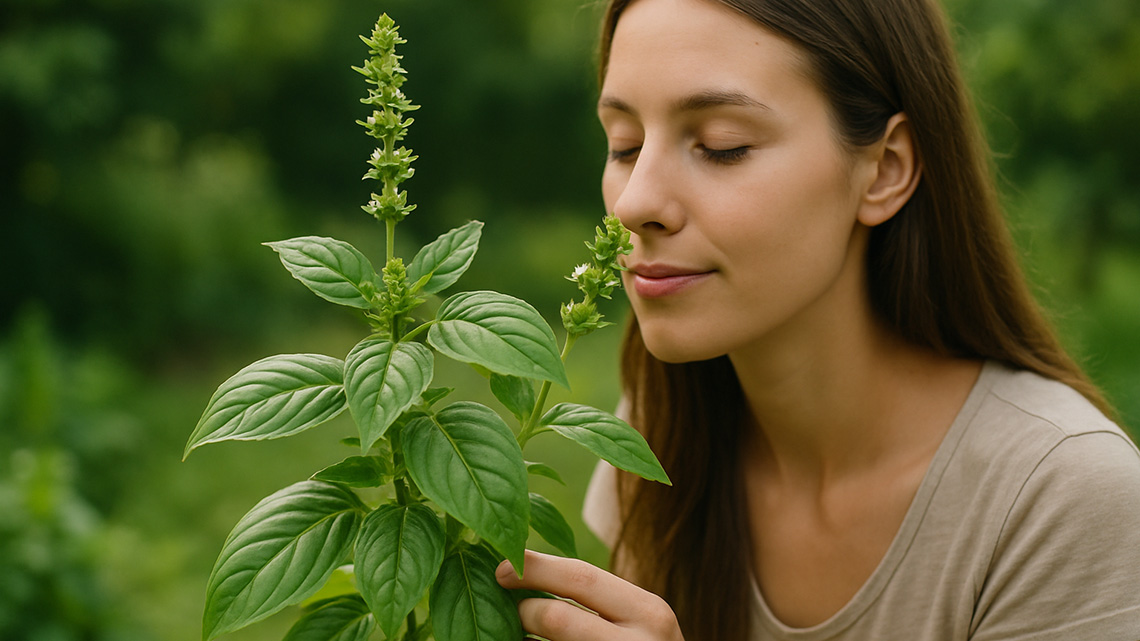
Basil is much more than a flavorful kitchen herb. In traditional medicine and culture, it holds a special place as a sacred and healing plant. Known since ancient times, basil has been used for its calming scent, therapeutic oils, and culinary versatility.
Appearance and Characteristics
Basil is an annual herb from the mint family (Lamiaceae). It has a branched stem, soft oval green leaves, and small white or pale pink flowers. Its strong, recognizable scent comes from essential oils rich in compounds like eugenol and linalool.
It thrives in warm, sunny environments and moist soil, making it ideal for gardens, balconies, and pots.
Medicinal Benefits and Uses
Basil offers a range of health benefits:
- Calming effects – helps relieve nervous tension, insomnia, and headaches
- Aids digestion – eases bloating, nausea, and indigestion
- Antiseptic and anti-inflammatory – useful for sore throats, coughs, and mouth irritations
- Boosts immunity – thanks to antioxidants and essential oils
It can be used as:
- herbal tea,
- fresh leaves – in food and salads,
- essential oil or tincture,
- steam inhalation – for colds and congestion
Note: Basil should be used moderately. Large quantities, especially during pregnancy, are not recommended due to its estragole content.
In Folk Tradition
In many cultures, basil is a symbol of purity, protection, and spirituality. In Serbian tradition:
- basil is added to holy water,
- worn as an amulet,
- used to bless homes and protect from negativity


Comments