



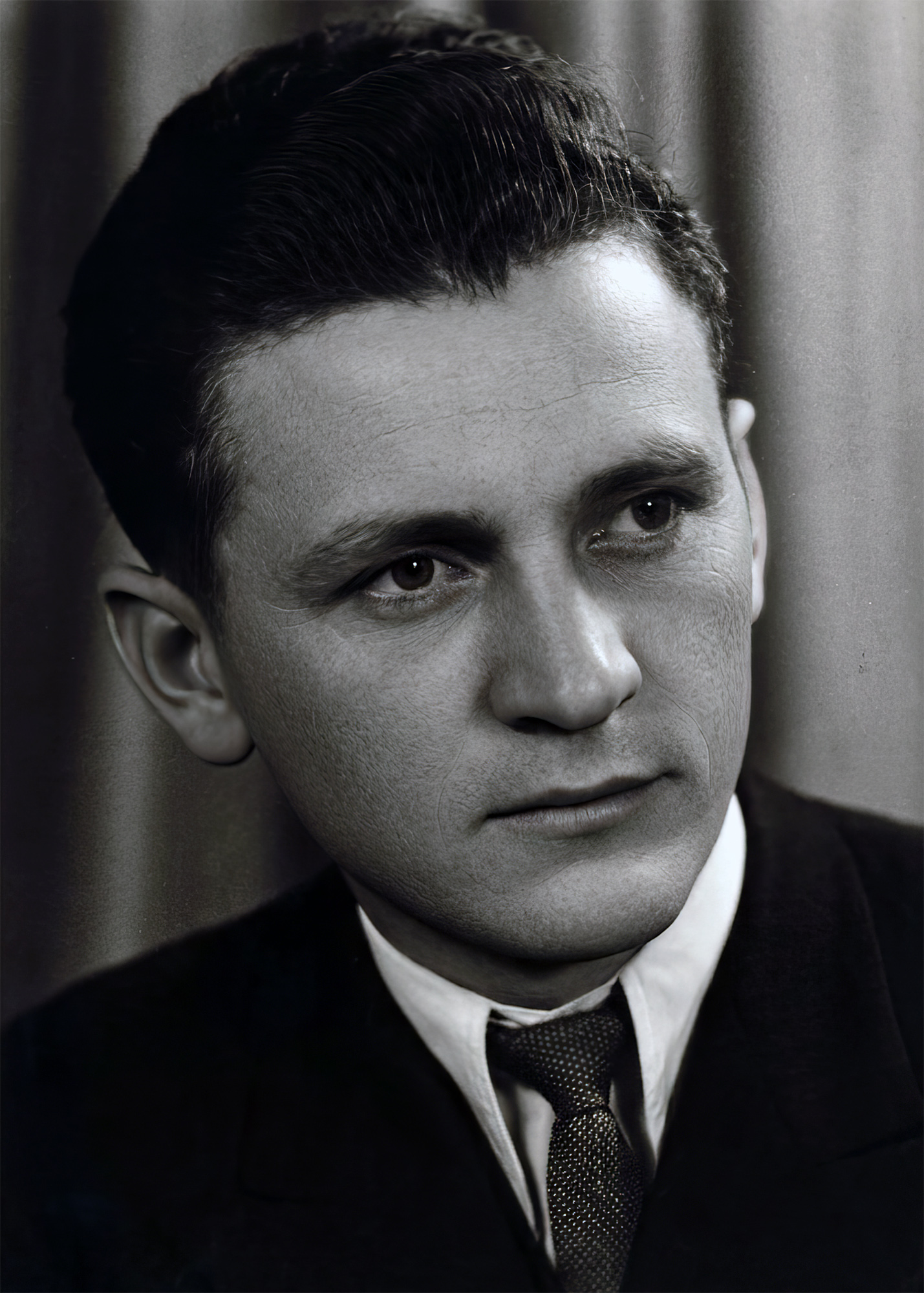
The name of composer Josif Marinković is spoken with deep reverence by the people of Novi Bečej, especially by the residents of the Vranjevo district. And rightly so — he is the most distinguished figure ever born in this town.
The memory of the composer was especially vivid in 1951, on the 100th anniversary of his birth, which was organized by the Association of Composers of Serbia and the Association of Musical Artists of Serbia. The celebration included a series of important events.
In Belgrade, at the Kolarac University, a concert of Marinković’s works was held at the beginning of October, followed by an exhibition at the Museum of the City of Belgrade, dedicated to his life and work. Before the opening of the exhibition, the senior members of the “Obilić” Choir, where Marinković once served as choirmaster, performed his composition “Hey, Trumpeter”, while academician and composer Petar Konjović spoke about the importance of Marinković’s music.
At the unveiling of a memorial plaque on his house in Belgrade — where he lived and composed many of his greatest works — Milenko Živković, president of the Association of Composers of Serbia, gave a speech in his honor.
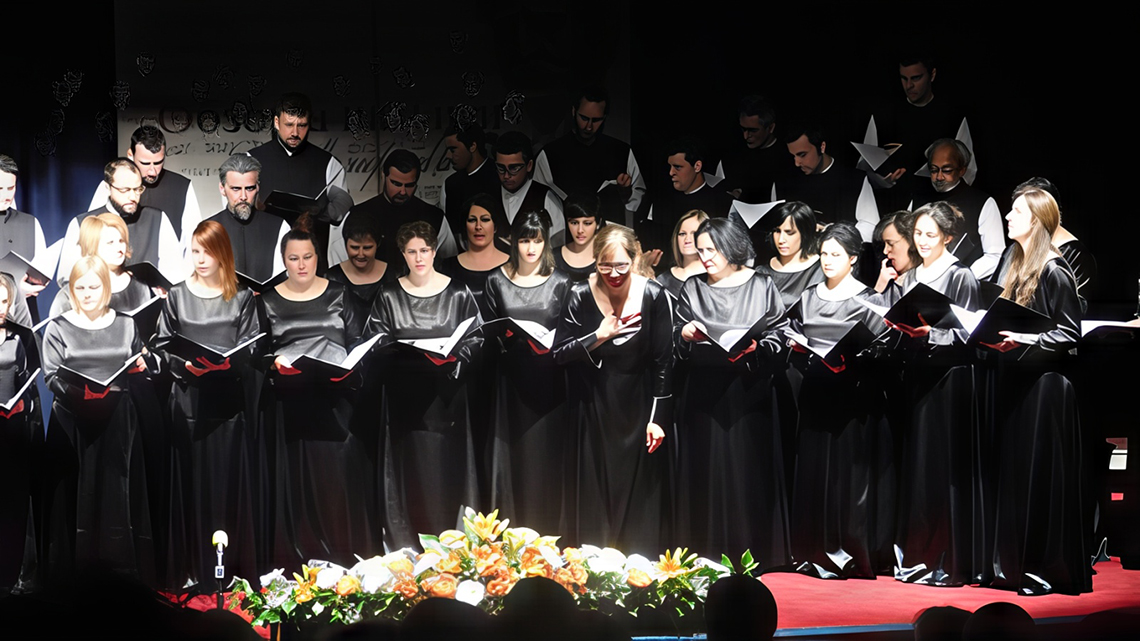
The celebration in Marinković’s birthplace, Vranjevo (then known as Vološinovo), took place on October 7 with a rich program. A memorial plaque was unveiled on the building where his birth house once stood, and in the evening, the Radio Belgrade Choir, conducted by Svetolik Pašćan, held a concert at the hall of the Hungarian Cultural and Educational Society. Professor Predrag Milošević of the Belgrade Music Academy spoke about Marinković’s life, while the choir performed his compositions “Satisfied River”, “11th Kolo” (Serbian folk songs from Vojvodina), “On Good Friday”, and two rediscovered works from his manuscripts — “Tell Me” and “My Friend”, sung by baritone Dušan Popović. The concert concluded with Marinković’s “Potočara”, conducted by Borivoje Simić with piano accompaniment by Andrija Preger.
The centenary was also marked in Sombor, where a memorial plaque was placed on the former Teacher’s College (Preparandija), which Marinković had attended as a student.
Nearly two decades had to pass before the people of Novi Bečej once again remembered their great artist. In 1968, the “Vranjevo” Elementary School was renamed “Josif Marinković” Elementary School, and soon afterward, the most important step was taken — the founding of the Josif Marinković Memorial Collection in 1971, initiated by Branislav Kiselički. At the same time, the local Choral Music Society adopted Marinković’s name.
However, one thing was still missing — a lasting manifestation that would preserve the memory of the composer and his works for generations to come. Another two decades would pass before that idea took shape.
It all began in Bočar, the smallest village in the Novi Bečej municipality, where Zagorka Jegdić, principal of “Dositej Obradović” Elementary School and music teacher, led a small children’s choir to remarkable success. In 1992, the choir won the Golden Plaque at the Children’s Music Festival of Vojvodina in Novi Bečej, and later achieved a perfect score of 100 points and another Golden Plaque at the Third National Festival of Elementary Schools of Serbia in Vršac.
This outstanding success led to an invitation to perform at the Children’s Choirs Concert in Negotin, on September 14, 1992, as part of the 27th “Mokranjac Days” Festival. There, Slobodan Bursać, conductor of the “Josif Marinković” Choir from Zrenjanin, impressed by the performance and Jegdić’s talent, proposed that Novi Bečej should establish a festival in honor of its famous composer — just as Negotin had done for Mokranjac. The idea was supported by many prominent musicians who attended the festival.
Inspired by the success and encouragement, Zagorka Jegdić, who had by then become the director of the Cultural Institution of Novi Bečej, with the full support of the local government, launched the festival “Days of Josif Marinković” in 1993.
The manifestation still lacked a distinctive name — a poetic one that would capture its spirit. This was provided by Dr. Spasoje Grahovac, professor of literature at the Pedagogical Academy in Kikinda and a great friend of Novi Bečej, who suggested the name “Horizons on the Tisa” (Obzorja na Tisi).
Thus, after years of preparation, the idea became reality — and the celebration could finally begin.


Comments