



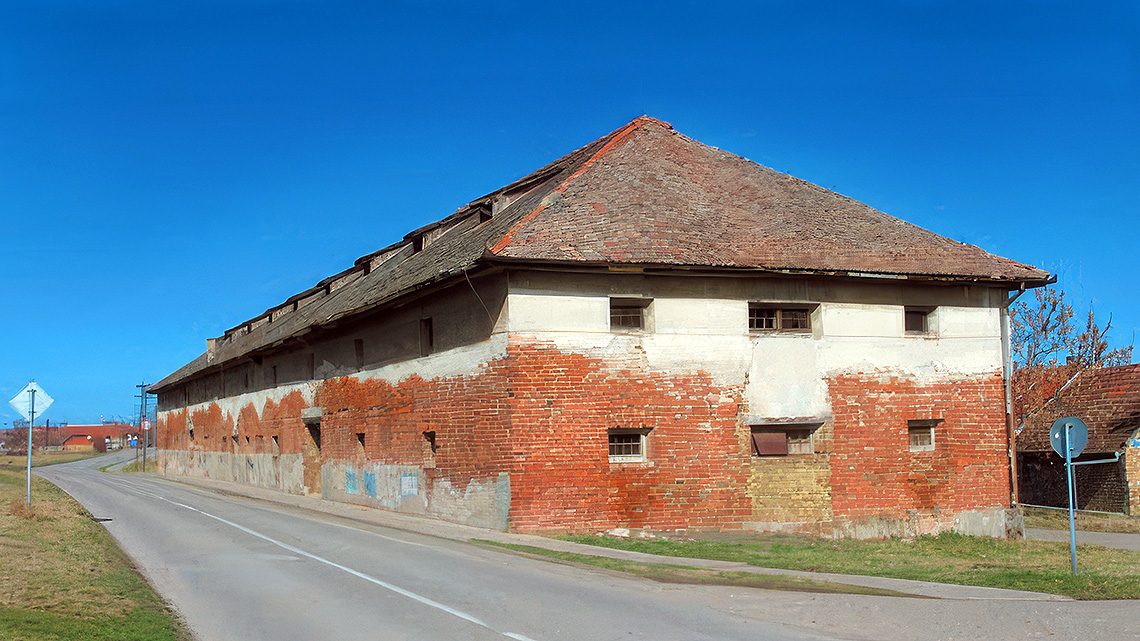
Vranjevo, Franjevo, or the trench Vranjevo is a settlement in Banat, which was settled in the mid-18th century by Serbian border guards from Bačka after the dissolution of the Potisje-Pomorišje border. From 1774 to 1876, Vranjevo was part of the Velikokikinda district1, an autonomous territorial area within the Habsburg Empire, and had a privileged position. In 1806, Vranjevo received the status of a small town and the right to organize two fairs annually. After the abolition of the district in 1876, it became part of the Torontal County, specifically the new Bečej district.
Today, the place named Vranjevo no longer exists, as it was merged with Novi Bečej in 1946, under the name Vološinovo, after a marshal of the Soviet Red Army who died in 1944 while liberating Novi Bečej. Since 1952, the place has been called Novi Bečej again, with Vranjevo being a part of it.
Vranjevo in the Velikokikinda District
At the time of Josif Marinković's birth and his childhood and youth, Vranjevo was the most developed and wealthiest settlement in the Velikokikinda district. Located on a navigable arm of the Tisa River, it was a vibrant center of trade. There was a large collection warehouse for exporting grains, where producers from neighboring villages brought and sold their products, as well as conducted their business. As a relatively newer settlement, with its wide, straight, and beautiful streets on elevated terrain, Vranjevo also attracted new residents, with the population ranging between 6,000 and 6,500.
With its dynamic development, Vranjevo quickly became the second largest place in the district after Kikinda, distinguishing itself in many ways. As early as 1758, it was noted that the Serbian elementary school in Vranjevo had the same number of students as the one in Kikinda. There was particularly notable interest among Vranjevo families in educating their children, especially in the 19th century when secondary education became established and higher education began.
The most prominent secondary school for Serbs in Vojvodina, the Sombor Preparandija, had more students from Vranjevo during the time Marinković attended. According to records from 1860 to 1874, the following students from Vranjevo are known: Sava Rajković, Lazar Josimović, Stevan and Dušan Knežević, Mladen Belić, Josif Marinković, Arkadije Popović, and Dušan Knežević. At that time, students from Vranjevo also studied at universities, primarily in legal sciences in Pozun, with notable figures such as Dr. Vladimir Glavaš, Mladen Mađarević, and Mija Vlaškalin.
The education of the people and youth of Vranjevo contributed to a very rich cultural atmosphere, leading to a vibrant theater scene. This resulted in the formation of amateur theater groups and later professional individuals, even traveling theaters. Notable was the professional traveling theater of Jovan Knežević, which transformed into the Serbian National Theater in Novi Sad, and from the traveling theater of Aleksandar Popović from Vranjevo, the Sombor National Theater was created.
It is worth recalling the names of actors who marked the Serbian theater scene: Jovan Knežević – Caca, Aleksandar Popović, Stevan Đekić, the notable family of priests Luka Popović, who contributed actresses Draginja, Ljubica, Jelisaveta – Jeca, Sofija, and Katarina, as well as actors Paja and Laza, Nikola Zorić, Teodora – Toda Boberić, married Arsenović, Vojislav Turinski, and Aleksandar Nešić – Tucaković.
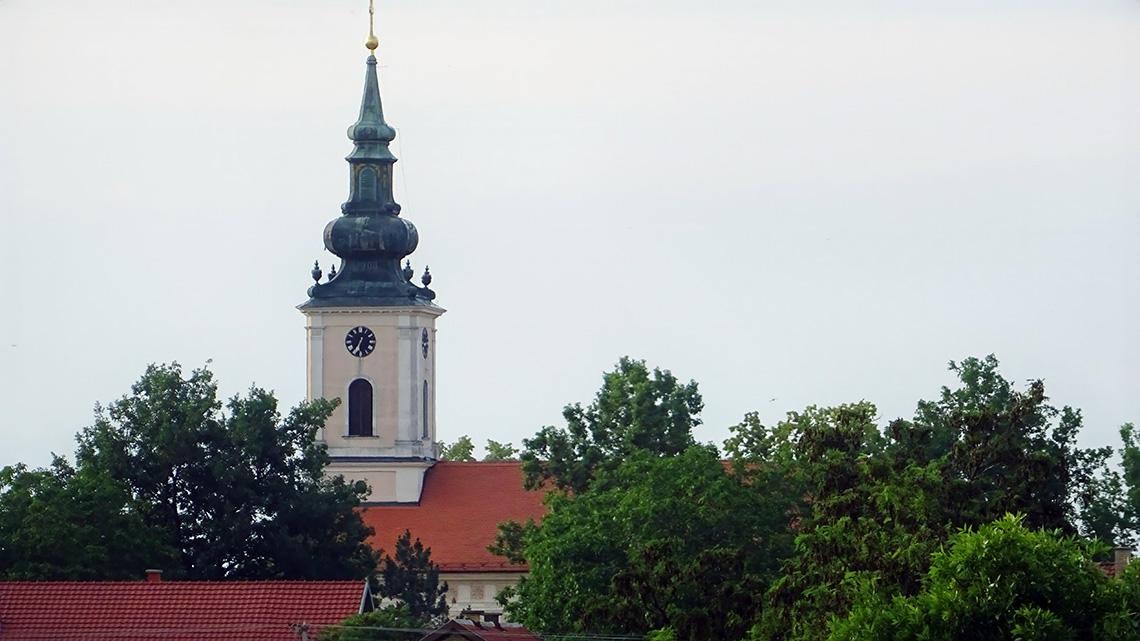
In this lively and very active place, with a rich agricultural base, crafts, and trade, it was possible during the 19th century to build a new Orthodox church, a municipal house, and seven new school buildings. This vibrant Vranjevo was declared a small town and granted the right to hold two fairs annually.
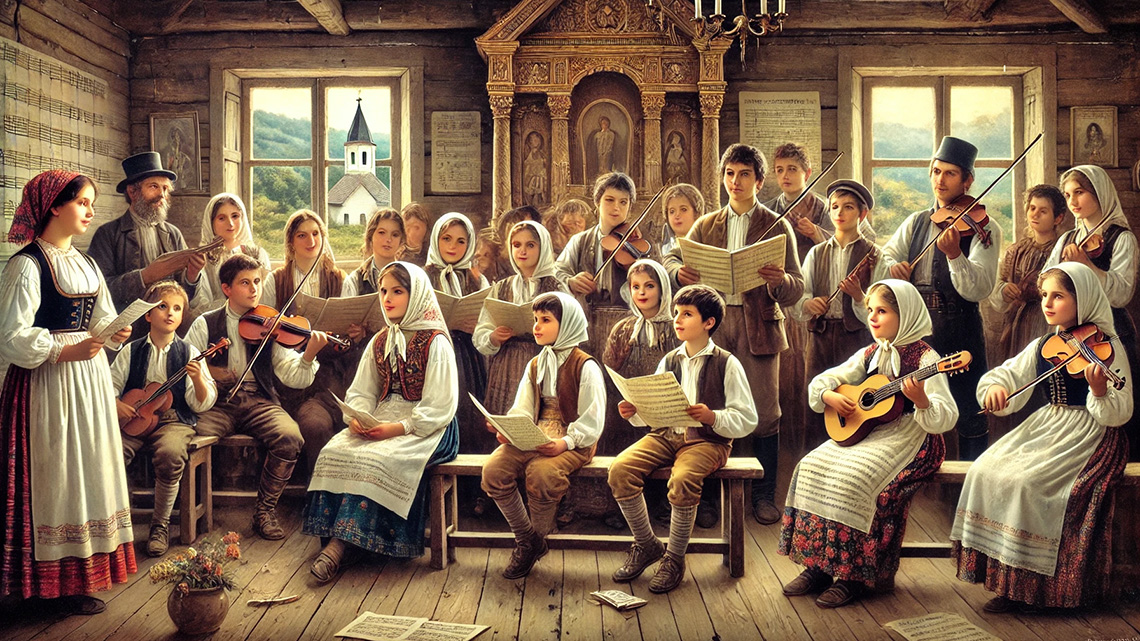
This is a general picture of Vranjevo, where the family of Josif Marinković lived, despite having a large estate in Kikinda. An interesting fact is that the family's stay in Vranjevo can be linked to the existence of the district, as Josif Marinković's grandfather settled in Vranjevo, and the family's departure coincided with the abolition of the district. Josif's father, Jovan, was one of twenty-five municipal heads. The family's connection to Vranjevo will be evident in the life of young Josif during his schooling. He spent all his holidays in Vranjevo, and after finishing high school, he actively participated in the cultural life of the place with his "speeches" – music-literary events, as well as his choir of fellow citizens that sang in the church. Thus, in such an environment, on the busiest part of the main Vranjevo street, stood the house of Josif's family, and from a young age, he observed all public and cultural events that strongly attracted him.
Excerpt from a paper by Branislav Kiselički, presented at the scientific gathering "Music at the Crossroads of Two Centuries," at the Serbian Matica in Novi Sad, September 28, 2001.
- The Velikokikinda district included the settlements of Velika Kikinda (district headquarters), Bašaid, Vranjevo (part of Novi Bečej), Jozefovo (Novi Kneževac), Karlovo (part of Novi Miloševac), Kumane, Melenci, Mokrin, Srpski Krstur, and Taraš.

Comments