



 Konstantin Vukov was born in Veliki Bečkerek (the former name for Zrenjanin) on September 20, 1875, to father Jovan Vukov, a cooper (pinter), and mother Ljubica, a certified teacher. After completing the fifth grade of elementary school, he was enrolled in gymnasium, which he left after the first year. He was accepted as an apprentice by the esteemed Bečkerek photographer Lajoš Orosi (7) on July 15, 1888, and became a journeyman on July 15, 1891. Afterward, he set out into the world to perfect his photographic craft.
His first destination was Belgrade, where he worked with master Vasa Danilović, and in 1892 with the brother of painter Paja Jovanović – Milan S. Jovanović. Both Danilović and Jovanović held the status of court photographers of the Kingdom of Serbia (8). Vukov later worked in Munich under several masters from 1893 to 1896, while simultaneously furthering his education at the Photographic School at the "Graphische Lehr- und Versuchsansalt" institute. Besides his craft, he also mastered the techniques of lithography and engraving. His return to his hometown was connected to serving his military duty, after which he found employment in Trieste and later in the Romanian city of Galati with royal court photographer Georg Maksai (Georg Maksay).
 A valid record from the Belgrade Section of Photographic Masters indicates that Konstantin Vukov received his trade license in 1907, and the assumption that he opened a photographic studio in Veliki Bečkerek after obtaining the license is confirmed by a postcard from Rusanda Spa from 1907, which bears the inscription "Cost. Wukow, Photogr-, Nagybecskerek." Konstantin Vukov frequently visited Rusanda Spa, as evidenced by numerous postcards of the spa published by him. There, he met Ljubomir Pavlović, a doctor from Novi Bečej. Upon his suggestion, Vukov moved to Novi Bečej around 1910 to open a permanent photography studio in the Maletić House, later known as the Craftsmen's House. More precisely, his studio was located next to the Maletić two-story house, at the intersection of Deak Street (Deák utca), later King Peter the Great, and Tsar Lazar, today at the corner of Marshal Tito and Vuk Karadžić Streets, facing Vranjevo. From that time, photographs and postcards with the signature "Wukow C. Törökbecse" and "Константин Вуков – Турски Бечеј" began to appear.
After nearly two decades of work, he purchased the left wing of the house at 15 King Peter the Great Street (now Marshal Tito Street), formerly the home of the Bizonj family. By converting part of the attic (the part facing the courtyard), he built a studio, modern for its time, and equipped it with a glass roof and wall to allow the room to receive as much natural light as possible. It should be noted that in the 19th and early 20th centuries, photography was mostly done in natural light, without electric lamps and reflectors. Even after the main street was electrified in 1927, Vukov preferred natural light, primarily due to the quality of the resulting photographs.
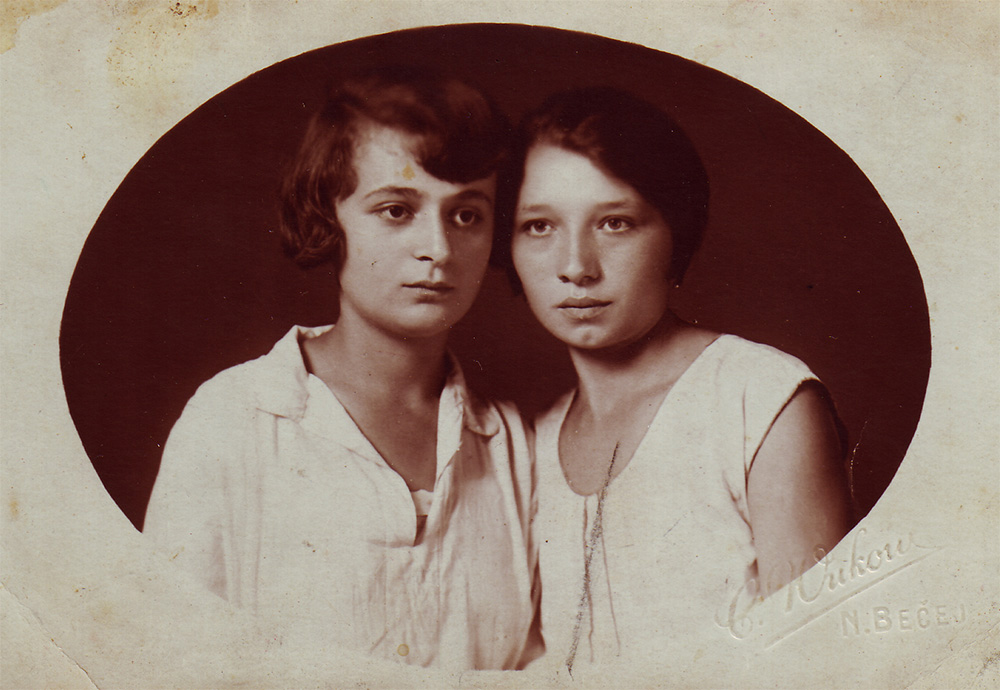 It was interesting to reach the studio, as one first passed through the ajnfort gate, and at the end, on the left side, one climbed wooden stairs to the attic. The studio roof was half glass, as was half of the wall facing the northeast side. Opposite the entrance doors, curtains in various colors were hung, with several chairs, armchairs, and a small table in front of them. In addition to these ambient props, there were also a wooden horse, wooden toys, dolls, and several parasols. In the middle of the studio stood two wooden stands, one larger and the other smaller, to which a bellows camera with a large lens and covered with black fabric was attached. These were plate cameras that used glass negatives (9) measuring 8x10 inches or 20.5x25.4 cm, from which photographs were made by contact printing. The photo paper was cut into various formats and glued to cardboard backings. In that studio full of light and a strange smell, with great expertise, elegance, and a smile on his face, Konstantin Vukov posed his customers for photography.
Photographer Vukov used several cameras, and among the better ones was a Linhof, purchased before World War II. He only switched from glass plates to plan film in the mid-1940s. He believed that narrow films measuring 6x9, and later Leica formats, were not suitable for making good photographs. He rarely produced his photographs in black-and-white. He mostly used brown tones with special chemicals to make the photographs as long-lasting as possible.
He was very eager to pass on his knowledge and experience to young students and others interested in photographic techniques. In addition to students like Dobrivoje Nestorov, Šandor Nađ, Tibor Sič, Živa Micić, and Jelisaveta Švajcer, he often employed assistants such as Lajoš Čanji and Tereza Kerekeš (10).
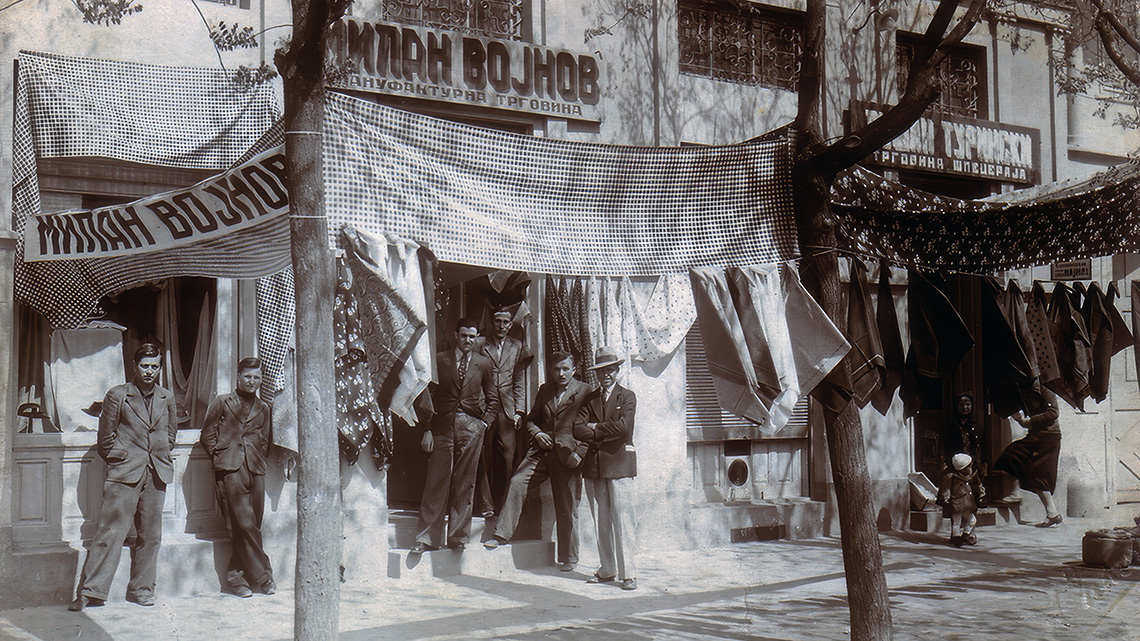
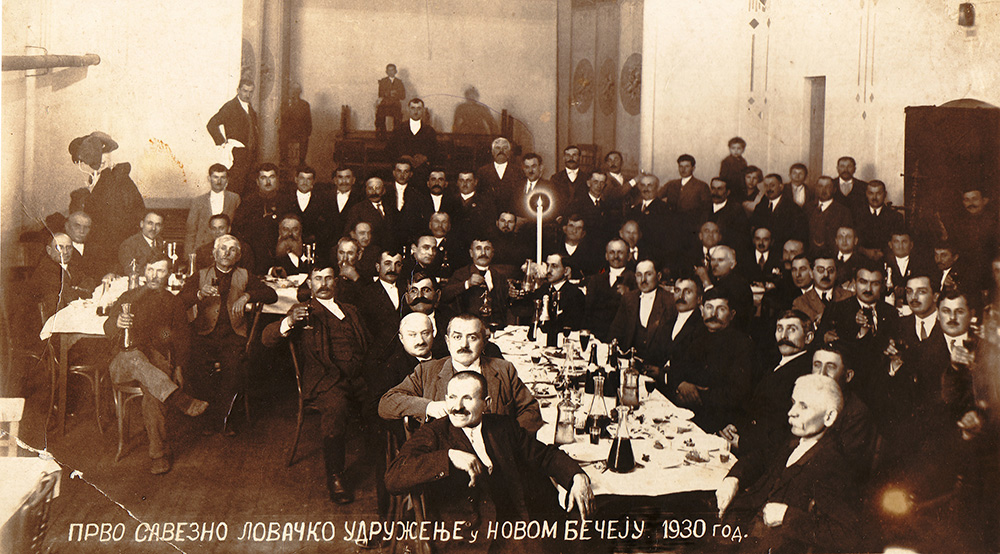
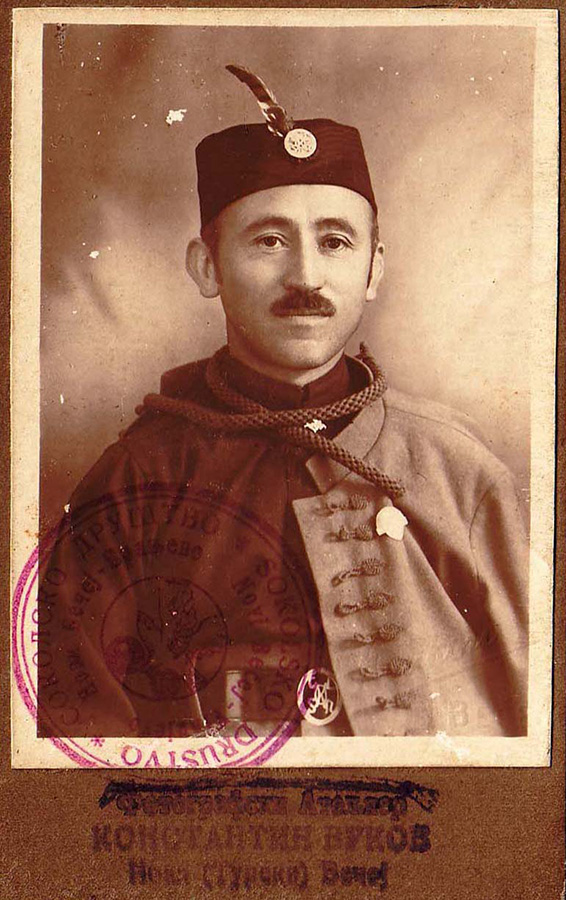 Konstantin Vukov recorded all the important events that took place in Novi Bečej and Vranjevo between 1910 and 1961, such as the consecration of the monument to Count Karolj Leiningen-Westerburg (Leiningen-Westerburg Károly) in 1911, the installation of bells on the tower of the Catholic church in 1924, the celebration of the 120th anniversary of the founding of the Kharkov Institute in 1932, the consecration of the monuments to King Peter the Great in 1926 and King Alexander in 1937. His well-known photographs were taken during the high water levels of the Tisza River in 1910, 1932, and 1942, photographs from the district Sokol gathering in 1938, as well as photographs from various cultural and artistic performances. He displayed his photographs in an improvised showcase attached to the house, to the left of the entrance door.
As early as the beginning of the 20th century, his photographs appeared on postcards of Novi Bečej and Melenci, more precisely Rusanda Spa (11). At that time, he also became a postcard publisher. Along with printer Giga Jovanović, he became the largest publisher of Novi Bečej postcards. After World War I, he began publishing postcards on photo paper, which was characteristic of that time.
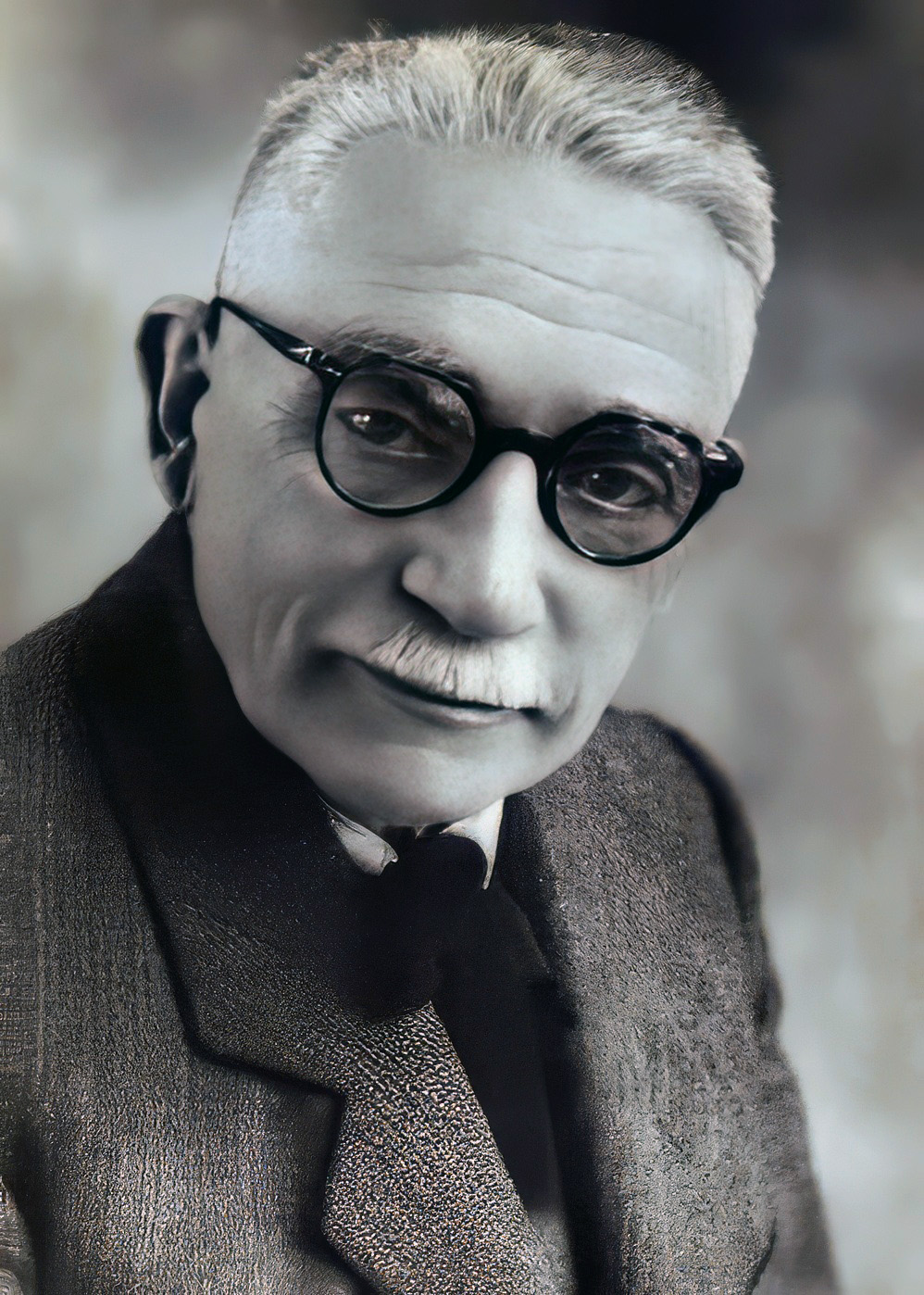
Čika Vukov, as he was called, lived in a harmonious marriage with his wife Emilija Krajcberger (Kreuzberger), and they had two children, Marija and Kosta (12). He was a kind gentleman, sociable, smiling, and always ready for a joke. To cheer up children, he often took out a cardboard box full of menthol candies from his pocket and shared them. The citizens of Novi Bečej will remember him walking down the main street in his gray coat, with a cane in hand, and smilingly greeting them back.
7 Lajoš Orosi photographed Crown Prince Ferdinand several times during hunting in Ečka in 1898 and 1899 (Németh Ferenc – Úri vilag Torontálban).
8 Data from Vladimir Janošev, Photo Museum, Belgrade.
9 In 1995, the new owner of Konstantin Vukov's house, Dragan Kiževski, donated a large legacy of glass negatives to the local collection of the National Library of Novi Bečej. I was personally present during the collection of this material, and I reviewed most of the negatives in the studio itself. My great hopes of finding a large number of glass negatives and photographs depicting our town were not realized. The negatives were mainly portraits and a few group photographs. That year, I once again reviewed the legacy in the library, but unfortunately, with the same result.
10 Branislav Kiselički – "Konstantin Vukov, Photographer"
11 Before and after his arrival in Turkish Bečej, Konstantin Vukov often visited Rusanda Spa to photograph the spa's clientele. His series of postcards of Rusanda Spa from the period 1905-1914 are well known.
12 Kosta – Dr. Konstantin Vukov (1920-1991), university professor in Hungary, scientist, doctor of chemical sciences, and world expert in sugar technology.
Comments