



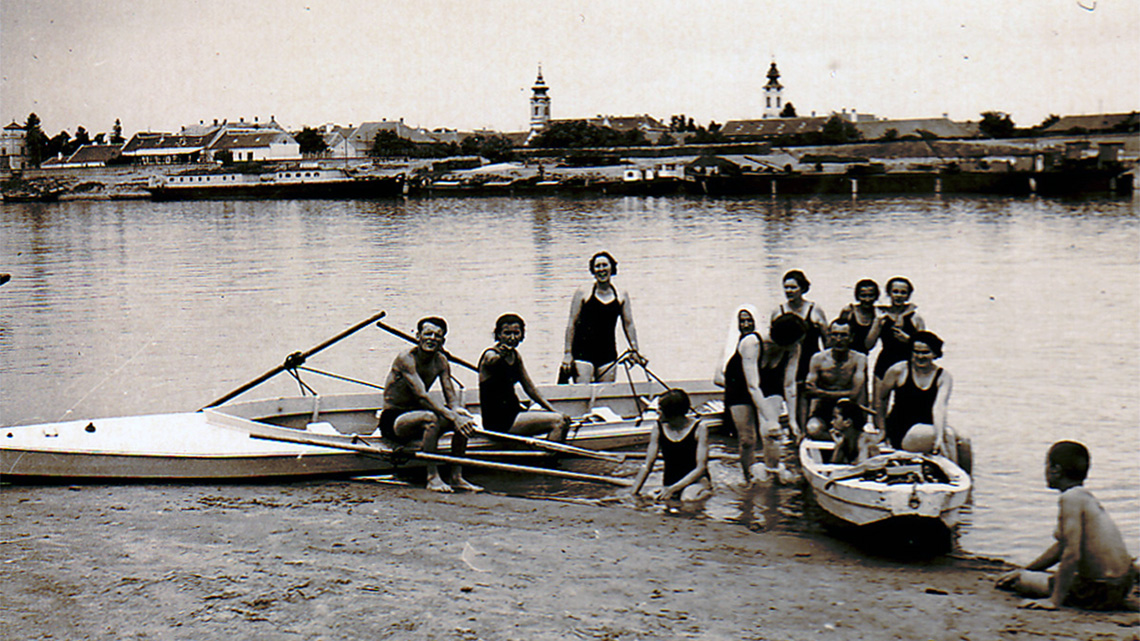
Based on several dozen photographs from the early 20th century, in the format of then-popular postcards, 9x14 cm, on thin paper and without any signature of the photographer, we reasonably assume that these are works of pioneers of photo amateurs from Novi Bečej. They belonged to the wealthier layer of the bourgeoisie and were able to allocate significant funds for purchasing portable cameras, and of course, the photographs were developed by local professional photographers. Some of these photographs were printed, addressed, and used instead of postcards.
One of our first photo amateurs was probably Ladislav Laslo Kostović (1855-1942), the brother of scientist and inventor Ognjeslav Kostović, who served as Hungary’s consul in the Netherlands and Serbia. He traveled through Europe and parts of the world as early as the late 19th century with his portable camera. In the last years of his life, he spent time in the family home in Novi Bečej, leafing through and showing his photo albums to curious fellow citizens.
From the descendants of our wealthier locals, we know of photographs of Isak Garai, the director of the Turkish Bečej Savings Bank. He left us several precious photographs of his family members at the tennis court in Gradište from the first decade of the 20th century. Also, around this time, in 1907, a certain Dušan sent his amateur photograph from Turkish Bečej to Mitrovica using a photo postcard.
From a conversation with Natalija Marić, born Nićin (1911-2004), we learned that her parents acquired a camera from America at the beginning of the second decade of the 20th century and immortalized interesting moments from the time they lived in. The albums full of photographs, held by the heirs of the Marić family, testify to various events from the past of this distinguished Novi Bečej legal family.
Giga Jovanović (1875-1944), a banker and printer, also kept up with contemporary trends and fashion trends from around the world, so it was unimaginable for him to miss out on anything. Judging by the photographs examined from Giga's legacy, we can confidently state that he owned a camera from the 1920s.
Based on the discovered photographs of merchant Maks Cigler (circa 1870-1941), which mostly feature family members and events from various trips, we conclude that he used a camera from the late 1920s.
Branislav Bata Kiselički (1919–2008), a teacher and principal of the "Josif Marinković" elementary school, befriended the son of photographer Konstantin Vukov and had the opportunity to get acquainted with photography techniques at a very young age. Noticing Branislav’s interest in this art, his father Jovan bought him a camera at the end of the 1930s. From then on, throughout his life, he remained true to his hobby, documenting the oak forest and the little house in Gradište, the dock on the Tisa River, and especially the Tisa itself. His early works show an artistic eye and good framing of the subject to be photographed. In the 1950s, he was a member of the photo section of the People's Technique. Branislav Bata Kiselički also founded and led the photo section at the "Josif Marinković" elementary school in Vranjevo, which was built thanks to his great effort. He often organized exhibitions of students’ photographs from the photo section, mostly within the school. Leafing through the photo albums of Branislav Bata Kiselički, we see that alongside family photographs, there are numerous pictures of members of the school collective, his friends, and notable figures from the cultural life of Novi Bečej and Vranjevo.
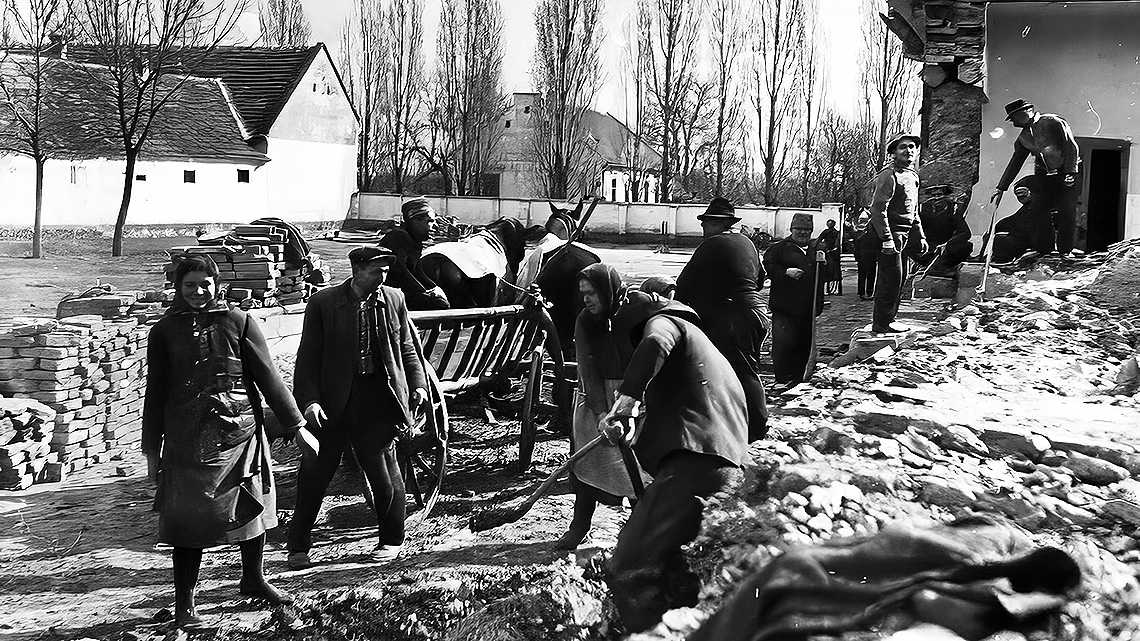
Branislav Josimović (1924-2002) began engaging in photography around the same time as Kiselički; however, he had his own photography lab in the 1950s. Professionally, he was a construction inspector working in the Municipality of Novi Bečej, which meant he often had the opportunity to photograph various sites in the field due to the nature of his work. Over time, photography became an obsession for him, but he always carefully selected what to focus his camera on and from which perspective. On several occasions, he organized thematic exhibitions with interesting commentary, aiming to draw his fellow citizens’ attention to the appearance of our town.
Dušan Aćimov (1911-1996) was employed by the Water Cooperative of Novi Bečej and had a camera since the time of the occupation during World War II. Whether he used it more for official purposes or in his private life is unknown, but in any case, he left behind a considerable number of photographs of the Tisa River and various events occurring from the mid-1940s to the mid-1960s. Many of Dušan Aćimov’s photographs can be found in the archives of the Novi Bečej Water Cooperative (now called the “Basic Canal Network” water management organization, working unit Novi Bečej).


Comments