



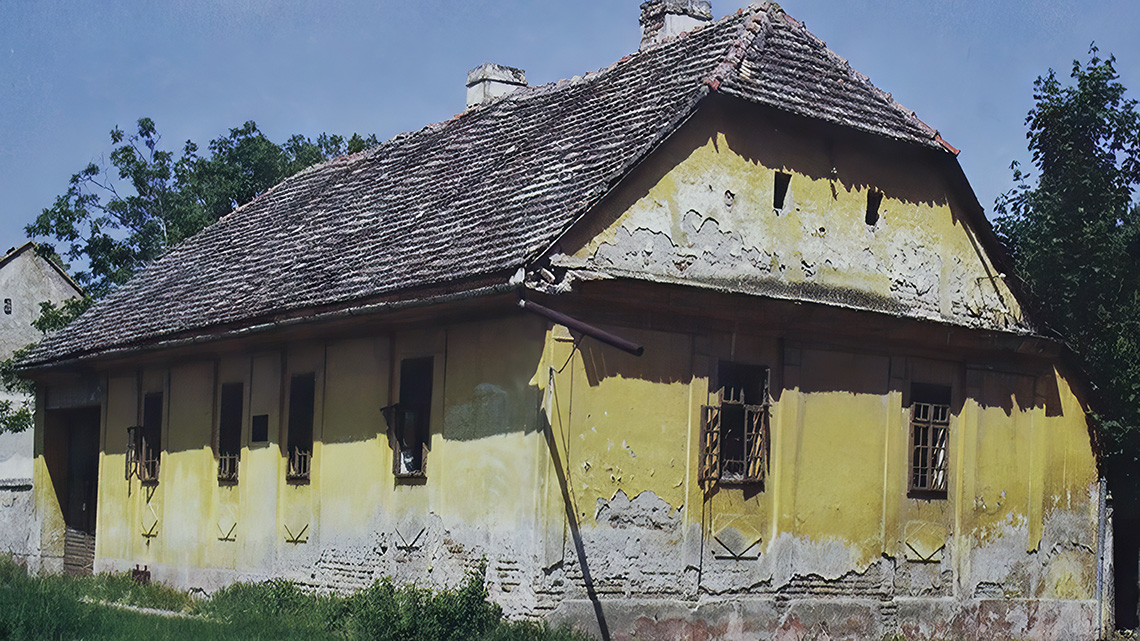
The rich cultural heritage, including residential structures built or inhabited by notable personalities, now constitutes a cultural value that should be preserved and presented to the wider public. In this way, the societal community, starting from each individual, becomes aware that cultural heritage, regardless of the space and time of its origin, carries the values that highlight our local specificities, cultural differences, and constitute the distinctiveness of a nation or a smaller social community. Its preservation and protection should become a crucial factor in determining the priorities of development and progress in any society. The more affluent and advanced societies are, the more developed is the concern and awareness of people about the necessity of preserving their cultural identity.
One of the crucial segments in presenting the architectural heritage of the municipality of Novi Bečej, which includes Kumane, Novo Miloševo, and Bočar, alongside this town, is undoubtedly the publication of popular monographs about individual cultural monuments. The aim is to bring these buildings closer to the wider public by emphasizing their most important architectural and cultural-historical values.
These values symbolize the past as they reveal many facts about the way of life and customs of the people in this region, although many cultural monuments, apart from church buildings, have completely lost their original function over time.
The monograph on the house of Dr. Vladimir Glavaš in Vranjevo is just the first in a series of publications about cultural monuments located in this area. It is a structure of secular architecture born in a small but culturally rich environment that was not lacking in the number of well-known intellectuals. Educated in more prominent university centers of Southeastern Europe, then part of the Austro-Hungarian monarchy, they brought back to their hometown the advanced European spirit of the second half of the 19th century, attempting to assist their fellow citizens not only with their ideas but also materially, through their way of life and work.
In addition to the houses of wealthier citizens, their palaces, summer residences, and castles in the territory of the municipality of Novi Bečej, numerous church buildings—both Orthodox and Catholic—are preserved and of great significance.
A special area is represented by rural architecture and objects of technical culture that are indispensable elements of rural landscapes.
By preserving and highlighting the monument-specific features of each building individually, we participate in defending the overall values of our cultural heritage. In terms of the number of cultural monuments and their significance, it does not lag behind the rich cultural-historical heritage of neighboring countries, constituting only an indispensable part of the diverse and very rich European tradition.
Comments