



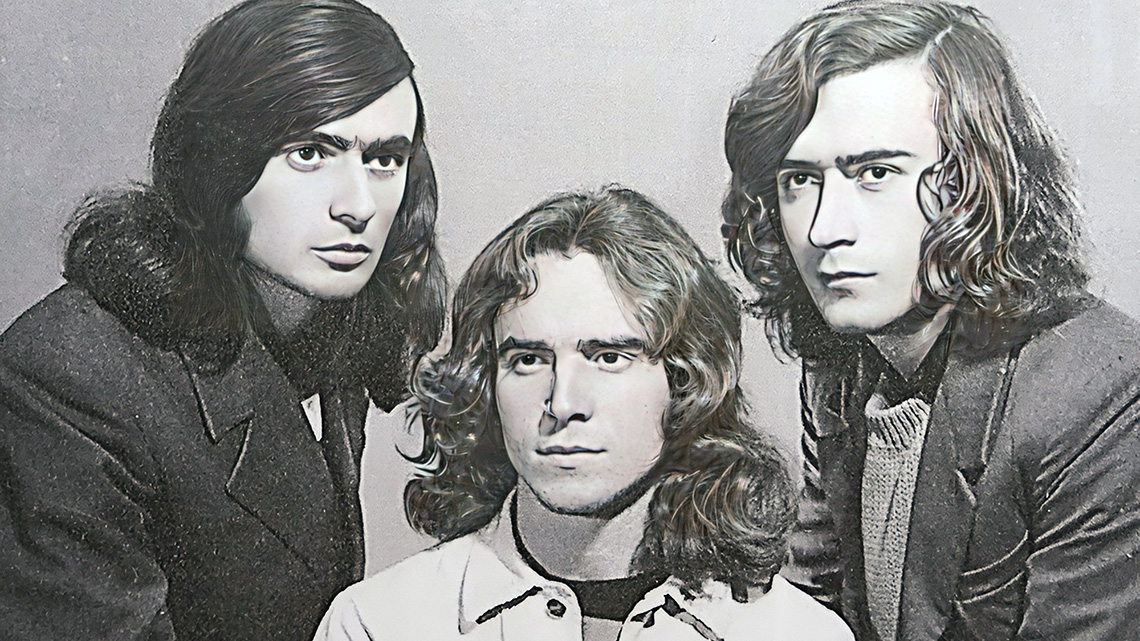
This small memorial about the vocal-instrumental ensemble LIRE represents a nostalgic memory of an era that took place half a century ago. Traces of that era remain to this day, and in a positive sense. The impact of LIRE on our ordinary life path was seemingly not significant. Formally, it was so, but essentially not. We should not forget that if they had not existed, could the youth and new generations in the post-war period have enjoyed themselves, socialized, and grown up without prejudices and social differences in the way they do today? We should also consider how many life connections were formed through the young people's infatuation with their music during social dances when it was the right time to go out dancing. When "ladies chose" or when skilled boys from the shadows and semi-darkness of the crowded youth center observed and had "dangerous romantic intentions," which can only be played out in youth, in a healthy way, and never again.
I thank the former members of LIRE: Culet, Radi, Liki, Đuriki, and Boleta, especially Sloba and the reviewer, Milan, who was then the president of the youth organization, for their help in structuring this memorial.
Overture
During the summer break, we enjoyed playing in the village park, which was very popular at that time. I remember that afternoon when, while we were having fun, our game was interrupted by unusual music. It was coming from the beginning of the park entrance. These were magical sounds that did not belong to the folk music we listened to daily through the radio. As if by some agreement, we headed towards the source of this intoxicating sound, which grew louder as we approached. It was an outpouring of "new energy, and a new breath of youth of a new era." This era was born in the 60s, later realizing that these were the most important years of the 20th century. We stood on our tiptoes and climbed to the top of the fence to see better what was happening. It was a room that used to serve as a storage space for a newly opened self-service store. In the room were five or six boys, a little older than us nine-year-olds. They were around 14-15 years old.
They played on guitars of unusual appearance (electric guitars), which we had the opportunity to see and hear for the first time. The music was intense, and they also sang passionately, while the drummer thundered across the big and small drums with all his might (which had their names, but I learned that later). It was mesmerizing. At least, that's how it seemed to us. Occasionally, they interrupted their playing to discuss corrections to make the song as faithful to the original as possible. At that time, those songs were recorded from tape recorders from Radio Luxembourg. With domestic hits, which were largely covers of various foreign melodies and bands, it was easier. Songs by pop singers like Perica Stojančić, Radmila Mikić, Radmila Karaklajić, Ivica Šerfezi, Đorđe Marjanović, Miki Jevremović, later Mišo Kovač, Kića Slabinac, etc., were practiced. From pop-rock bands, the repertoire included: Siluete, Elipse, Crni biseri, Roboti, Crveni koralji, Dubrovački trubaduri, Grupa 220, and others. Later, songs by Ambasadori, Indexi, Pro-Arte, Yu Grupa, Smak... were performed. At that time, it was harder to get records from foreign bands, and the radio was the only way to access such songs.
At that moment, they were rehearsing the song 'Ob-La-Di, Ob-La-Da.' Later, I learned that it was one of the biggest hits of the new music called rock and roll by the Beatles, who had already conquered the world with their music, culture, and behavior. The question remains unresolved as to how it arrived so quickly to us, especially in Kumane. It was certainly the merit of these boys who were already performing under the name VIS LIRA. The band consisted of teenagers:
Siniša Brusin, born 1948 – electric guitar Đura Gladić, born 1950 – accordion, drums Slobodan Kojić, born 1950 – double bass Duško Maksić-Cule, born 1950 – guitar and lead singer Radivoj Titin, born 1950 – guitar and lead singer Slobodan Kojić, born 1950 – guitar
Already then, people started talking about new generations with long hair that needed to be cut to prevent disturbing the order and peace, at least in our town. However, history shows that things played out quite differently. In the 60s and 70s, a special, spontaneous, and natural revolution of the youth emerged, both musically and spiritually.
Not long after, after elementary school, their rehearsals became even more intense, and not far from my house, at Katica and Emil Gladić's place. With open windows, they created deafening noise at the Gladićs' house. Their son Đuri then played the accordion, and later drums, and like all young people, he wanted to show something new, which the older generation did not quite accept or understand.
As for the positive impact of rock and roll, history shows it is certainly immeasurable. On a global level, it erased boundaries and nations, and to a great extent social differences, and provided a new, pacifist view of the world.
Comments