



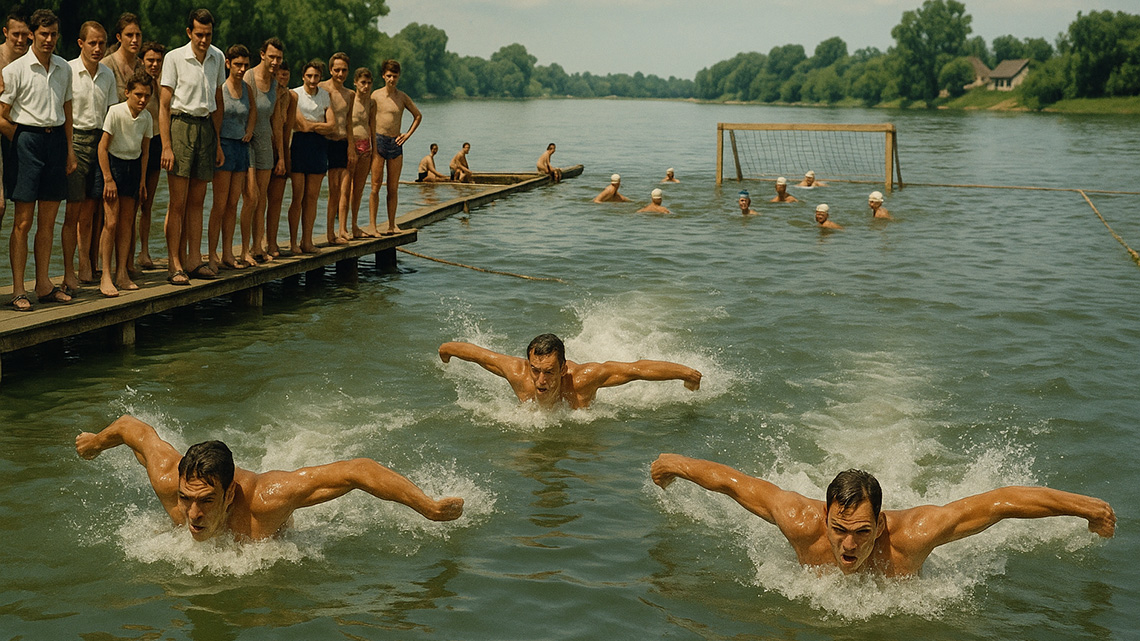
Swimming and water polo as organized sports were actively nurtured in Novi Bečej from 1934 to 1972. Their greatest success and popularity were achieved between 1950 and 1960. Participants and fans of that era later recalled:
"That was the time when people swam butterfly stroke in Novi Bečej."
Training and competitions took place at makeshift swimming venues along the banks of the Tisa River. Toward the end of this period, swimming was abandoned, while water polo continued for some time at "Banja" – one of the small artificial lakes in Novi Bečej. The neglect of swimming and the gradual departure from the Tisa – the most attractive natural area in and around Novi Bečej – marked the beginning of the end for these water sports in the town.
When deciding how to approach this topic, the most difficult question was the angle: Should the focus be on the sporting or the social dimension of these events? Should it be written as a chronicle or a monograph? It was believed that there was an abundance of documentation and material. However, after a thorough review, it was found that existing records were scarce and fragmented.
The only valuable written document was left by B. Kiselički, titled “The Great Swimming Day – August 29, 1943.” This account, written in essay form, provides a detailed description of all events and races during the meet between the swimming clubs "BOB" from Belgrade and "Zvezda" from Novi Bečej, held on August 29, 1943, including an epilogue. The document, handwritten on 25 densely filled pages (with the last few pages missing), stands out as an excellent piece of sports journalism and reportage on a truly significant event.
A newspaper clipping from the weekly magazine "Sport" also survives, which reported on the same event on its front page. In addition, there is a document titled "Report on the Need and Importance of Having an Organized Swimming and Water Polo Sport in Novi Bečej."
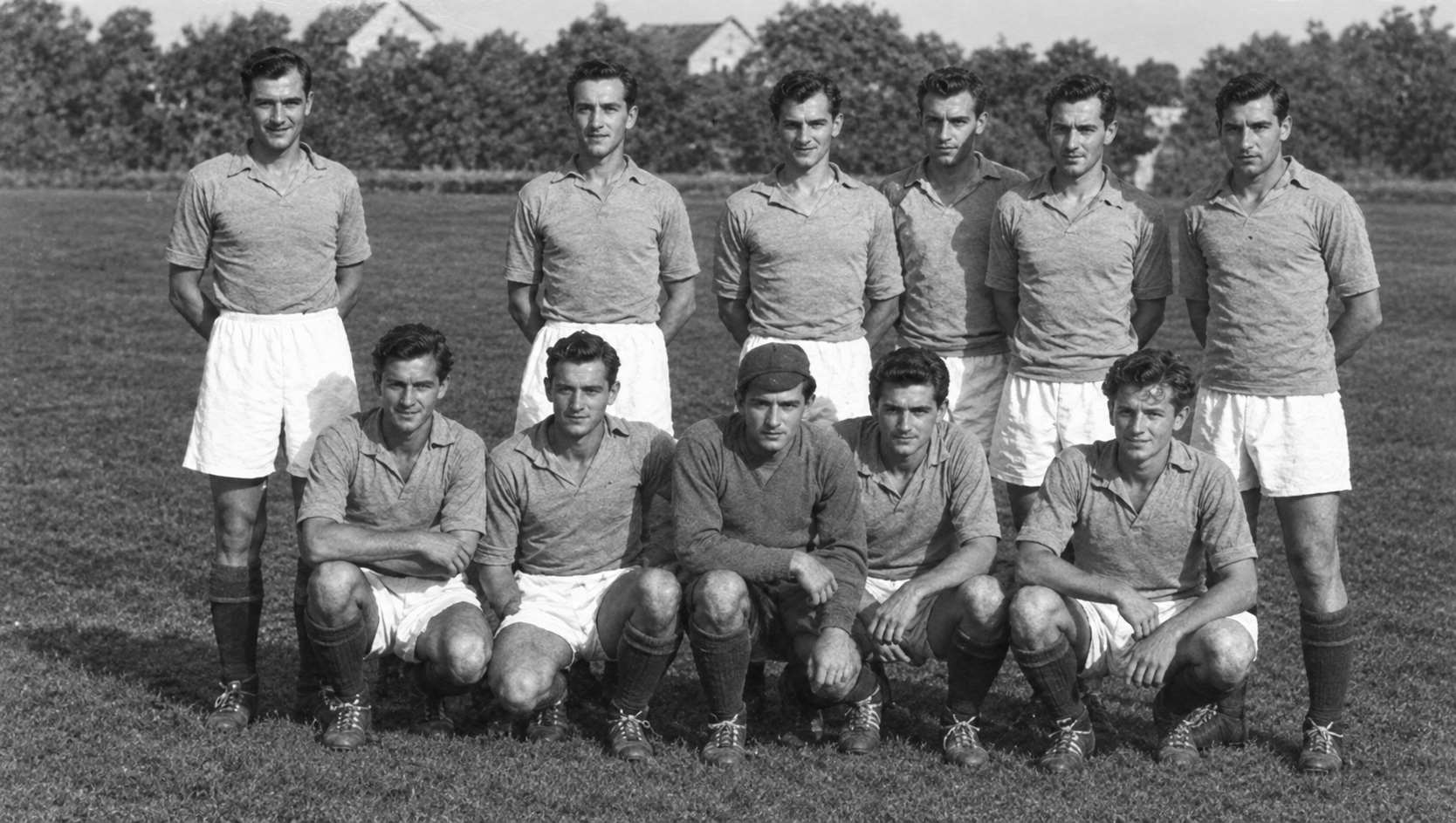
For the period between 1944 and 1963, no written records were found, except for a wealth of remarkable photographs preserved by Branislav Vojnov. Unfortunately, these photographs lacked any accompanying text, so they could only be interpreted with the help of eyewitness memories—on which this part of the monograph was also based.
Although the original intention was to publish this work with a full photo album and several annexes, material constraints led to a more modest edition, including only a small number of photographs and no appendices.
The monograph is divided into three historical periods that encompass the era during which swimming and water polo were practiced in Novi Bečej. To better understand, evaluate, and appreciate the subject matter, this introductory section presents basic information on: swimming, water polo, and Novi Bečej.
The monograph is based on the recollections of active participants in the sports' development, as well as on surviving written materials and photographs left by Branislav Kiselički, preserved by Branislav Vojnov and others, including newspaper reports and additional accessible sources.
For clarity and structure, the content is organized into three main sections:
- The Period Before World War II
- The Period of Occupation
- The Period After World War II
Comments