



In the Church of St. Nicholas in Novi Bečej, specifically in the choir of the church or narthex walls beneath the choir as well as on the very walls of the nave and the altar area, there was a large number of very valuable icons and liturgical objects.
The greatest value of this collection, a total of 14 objects, are in fact protected icons and parts of the church mobiliar which were transferred from the old temple on the banks of the Tisza, from the Church of the Assumption of the Virgin Mary, known as the chapel Monastery“, built in the mid-eighteenth century.[32]
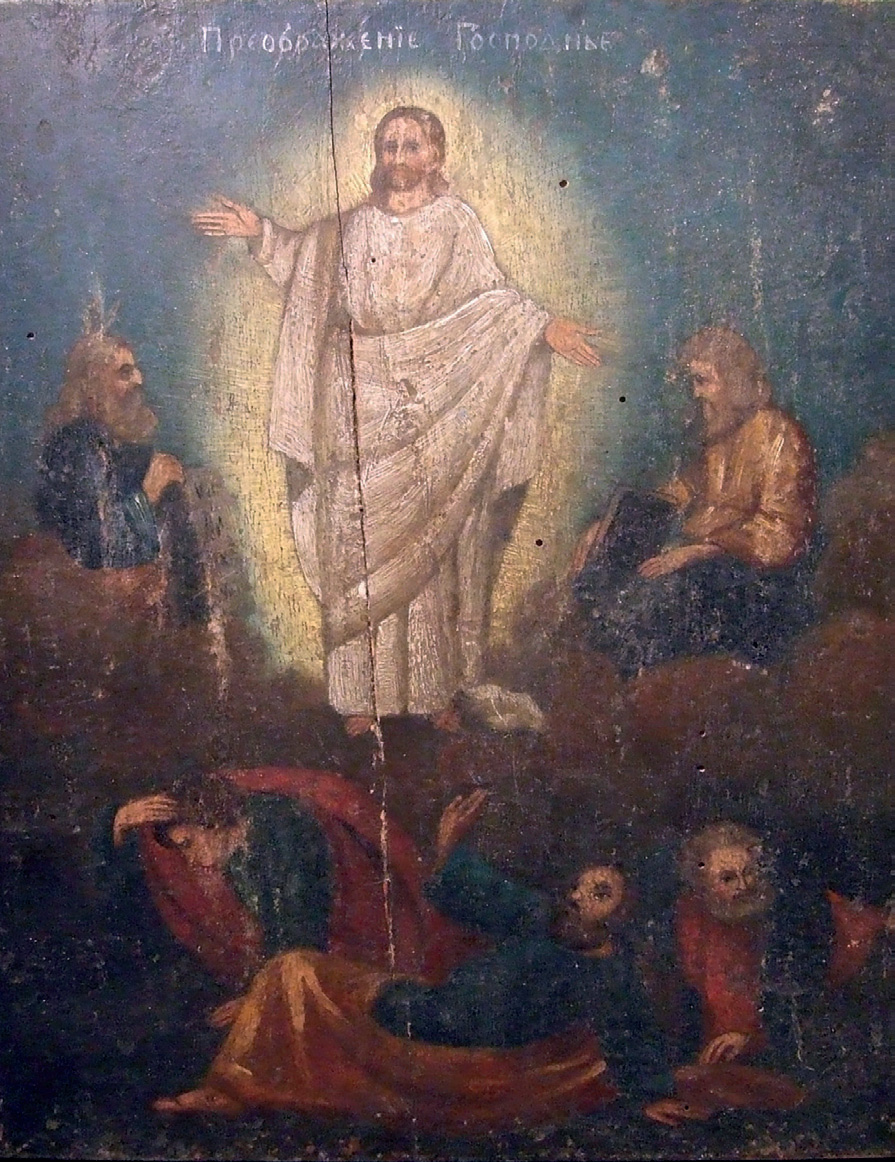 The other icons were donated to the church as pledge - protective icons by the wheat merchants who were doing business and staying in Novi Bečej during the 18th and 19th century, while some icons were donations of families that had no male heirs. Among the icons are the ones that were given as gifts by the Russians - White Army members who settled in Novi Bečej after the October Revolution.
Particularly interesting is the triptych from the beginning of the 18th century (preserved in 1965), which features the St. George Killing the Dragon at its central panel, while the side wings show scenes from the saint’s life.
A cross with the representation of the Crucifixion from the old iconostasis, two Jerusalem icons, one done in oil on wood, the other on the canvas, St. John Chrysostom, Madonna on a throne, Black Madonna, the Virgin and Child, Two Saints, Christ Pantocrator, Holy Trinity, Assumption and other icons are a part of the protected old iconostasis of the chapel called “The Monastery” from the 18th century.
Today they are in the premises of the old church school at Ivo Lola Ribar St. no. 2, in addition to many others, which are the work of unknown authors from the late 18th, 19th and early 20th century.
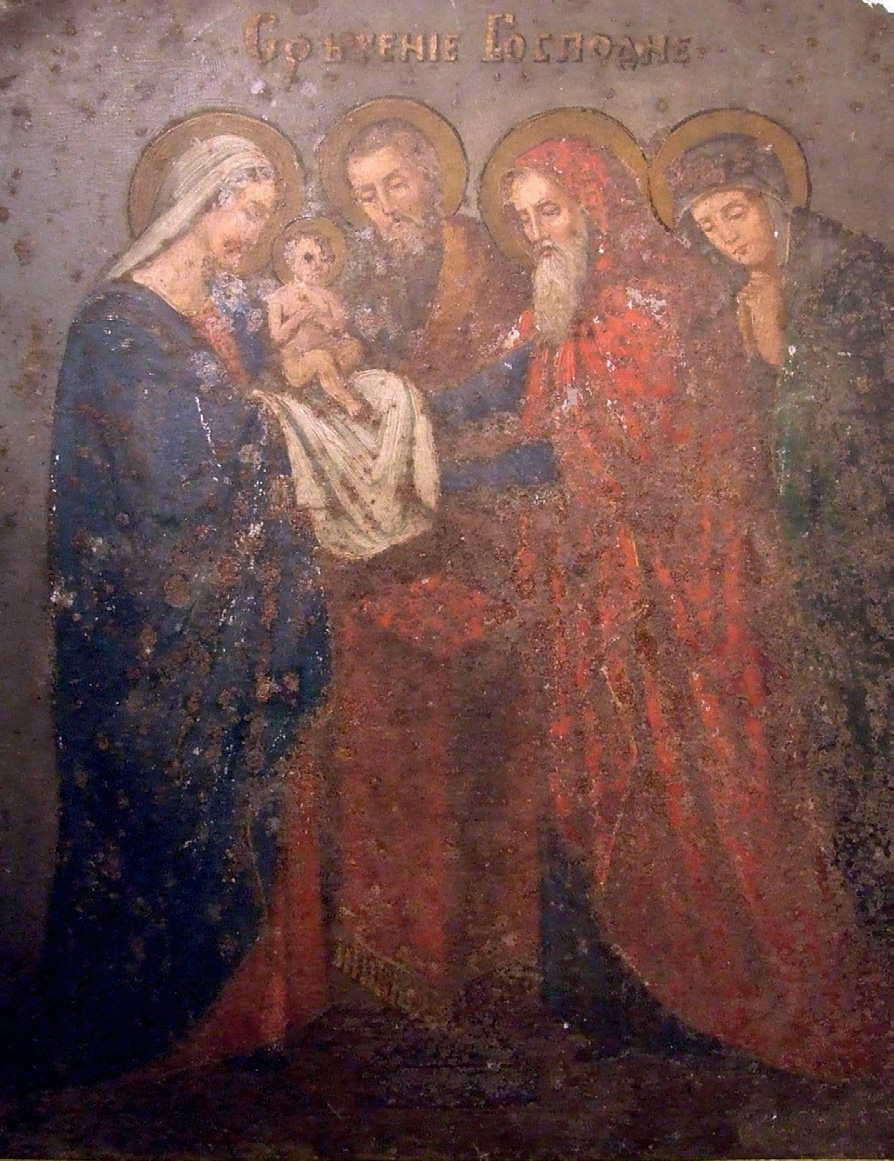 In 2009, at the invitation of the municipality of Novi Bečej, the first professional assessment of the state of the icons and liturgical objects was done by experts from the Gallery of Matica Srpska, Novi Sad. The expert opinions were given by Dr. Branka Kulić, curator - adviser, at the time the director of the Gallery and Daniela Korolija Crkvenjakov, conservator - advisor. They concluded in their report that all the objects were in jeopardy because of the presence of moisture in the walls and in the material. Everything was extremely dusty, grimy with a lot of cobwebs.
In addition, the objects were physically endangered as well because the church bells were swung from the area of the church choir on daily basis. The icons on wood were for the most part being endangered by woodworm, and the icons on canvas sustained widespread damage of the canvas itself: holes, tears, deformations in varying degrees.
After all, the report concluded that further efforts are needed to make this valuable material preserved from further deterioration in order to be worthily presented.[33]
In 2009, the same year after the report on the status of icons from experts employed in the Gallery of Matica Srpska, the professional service of the Institute for Protection of Cultural Monuments Zrenjanin, Vesna Majstorović and Vesna Karavida, art historians and conservators, Vladimir Petrović, a painter conservator, went out on the field with a view to record and photograph all items that were in the Church of St. Nicholas, as well as those in the parish office, next to the temple. Cataloging, measuring, photographing, cleaning the surface dust and proper disposal of the materials, lasted about ten days. A total number of about 166 items was cataloged. In addition to the icons, which were the most numerous, parts of church mobiliar and various church liturgical items were also cataloged.
Vladimir Petrović, a painter conservator, on the basis of all available data, eventually prepared the working version of the catalog with the most important objects of applied art listed.
The catalog contains, in addition to significant data about each icon or object, a rich photographic documentation as well.
All these items are valuable material for the study and development of the history of painting and applied art in Vojvodina from 16th to 19th century. As such, they became irreplaceable artifacts regarding the study of the cultural milieu and activities of the time.
A plan within the further system of protection and preservation of the collection is to exhibit the collection, after the necessary conservation - restoration work on its reconstruction, as a part of the permanent exhibition in one of the protected buildings of the ambient unit of the Old center of Vranjevo or Center of Novi Bečej.
In this way, artistic offer of the cultural and historical heritage of Novi Bečej and the entire municipalitywould be significantly enriched.
[32] This building too is, like Orthodox Church of St. Nicholas, declared the immovable cultural heritage of great importance for the Republic of Serbia (1963/1991). By the same Decision from 1963, the most valuable icons and furniture found in the church, which are owned by the Serbian Orthodox parish in Novi Bečej were placed under the protection of the law and registered as cultural monuments (Decis. No. 104, Novi Sad, May 23, 1963; E-231/G, inv. no. 1423).
[33] One of the first, already undertaken, actions was covering the front of the protected icons with Japanese paper, for the purpose of fixing the paint layer and the protection during the later stages of conservation. Just because of this, their presentation in this publication is not been possible. Only after the completion of restoration - conservation work on them, at some time later, they will be presented to the general public.


Comments