



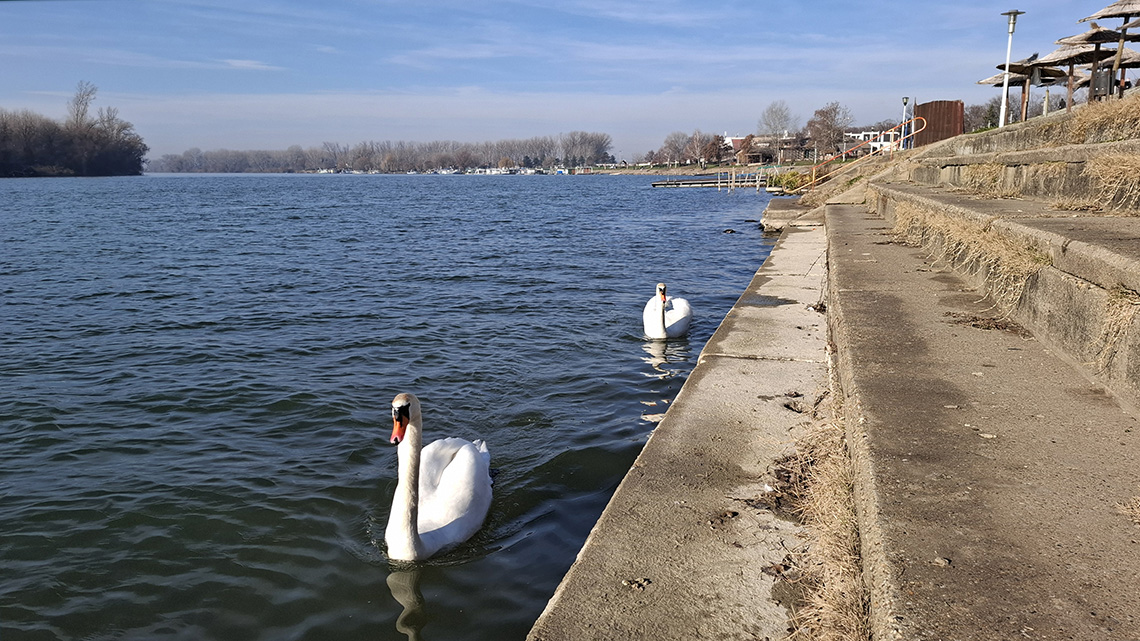
The development of water management in Vojvodina, Banat, and our Novi Bečej region is presented in the following exposition as a report, or more precisely, a story about water and what people have created by living and working on and around water over the past 150 years.
While much has been written about the significance of water management in recent times, very little has been said about its importance in the past, and most of that is critical. This may have been an injustice to those who started working later, in the most difficult conditions.
When we say today that little was done in water management in the past, it is important to note that for that time, a lot was accomplished, because work was done manually, using human strength, with the help of cords. Furthermore, work was carried out from early spring to late autumn, from early morning until dark, with people working at full capacity—men, children, the elderly, and even women. These hard labor tasks were carried out alongside water and in water, with small wages but great effort.
There was not enough skilled labor, and mechanization was practically unheard of. However, despite all the difficulties, large-scale constructions and significant projects were also undertaken, such as the regulation of the Tisa River in the second half of the last century and the concurrent construction of the first embankments, later followed by canals and other structures.
With the construction of the first steam-powered pumping stations at the end of the last century, the era of building drainage canals began, allowing water to be redirected artificially, pumping from the endangered areas into the Tisa River.
This process continued through the mid-20th century, and it can be said that for the first 100 years of organized water management in our area, a great deal was accomplished. The Tisa River was regulated, embankments were built, and much work was done on drainage.
By regulating the Tisa River in the mid-20th century, the navigable route was shortened, which was very significant for the time, and the larger waters from the upper reaches of the river were more efficiently directed into the Danube.
The construction of embankments along the Tisa River permanently prevented flooding of fertile Vojvodina fields. Vast areas were converted into arable land, settlements were protected from flooding, and conditions were created for agricultural development.
Only with the organized construction of drainage canals and the first steam pumps was there a comprehensive effort to create more favorable conditions for all economic sectors.
In the early 1950s, following organizational changes, a period of great construction in water management began. Large-scale projects were undertaken, including the construction of the Basic Canal Network of the Danube-Tisa-Danube Hydrosystem (OKM), the regulation of drainage basins, and the repair of embankments along all major rivers.
The construction of the basic canal network in Bačka, especially in Banat, is of immense importance for the economy. It created conditions for solving and improving various water management functions, including flood protection, drainage, irrigation, water supply, navigation, acceptance of industrial and other waters, development of fisheries, forestry, and more.
In the 1960s and 1970s, highly efficient drainage systems were intensively built. At the same time, large-scale repairs began on the reconstruction of embankments, including those along the Tisa River.
Thus, the Danube-Tisa-Danube Hydrosystem was created, where the structures are mostly unified, with the same or similar technical characteristics on a broad scale. This created excellent conditions for development in Vojvodina, and thus in our region. Major water management problems were solved, and a foundation was laid for the overall exploitation of water resources. There is now the potential to use water resources on a large scale, with vast reserves available for all functions of water management, and efforts are underway to make these resources effective. In other words, a powerful water management system was created, and the results have been impressive.
To achieve all of this, the most modern techniques were employed. In addition to our organizations, countless other organizations from all parts of the country were involved. Several thousand workers with various qualifications and expertise built the Danube-Tisa-Danube Hydrosystem over thirty years. The value of the Hydrosystem is difficult to quantify in numbers. By the end of its construction in 1977, it amounted to approximately 13 billion dinars.
This created the conditions for faster progress and economic development. Water must now improve living conditions through modern technology and techniques. Every year must be productive, as we have become masters of water, tamed its forces, and gained the ability to use its benefits. However, further use of the Hydrosystem requires new investments to overcome the relative lag and improve material security.
In the early 1990s, for well-known reasons, there was a sharp decline in production. Funding sources dried up, leading to problems, particularly in the maintenance of the expensive infrastructure built.
Now, in a new organizational form, enormous efforts are being made to secure minimal resources for the maintenance and operation of canals, hydro-structures, and other systems. Considerable efforts are also being made to revive irrigation and find solutions to improve water quality in general.
The following chapters focus on the development of water management, first in a broader context and then specifically in relation to the Novi Bečej area. Chronologically, all events and developments are tracked, from the first organized water management efforts in the mid-20th century to the present day. The accompanying photographs and images should complement the depiction of a turbulent and fleeting time, which is now far behind us. By understanding the past, we will more rationally determine the future, which lies ahead with new challenges.


Comments