



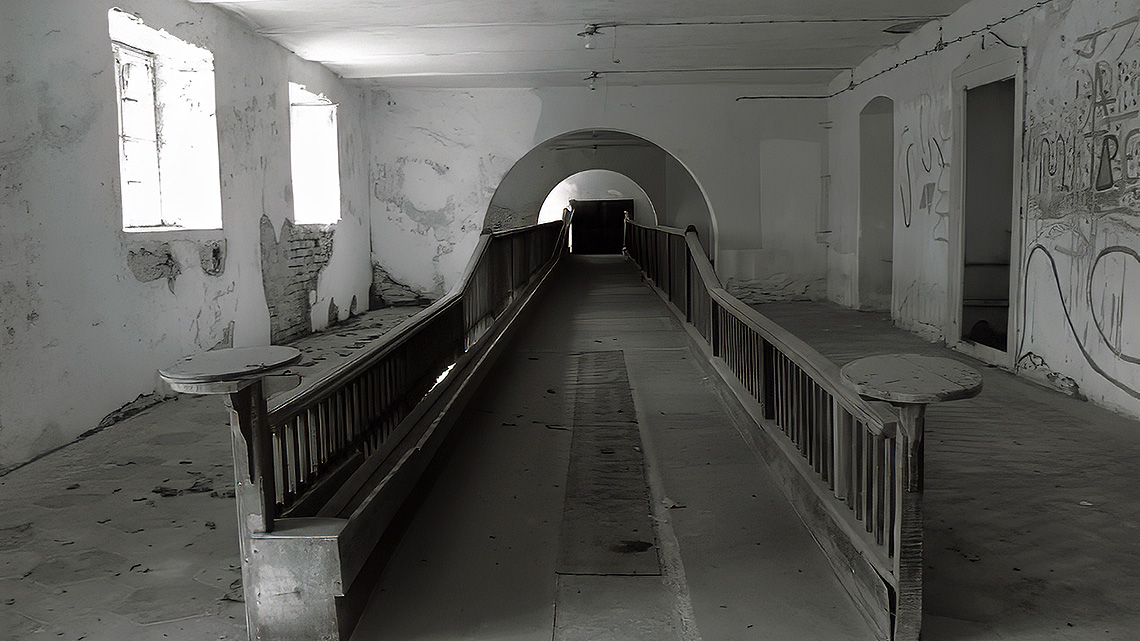
The beginning of bowling, as a sport in which a ball is used to knock down pins placed at a certain distance on a lane, is considered to be 1769, when an attempt was made in Germany to create unified rules. However, it began as an organized sport in 1885, when the German Bowling Club Association (Deutscher Keglerbund) was established in Dresden, quickly bringing together 220 clubs.
Game from the Time of the Pharaohs
The game of wooden balls was preceded by games with stone balls, which have been found in the tombs of Egyptian pharaohs and other ancient peoples. Throwing a stone ball toward a specific place or object is known among the Greeks, Romans, and Germans.
The first international bowling federation, the International Bowling Association (IBA), was founded in 1926 in Stockholm. From 1929 to 1939, the IBA was based in Germany. The Yugoslav Bowling Federation was established on February 21, 1932. Bowling gained great popularity in Vojvodina, and the first clubs were formed in Subotica (1933), Novi Sad and Ruma (1935), Sombor, Bečej, and Sremska Mitrovica (1936), and most likely also in Novi Bečej.
The Yugoslav Bowling Federation organized only three national championships from 1932 to 1941.
At the first IBA congress after World War II, a section with 9 pins was established; until then, the IBA had been responsible for the American system with 10 pins. At an extraordinary IBA congress in Stockholm in 1949, it was decided to freeze the activities of the IBA.
The First World Championship
The first World Bowling Championship was held in Belgrade in 1953. In the women's competition, Austria took first place with 2,206 pins, while Yugoslavia came in second with 2,186 pins.
In the men's competition, Yugoslavia ranked first with 4,997 pins, Austria second with 4,832 pins, and the German Democratic Republic (GDR) third with 4,754 pins.
At the initiative of the Yugoslav Bowling Federation, a meeting of former sections of the 9-pin game was convened in Vienna in 1951, where it was decided to call a conference of former IBA members. Thus, on January 27, 1952, in Hamburg, in the presence of delegates from Austria, Finland, France, Belgium, Luxembourg, West Germany, Sweden, Switzerland, and Yugoslavia, the founding congress of the International Bowling Federation (Federation Internationale des Quilleurs, FIQ) was held, where all four bowling systems were recognized.¹
1 Encyclopedia of Physical Culture, pp. 512-515, Yugoslav Lexicographic Institute, Zagreb 1975

Comments