



Arača, a medieval town with a church and monastery. Or, when you say Arača, for the local population, it’s the walls of the church, the remains of the basilica in the plain that for centuries have evoked various feelings, reactions, and comments. Archaeological excavations have uncovered a smaller parish church from the 11th century. The foundations of this church are preserved in the central nave of a three-aisled basilica built in the early 13th century.
To the north, along the walls of the basilica, a monastery was built at the end of the 15th century, and the medieval settlement, less studied, formed in the surrounding area. Northwest of the basilica, along the left bank of Crna bara, rows of houses can be seen. South of the basilica is the conditionally urbanized Arača. Along the bank of Crna bara, the beginnings of settlement extend back to early prehistoric settlements. Newer research confirms the existence of monastic fortifications built during various periods alongside the basilica.
Arača is a place of gathering for various reasons, weekend trips, celebrations of the presumed patrons of this holy place, excursions organized to mark significant dates in recent history, family visits. Archaeological research often lasts decades and involves significant financial resources. To ensure that allocated funds are used effectively, the local government has made concessions by exempting archaeological excavations from fees intended for the municipality. In several campaigns, the local government has provided transportation or accommodation for the archaeological team, equipment, and finds in various ways. Several generations of workers from this area, initially involved in protective work at Arača, have become a qualified part of archaeological excavations at other locations. Another mutual benefit and nuance of a better life gained through awareness of the need to respect and care for heritage as a common good. Conservation and restoration work on the walls of the basilica could signify the beginning of the establishment of professional and licensed enterprises in the local community. This trend is also a consequence of a positive relationship with Arača and a hint of another possibility within the potential of cultural heritage as a resource for sustainable development.
The local community has built a road, sufficiently passable, that does not disrupt the environment, and parking where vehicles, carriages, tractors, and buses can stop briefly. The relationship of the local community with Arača reflects the significance of Arača as a shared, common heritage. In the surrounding area, it is an indicator and confirmation of good relationships within the local community.
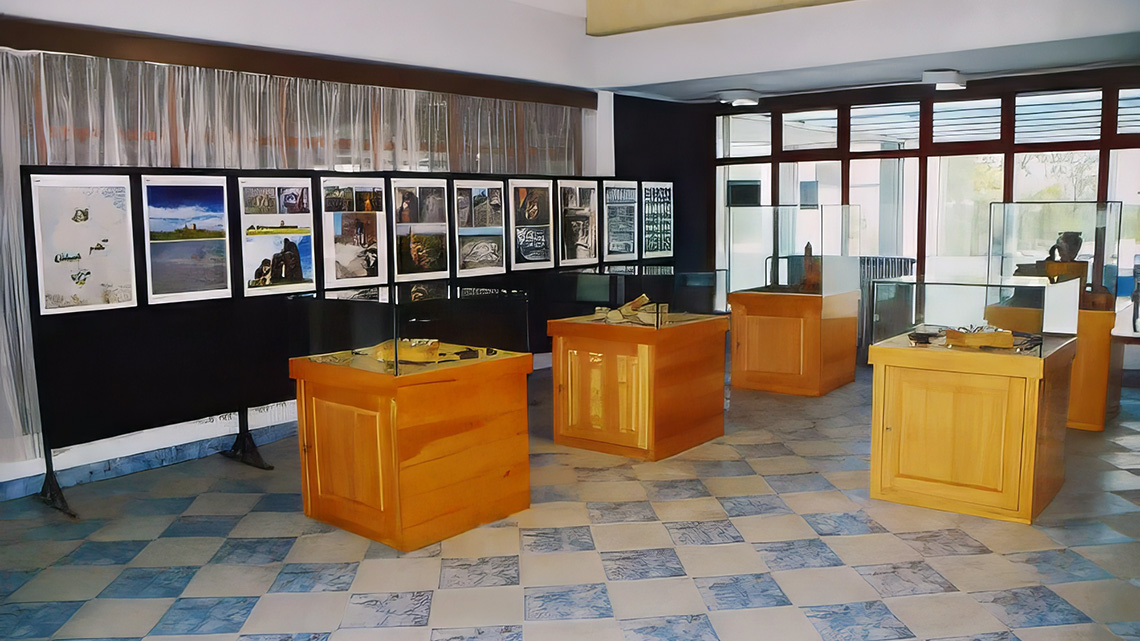
For successful care of cultural heritage, mutual trust between the local community and cultural institutions is essential. Private collections, regardless of the intentions of collectors or individuals from local communities, are often the beginning, which, with specific transformations, initiates the formation of professional institutions. The Glavaševa House is an initiative supported by the local community. The exhibition in the Cultural Center is the result of positive cooperation among professional institutions, local government, individuals, and cross-border projects of local government institutions. In the hall of the former Workers' Home, the results of research on Arača and Borđoš are presented. It is the right place, at the center of the events of the Great Lady's Days, another event organized by the local government.
Tourism and cultural heritage are recommended as a formula for a better life for the local community. While tourism organizations in the surrounding area are preparing or calculating, a tractor and trailer with Arača enthusiasts will appear from the clouds of Banat dust. A bus with students. Awareness of the significance exists, but it seems that there is still no idea on how to make things better for everyone, how to initiate sustainable development. The placement of markers in the immediate vicinity of Arača, and not just Arača, must be carefully considered to minimize disruption to the authenticity and the principle that heritage belongs to everyone and that everyone feels comfortable with this sense.
Bečej Fortress, a medieval water town, a fortress on the Tisza. Based on written sources, it can be assumed that it was built at the beginning of the 14th century. Descriptions of the fortress, its hydro-technical and architectural details, are scarce and are made with the decision to demolish it. The demolition of the fortress, at the beginning of the 18th century, along with counting bricks and transferring building materials for the construction of other buildings, contrasts with modern approaches to cultural heritage, repurposing, and sustainable development. By the mid-20th century, the remains of the fortress were clearly visible but further endangered in the long term by raising the Tisza’s level due to dam construction.
It is neither realistic nor necessary today to seek answers and reasons that led to the visible remains of the fortification not being subjected to protective measures, whether through maximum documentation of parts that would be submerged or, with the possibilities then available, preserving what was visible. With today’s emphasis on sustainable development, this would be another proven good offer for tourism. The fortification, a water town, is just a few minutes' walk from the center of the modern city along the Tisza's embankment.
Archaeology can reveal and present parts of the fortification that are not, to a significant extent, submerged. These works would initiate an effort to make up for the missed opportunities. Modern methods of research, restoration, and presentation can contribute to improving the generally accepted attitude towards common heritage. Motivating local communities, along with creating legal frameworks for local governments, it is possible to initiate a revitalization project based on the currently available parts of the fortification. The Tisza is an important resource for sustainable development. Some zones of natural heritage and reserves are the concern of this local community, to which the Bečej Fortress should be added.
Comments