



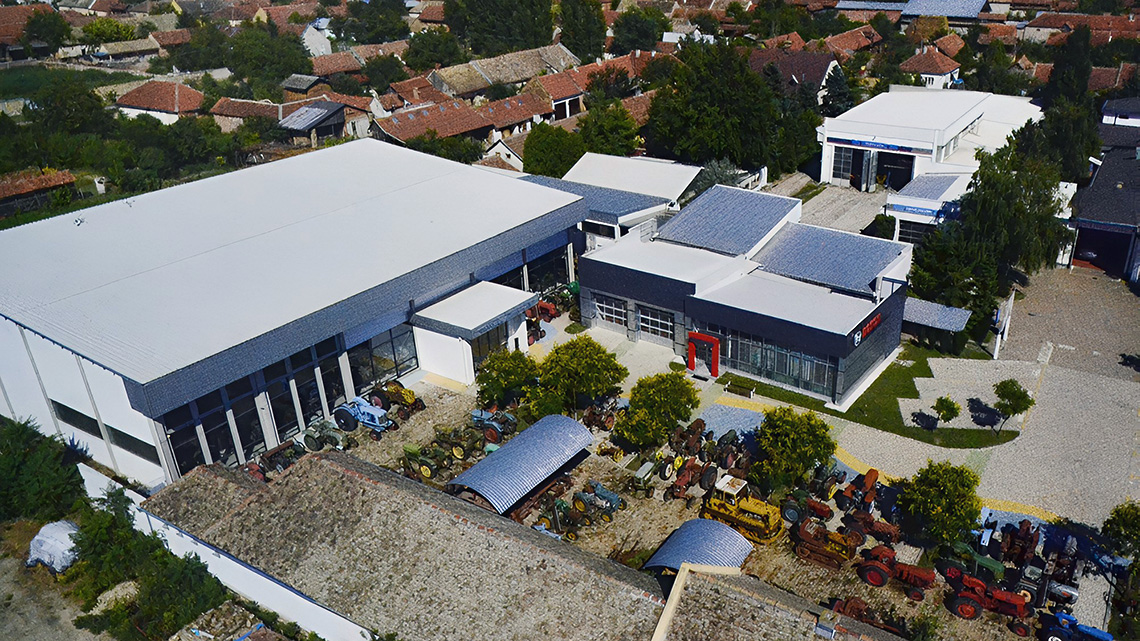
Located within the "Bosch Diesel Center Žeravica" in Novo Miloševo, there is a unique collection of tractors, steam and agricultural machinery, artisan workshops, equipment, and household items. Continuing the tradition of his grandfather Milorad and father Milivoje, Čedomir Žeravica transformed the family workshop into a diesel center, which was recognized as the best service of the renowned German company in the former Yugoslavia and Hungary. Within the complex, alongside modern workshops and a school for training and advancing craftsmen, the dominant feature is the Museum "Žeravica."
It all began in the late 1970s with Milivoje Žeravica's (1931-2009) desire to acquire a Fordson 10-20 NR tractor from 1924, which his father Milorad (1909-1968) had, one of the first in the village, and with which he grew up. Owning a tractor in the village at that time was quite rare and a sort of attraction.
 He learned from a friend that such a tractor existed near Kragujevac. He went to see it and was surprised to find several similar tractors from that era. He immediately thought of buying them all to save them from disappearing.
Initially, it was a small collection of a few tractors, temporarily housed in an old shed. Over time, the collection grew, and alongside tractors, other agricultural machines were collected.
His son Čedomir elevated it to the level of a prestigious collection, unique in our country. The fact that it was entirely gathered domestically adds to its value.
The collected tractors were first exhibited to the public in 1991, as a permanent display in a purpose-built facility. Since then, the facility has been expanded to house the collection, and today, a large part of it is in an exhibition hall covering over 1,600 square meters.
The museum's exhibit consists of several sections, showcasing thousands of items. In three connected halls and an outdoor exhibition space, one can observe the technical development of the industry over almost three centuries in this part of Europe. Some exhibits and collections are rarities and can be considered important examples in this part of Europe.
The most significant feature is the tractor collection, which includes over 140 specimens. In addition to the oldest tractor, a Hart Parr from 1920, the collection includes tractors from brands like Case, McCormick, Fordson, Farmall, Allis Chalmers, Massey Harris, Bulldog, HSCs-Fofnerr, Deutz, Oliver, Hanomag, Stayer, Hurliman, Lanz Bulldog, Landini, etc. There are tractors from former Eastern and Western Europe and from America. The collection of domestic tractors produced by "14. oktobar" from Kruševac and IMR from Rakovica and New Belgrade is also unique. Most tractors are almost completely preserved and can be put into operation.
Seven steam engines, including brands like "Epple & Buxbaum," "Hofherr Schrantz Clayton," "Marshall, Sons & Co.," and "Ruston, Proctor & Co.," date from 1886 to 1928 and form a special section. Alongside them are seven threshers, which were powered by steam engines or tractors. The threshers are from brands like "Hofherr Schrantz Clayton," "M. K. Allamvasutak Gep Gyara," "Mengele Venus," and "Zmaj," and were produced between 1909 and 1957.
The collection of stationary engines consists of over 40 specimens and covers the period from the late 19th to the early 20th century.
Agricultural machines include over 300 exhibits, such as long and short wooden carts, plows for plowing and harrowing, seeders, rollers, cultivators, mowers, rakes, threshers, cleaners, sieves, shakers, scales, oilers, cranes, etc. These items demonstrate the development of agriculture during the 19th and 20th centuries.
The museum also features collections of automobiles, motorcycles, radios and televisions, baby carriages, typewriters, children's toys, old furniture, musical instruments, and more.
Special areas include: carpentry, wheelwright, machinist, tailoring, shoemaking, hat-making, saddlery, soda-making, barbering, and blacksmithing workshops. Each contains several dozen items that evoke the times when master craftsmanship and tools were highly valued.
Within the Museum "Žeravica" is a valuable ethnological artifact – an old village house from the late 19th century. The house has retained its authentic appearance from the time it was built, and it is planned to create an exhibit dedicated to the Popov family, from which Dušan Popov originated – celebrated as the inspiration for the character James Bond according to claims. Dušan’s grandfather Omer Popov was a distinguished merchant, and Mr. Čeda plans to create a replica of a textile store from 1911 in one part of the house. The continuation will feature a souvenir shop, a section dedicated to the history of the Popov family, and a final part dedicated to James Bond films and books.
"Sunset at Dawn" Event
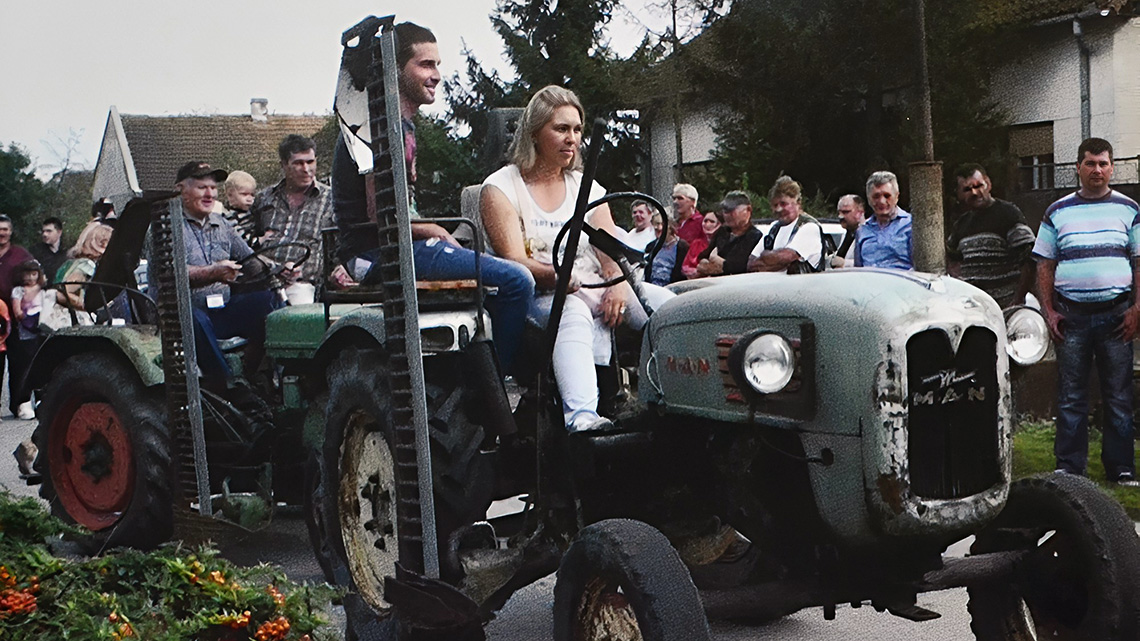
For the third consecutive year, the Museum "Žeravica" organizes the "Sunset at Dawn" event, where numerous guests get acquainted with the Museum "Žeravica," attend lectures on the development of tractors and agricultural machines, and enjoy a special artistic program. Guests from Hungary – enthusiasts of old tractors – also attend. The event concludes with a traditional grain threshing using threshers and a steam engine, followed by a review and parade of vintage tractors, which, in addition to participants, can be driven by all visitors to the event.


Comments