



1929
1. The Ritsko Hunting Society in Vranjevo (Banat)
The society, which a year earlier had leased a hunting ground of about 11,000 cadastral acres, organized two social hunts.
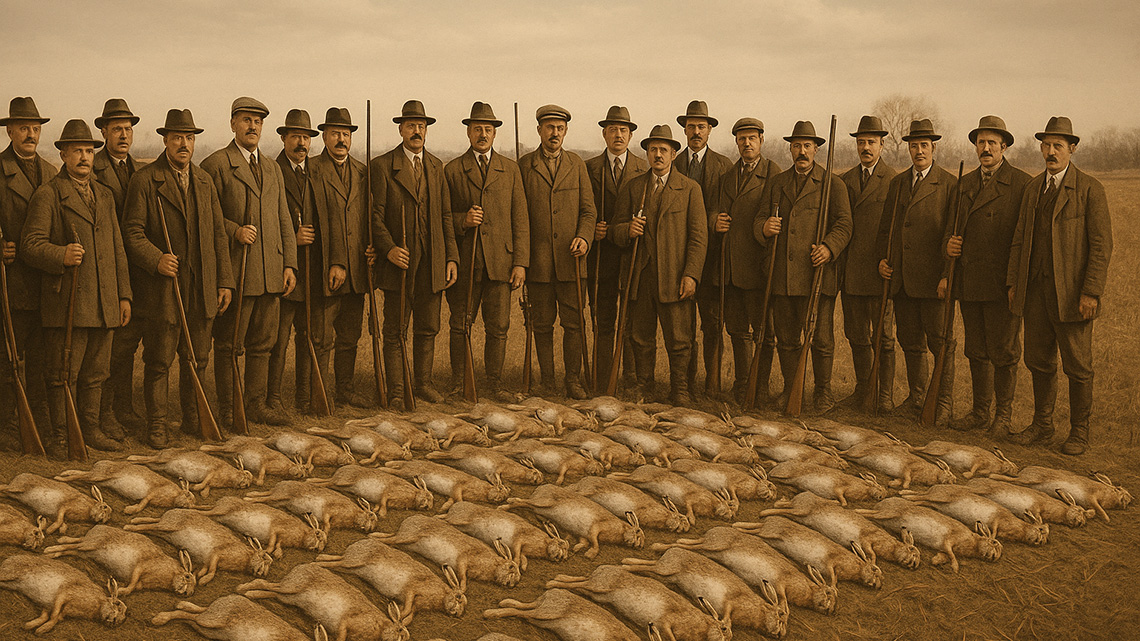
In the first hunt, held on December 12, 1928, with 60 guns, 220 hares were taken, while in the second, on January 15, 1929, with 26 guns, 205 hares were shot.
Considering that this terrain is one of the most suitable for hares, partridges, and wild geese, the results were below expectations — in previous years, 700 to 900 hares were taken in a single drive.
Former leaseholders had significantly reduced the game population, but the lease was now in the hands of experienced hunters — Dr. G. Dunđerski, N. Gerber, Dr. M. Vlahović, and others — and it was expected that future results would surpass the earlier ones.
The author, who participated as a guest together with hunters from Sombor, Stari Bečej, and other towns, noted that the day was spent pleasantly in good company and with hospitable hosts.
(Source: “Lovački glasnik,” February 1929, p. 30)
2. The Federal Hunting Society in Novi Bečej
On November 26, 1929, the society organized a hunt with 32 hunters and 30 beaters. In five rounds, 350 hares were taken, among them 52 by the skilled member Imre Buzogalj alone.
The discipline was exemplary. This fine success was attributed to regular winter feeding and observance of the close season. After the hunt, a friendly dinner with toasts and cheerfulness was organized.
(Source: “Lovački glasnik,” December 1929, p. 183; Monograph of LSV, p. 95)
3. The Hunting Association in Vranjevo (Ritsko)
The leaseholders — Dr. Gedeon Dunđerski, Dr. Miloš Vlahović, N. Gerber, and others — organized a social hunt on December 8, 1929, attended by distinguished guests such as Minister of War Hadžić, General N. Mitrović, Dr. Verbicki, Mr. M. Nikolić, and others from Belgrade.
With 38 guns, in two drives and two rounds, 300 hares and 20 partridges were taken — a fine result, especially considering that the association suffered losses due to poachers from the surrounding area.
(Source: “Lovački glasnik,” December 1929, p. 183; Monograph of LSV, p. 95)
4. Patron Saint’s Day of the Federal Hunting Society in Novi Bečej
At its meeting held on September 15, 1929, the society chose Saint Stephen as its patron saint’s day. It was recommended that other hunting societies follow this example and adopt their own patron holidays.
(Source: “Lovački glasnik,” October 1929, p. 151)
1930
1. The Federal Hunting Society in Novi Bečej — Closing Hunt of the Season
On January 13, 1930, the society organized a hunt to close the hunting season. Despite thawing weather and soft terrain, the hunt was successful — something few societies could boast that year due to the scarcity of hares.
With 35 hunters and 40 beaters, 270 hares were taken, a very favorable result. The hunt was directed by Ljubomir Tucakov, to the satisfaction of all participants.
It was remarked that the results would have been even better were it not for the “unruly neighbors” who allegedly drove hares by horse to their own grounds before dawn.
(Source: “Lovački glasnik,” January 1930, p. 41; Monograph of LSV, p. 97)
2. Voluntary Contribution to “Lovački glasnik”
On the initiative of the energetic hunt manager, Ljubomir Tucakov, the society donated 500 dinars as a voluntary contribution to the “Lovački glasnik,” which the editorial board praised as a fine example for others to follow.
(Source: “Lovački glasnik,” March–April 1930, p. 135)
3. Delegate from Novi Bečej at the General Assembly
A delegate from Novi Bečej attended the 8th General Assembly of the Association of Hunting Societies of Vojvodina, held in Novi Sad on August 10, 1930.
(Source: “Lovački glasnik,” October 1930, p. 31)
1931
1. Record Hunt on the “Bereg” Terrain
The First Federal Hunting Society in Novi Bečej organized a hunt on January 12, 1931, on its “Bereg” grounds, covering a little over 2,000 cadastral acres.
With 49 hunters and 47 beaters, 965 hares were taken in three rounds. The weather was fine, and discipline was excellent — largely thanks to the hunt manager, Ljubomir Tucakov.
Hundreds of hares were running in the circle; some hunters even shot two hares with one bullet. It was estimated that only half of the hares were actually taken, as beaters were also responsible for collecting and counting the game.
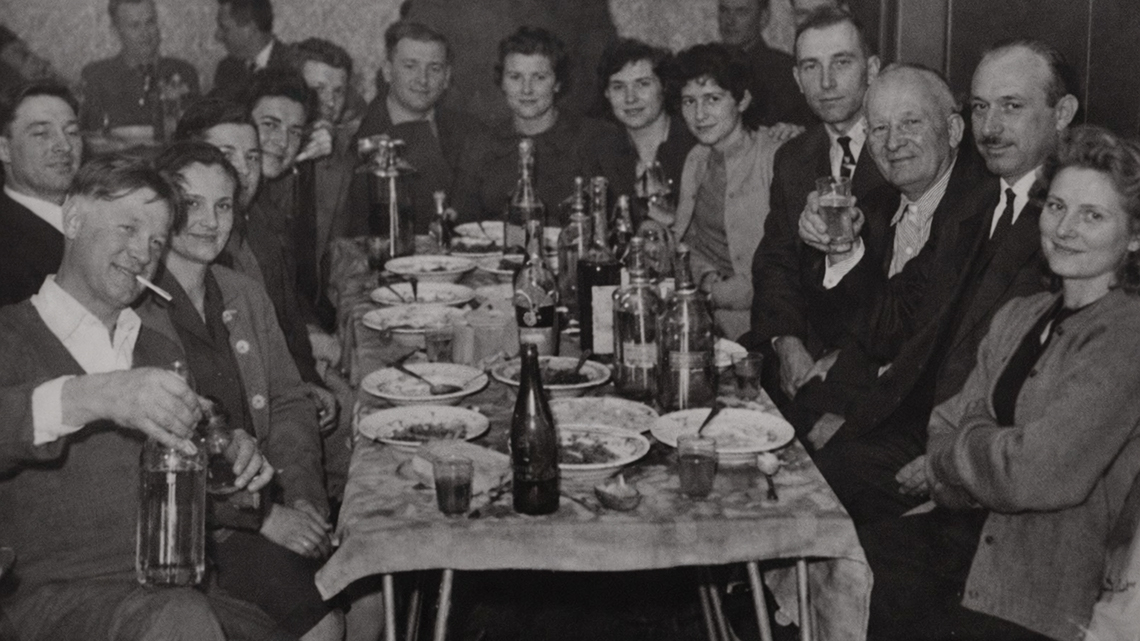
After the hunt, a dinner for all guests was held in a friendly atmosphere.
(Source: “Lovački glasnik,” January 1931, p. 31)
2. Statistics for the 1930 Hunting Season
During that season, the society took 649 hares, 282 partridges, 435 useful birds, and 1,524 harmful birds — including 9 hawks, 120 falcons, 10 owls, 148 ravens, and 1,100 crows.
The total area of the hunting ground was 13,500 cadastral acres.
(Source: “Lovački glasnik,” February–March 1931, p. 95; Monograph of LSV, p. 104)
3. Author’s Commentary
The hunt held on January 12, 1931, in Novi Bečej remains one of the most successful ever organized in Yugoslavia.
On an area of 1,151 hectares, 965 hares were taken — a record of 83.84 hares per 100 hectares.
On average, each hunter shot about 20 hares (19.69).
For comparison, the Federal Hunting Society in Velika Kikinda — considered the best at the time — took 3,723 hares during the 1923/24 season over nine hunting days (an average of 413 per day). In Mokrin, during 1924/25, 1,680 hares were shot over six days on 6,900 hectares — averaging 280 per day or 24.35 per 100 hectares.
4. Guest Hunt in Stari Bečej
On January 11, 1931, the Federal Hunting Society in Stari Bečej (N. Gerber and others) held a large guest hunt on its “Medenjača” grounds (approx. 3,000 cadastral acres).
Thirty hunters and seventy beaters participated, and about 450 hares were taken.
Among the guests were Dr. Gedeon Dunđerski with his sons, Vice President of the Association Mr. Joca Divild, Inspector of the Danube Banovina M. Jovanović, and other prominent figures.
However, the discipline this time was not as exemplary as before — some hunters failed to follow the rule of moving toward the center of the circle once it closed, waiting instead for hares to be driven toward them. It was hoped this would not happen again.
(Source: “Lovački glasnik,” 1931; Monograph of LSV, p. 103)

Comments