



1955
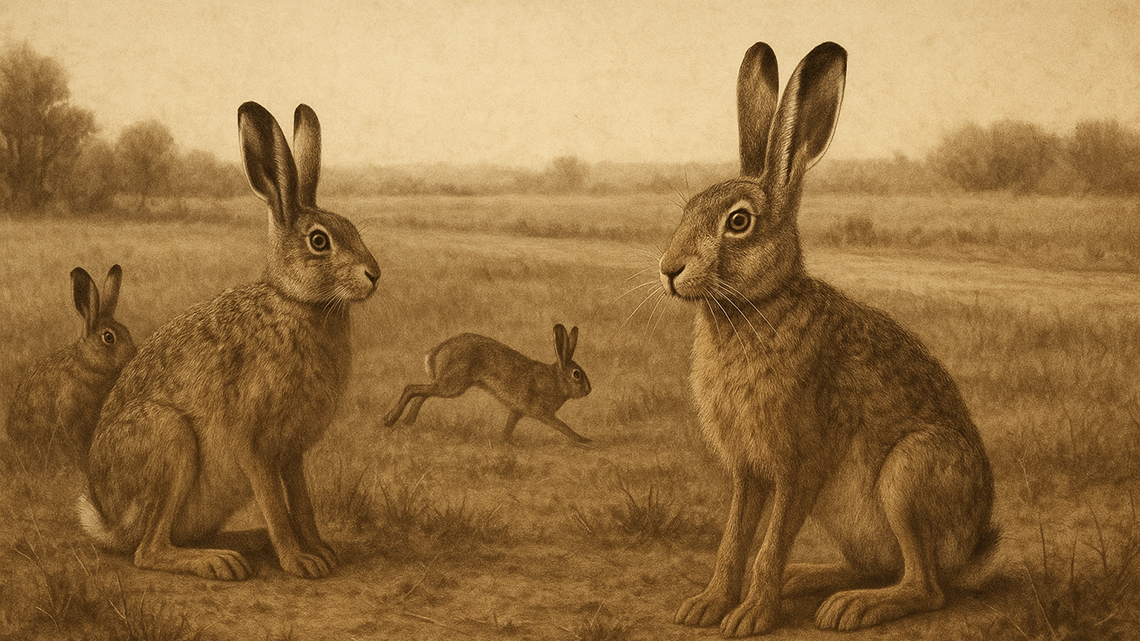
In 1954, a total of 43,077 hunted hares were exported abroad, generating 80,700 accounting dollars, along with 7,500 live hares for which 84,500 accounting dollars were received.
A commentary published with the report raised the question: “Why is it necessary for one hunting society, such as Novi Bečej, to export 3,500 hunted hares and only 500 live ones in a single year?”
(Source: “Vojvođanski lovac,” nos. 90–91/1955; 92–93/1955; LSV Monograph, 1992, pp. 417–418.)
1956
In 1955, Vojvodina exported 4,593 hares, earning around 22,000 accounting dollars.
The catching season began on 18 December 1955, using four nets. Activities were carried out across 68 hunting societies, which represents only 19% of all societies in Vojvodina.
- Total working days: 102
- Average catch per society: 70 hares
- Average daily catch: 50 hares
Societies with the highest number of live hares caught:
- Đurđevo – 354
- Čurug – 278
- Novi Bečej – 221
- Srbobran – 183
- Mošorin – 170
(Source: “Vojvođanski lovac,” nos. 3–4/1956; LSV Monograph, 1992, p. 418.)
1957
1. Achievements and Activities of the Novi Bečej Hunting Society
According to the initial plan, Novi Bečej hunters were expected to catch around 300 hares in 1957. However, they significantly exceeded the target and caught 550 hares, for which the society received 1,500,000 dinars.
The management board decided to extend the catching period by two additional days to capture 300–350 more hares, which would raise the total revenue to approximately 2.5 million dinars.
Planned investments and activities:
- construction of new feeding stations for roe deer — about 300 individuals lived in the area
- construction of feeding stations for pheasants and partridges — around 500 pheasants in the Potisje region
- winter feed secured: 5,000 kg of dry clover and hay and 600 kg of grain-based feed
Modernisation and infrastructure development:
- A modern shooting range was planned, with 500,000 dinars already secured
- Construction was to begin in March, with voluntary labour reducing expenses
- Renovation of the hunting lodge was planned — 300,000 dinars allocated
- New furniture, books, and recreational equipment for members were to be purchased
Education and training:
- Every member subscribed to “Vojvođanski lovac”
- Many were also subscribed to daily newspapers
- Young hunters prepared for exams with the assistance of experienced members
Notable contributions and recognitions:
One exceptional gesture in 1956 was the society’s donation of a X-ray machine, worth 1 million dinars, to the local Health Centre.
Decades later, the same machine was used by two physicians who were also members of the hunting society: Dr. Farkaš Bela and Dr. Kovač Laslo (who, in 2011, participated directly in preparing the monograph).
The article’s author highlighted this as “a truly noble act.”
Outstanding hunters:
- Sava Boberić – 4,600 points
- Rada Gurzul – 3,000 points
- Milan Krompić – 2,500 points
- Jefta Blažin (“Baba”) – 68 years old, active hunter for 55 years, likely one of the oldest active hunters in the province
(Source: “Vojvodanski lovac,” no. 1–2, January–February 1957, p. 33.)
2. Membership and Game Population in 1957
In 1957, the Novi Bečej Hunting Society had 100 members, managing a hunting area of 52,000 cadastral acres.
According to estimates, the hunting grounds contained:
- 7,000–8,000 hares
- around 300 roe deer
- 500 pheasants
- around 650 partridges
Game harvested in 1957:
- 1,200 hares
- 20 roe bucks
- 20 fawns
- partridges were not hunted
That year, the society purchased 210 young pheasants at 500 dinars per bird, releasing them into the forest near the Tisa River.
Plans for 1957:
- catching and exporting 1,200 live hares
- adapting a farmstead in Kopovo into a new hunting lodge
In the previous year, 1956, the society had already renovated the hunting lodge in the centre of Novi Bečej, investing around 400,000 dinars to build a large hall and additional rooms for the society’s activities.
Cooperation with the “Miloje Čiplić” Elementary School
A long-standing cooperation existed between the school and the hunting society.
In 1957, the society allocated 224,000 dinars from its own funds to purchase a narrow-film cine projector for the school, intended for use in teaching and lectures.
(Source: “Lovac,” no. 6, February–March 1957/58, p. 211.)

Comments