



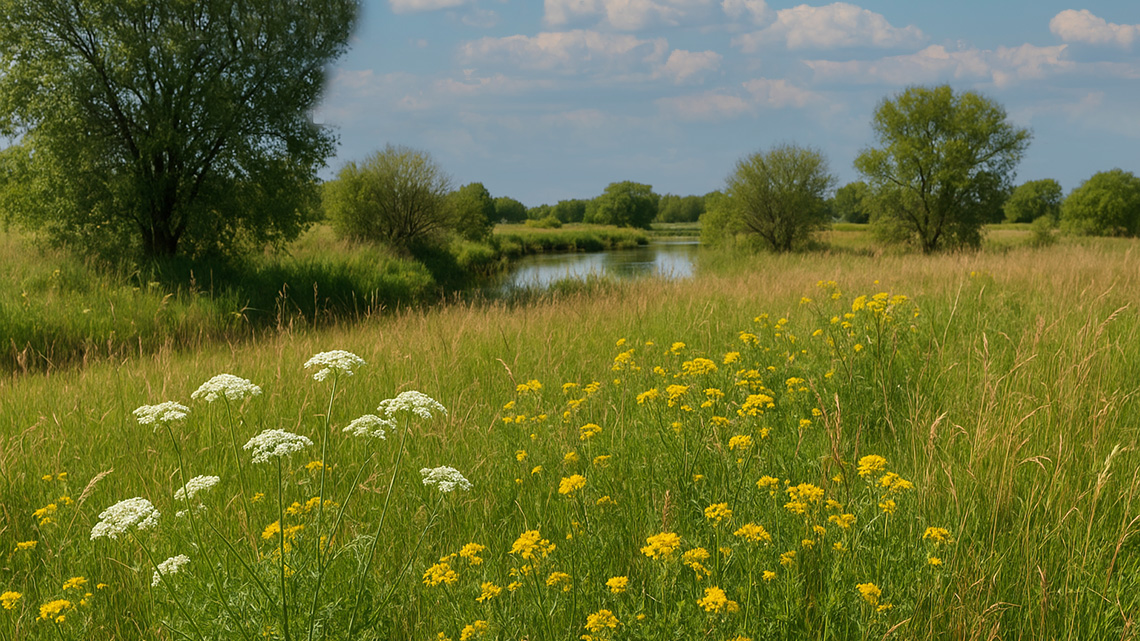
The plant life in the municipality of Novi Bečej is characterized by steppe vegetation typical of the Pannonian Plain, with distinct features of the Banat region along the Tisa River. However, as in most of Vojvodina, the natural vegetation has largely been replaced by cultivated crops.
Natural vegetation—such as forests, hydrophilic plant communities, and low grasses on saline soils—has been preserved mainly along roads, in depressions, on saline areas, as well as in ponds and wetlands.
The fauna of Novi Bečej is represented by diverse species. Among mammals, roe deer, wild boar, field mouse, ground squirrel, hamster, hedgehog, and polecat are notable. Bird species include wild duck and goose, quail, partridge, pheasant, turtle dove, sparrow, crow, starling, and owl. The aquatic life is represented by fish such as carp, catfish, zander, crucian carp, and pike.
Pedological Characteristics
The territory of Novi Bečej is covered by a diverse pedological composition. The most common soil types include chernozem, riparian black soil, riparian loam, alluvial soils, solonchak, and solonetz.
Comments