



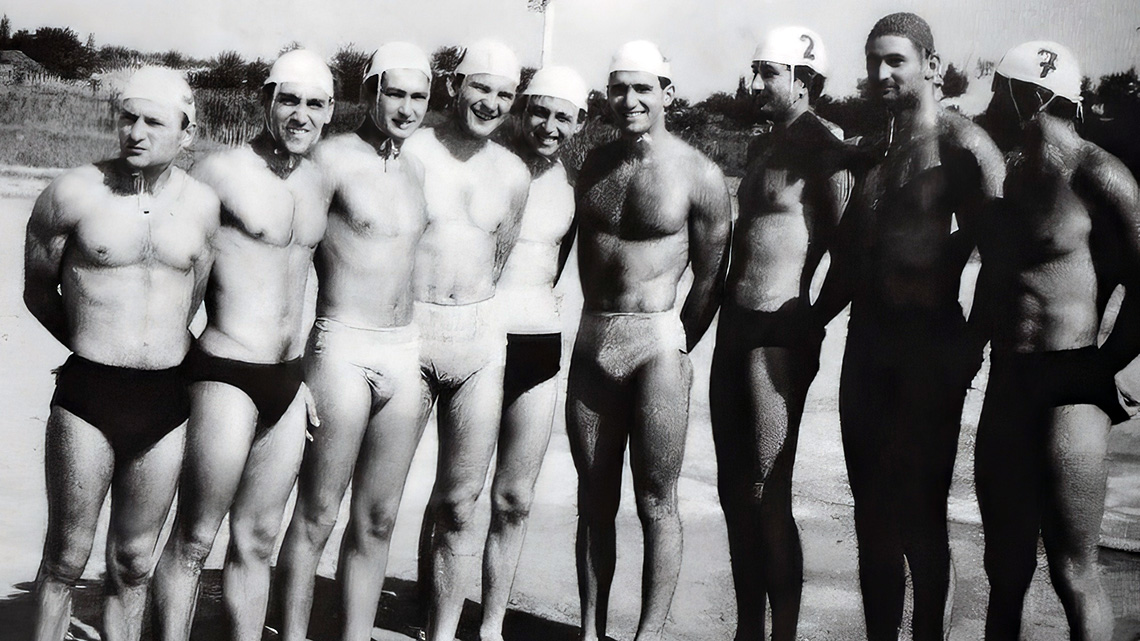
The chronicle of swimming and water polo in Novi Bečej spans over five decades, from 1934 to 1989, during which swimming, water polo, and at one point even diving, were very popular.
In the rich and long history of these sports, activities were carried out in phases, with frequent interruptions that sometimes lasted only a few years, and other times an entire decade.
Everything mostly depended on the enthusiasm of individuals or groups of enthusiasts who, during the summer period of two to three months, were willing and able to dedicate their free time to the Tisa River and improvised pools, which were installed on it from 1935 to 1958. At one point, water polo became the dominant sport over swimming, and instead of the Tisa, the venues for training and competitions were first the “Banja” near the Polet Brick and Tile Factory, and later the Danube-Tisa-Danube Canal.
Although in the 1980s there was no organized work with water polo players, they participated in all competitions and age categories organized by the Water Polo Association of Vojvodina, thanks primarily to the efforts of Zlatoje Marić, who selected a team of local and younger water polo players, including some top league players from neighboring Bečej. This continued until 1989, when Novi Bečej’s water polo players participated in the Vojvodina championship for the last time, after which the club ceased its activities.
The history of swimming and water polo is divided into three periods:
- The First Strokes (1934 - 1946)
- The Golden Age (1951 - 1966)
- The Last Decade (1977 - 1989)
In addition to the activities of Novi Bečej’s swimmers, water polo players, and sports officials of that time, the book also partly covers their sports activities in other clubs, army competitions, and sports associations at the republican and federal levels, in which they competed or were active participants.
The book also includes brief biographies of the “offspring” (daughters and sons) of Novi Bečej residents who continued their parents’ tradition in other communities, often very successfully, while remembering and respecting their roots.
The sources for writing this chronicle are based on written materials, sports and daily press, published books about water polo, memories of participants, and the documentation of the Water Polo Association of Vojvodina.
Invaluable treasures include written materials and photographs left to the Novi Bečej Public Library by Branislav Kiselički, a contemporary and participant (especially in the pre-war and war periods). Significant documents were also provided by Branislav Vojnov Sr., Sava Ivanić, Branislav Vojnov Jr., and part of the documentation was obtained posthumously from Manojlo Gurjanov and Zlatoje Marić.
Particularly important are the testimonies and memories of participants in post-war swimming, water polo, and diving competitions, which preserve from oblivion an entire life and sports legacy of Novi Bečej residents in the 20th century, when they spent their best years on the Tisa River, the "Banja" near Polet, and the Danube-Tisa-Danube Canal, passionately defending the colors of their club.
Comments